

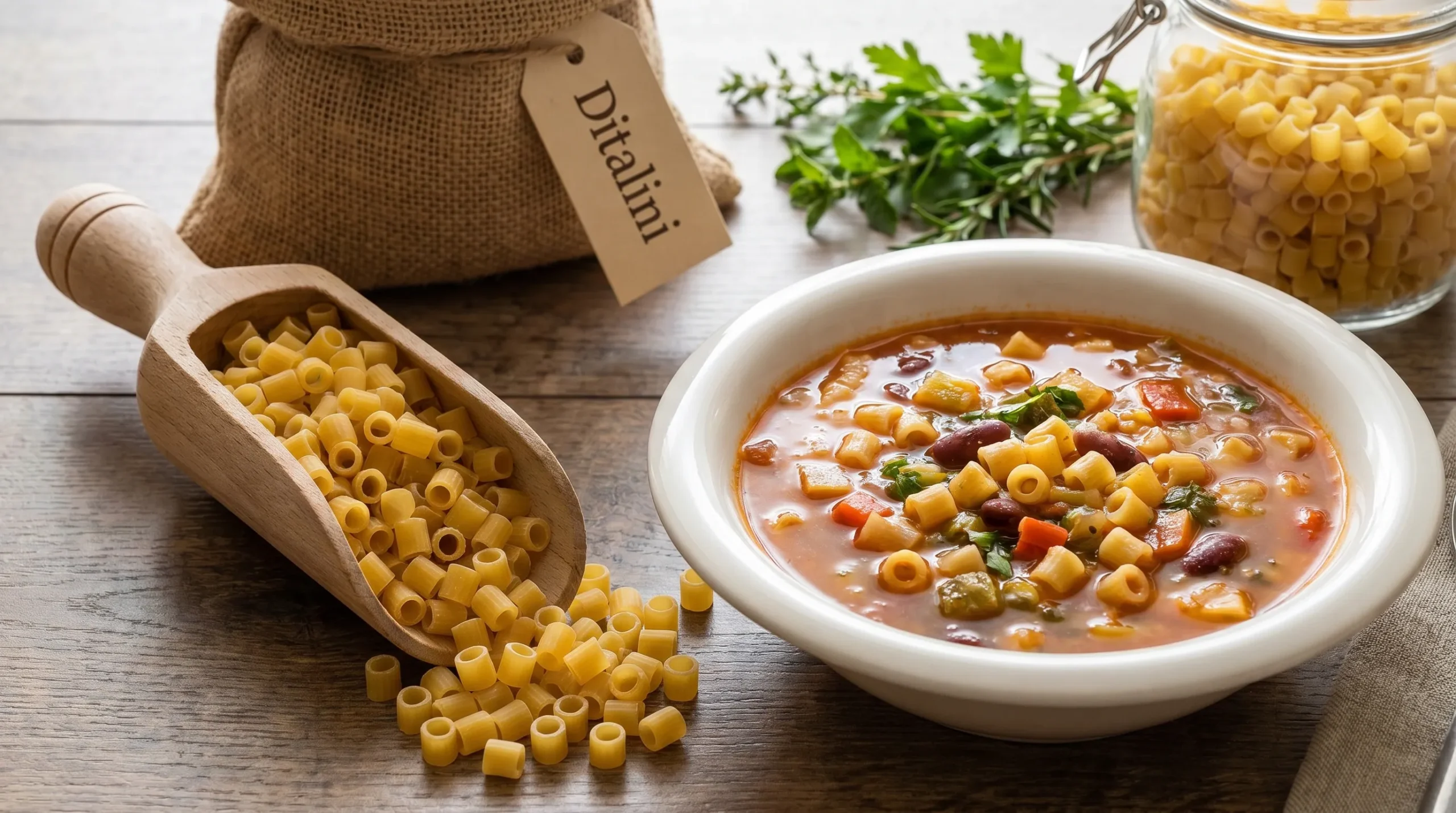
What is ditalini? Ditalini is a small, tube-shaped Italian pasta whose name means “little thimbles,” and it is best known for its role in comforting dishes like minestrone and pasta e fagioli. If you have ever seen tiny hollow tubes in a soup and wondered what they were, there is a good chance you were looking at ditalini pasta.
This classic small tube pasta is simple, versatile, and easy to cook, but many people still ask the same questions: What is ditalini used for? Is ditalini the same as orzo? Can you use it in pasta salad? What is the best substitute for ditalini pasta? Those are all good questions, because ditalini sits in that interesting middle ground between a pantry staple and a pasta shape many home cooks do not fully understand.
In this guide, you will learn what is ditalini pasta, what it looks like, where it comes from, how to cook it, how it compares with shapes like orzo, ditali, tubetti, and elbow macaroni, and why it deserves a permanent place in your kitchen. Whether you want to make broth-based soups, a hearty bean dish, a cold pasta salad, or simply understand the shape better, this guide covers everything in a clear and practical way.
What Does Ditalini Mean in Italian?
The word ditalini comes from Italian and translates to “little thimbles.” That name makes perfect sense once you see the pasta. Each piece is short, round, and hollow, almost like a tiny sewing thimble with both ends open. The name is one of the reasons people often search what does ditalini mean in Italian or why is ditalini called little thimbles.
Italian pasta names often describe shape, size, or texture, and ditalini follows that tradition. It belongs to the broader family of short cut pasta and is related to ditali, which is the larger version of ditalini. In simple terms, if ditali are the bigger tubes, ditalini are the smaller, more delicate version.
That small difference in size matters in cooking. Because ditalini pasta is compact and easy to spoon, it fits naturally into soups and dishes where you want pasta to blend with broth, beans, vegetables, or sauce rather than dominate the bowl.
What Does Ditalini Look Like?
If you are wondering what does ditalini look like, picture tiny, short hollow tubes. They are usually smooth, although you may also see ditalini rigati or ditalini rigatti, which have ridges on the outside. Whether smooth or ridged, the overall shape stays the same: a small tubular pasta with a hollow center.
That shape gives ditalini a few useful qualities. First, it cooks fairly quickly. Second, it holds broth and sauce well. Third, it mixes easily with ingredients like beans, peas, diced vegetables, and shredded chicken without making the dish feel heavy.
Here is a simple comparison table to make the shape easier to identify:
| Pasta Shape | What It Looks Like | Best Use |
|---|---|---|
| Ditalini | Small hollow tubes | Minestrone, pasta e fagioli, pasta salad |
| Ditali | Larger hollow tubes | Chunkier soups and pasta dishes |
| Orzo | Rice-shaped pasta | Salads, soups, side dishes |
| Tubetti / Tubettini | Small tubes, similar to ditalini | Soups and brothy dishes |
| Elbow macaroni | Curved tubes | Mac and cheese, pasta salad |
| Pastina | Very tiny pasta shapes | Light soups, simple comfort dishes |
So when people ask what is the shape of ditalini, the easiest answer is this: small, straight, hollow tubes designed for soups, mixed dishes, and spoon-friendly meals.
Where Does Ditalini Come From?
Like many beloved pasta shapes, ditalini is deeply tied to Italy. It is often associated with Campania, though small tubular pasta also appears across other parts of Southern Italy. In the broader story of Italian food, shapes like ditalini became popular because they were practical, easy to pair with everyday ingredients, and well suited to home-style cooking.
Historically, small pasta forms gained more visibility during the industrial era and the 19th and 20th centuries, when mass produced pasta and extruded pasta became more common. Pasta dough made from semolina flour, durum wheat flour, and water could be pushed through metal dies to create a wide variety of shapes, including the neat tube pasta forms we still buy today.
That background also explains why you will sometimes see references to regions like Campania, Puglia, Apulio, and Sicily in conversations about Italian pasta. These regional food traditions shaped how pasta was used in local kitchens, especially in soups and rustic bean dishes.
A good food quote to remember here is:
The best pasta shapes are not just beautiful; they are useful.
That idea describes ditalini pasta perfectly. It is not flashy, but it is incredibly practical.
What Is Ditalini Used For?
When people ask what is ditalini used for, the simplest answer is soups first, then everything else. This pasta was practically made for broth-based soups, because its size allows it to sit comfortably on a spoon and mix evenly with other ingredients.
The most famous uses include minestrone and pasta e fagioli. In minestrone, ditalini blends with vegetables, beans, and broth without overwhelming the dish. In pasta e fagioli, it pairs naturally with beans and creates that cozy, filling texture people expect from the dish. These are the classic examples behind searches like ditalini used in soups like minestrone and ditalini used in pasta e fagioli and minestrone.
But its usefulness does not stop there. Ditalini pasta uses also include:
- light chicken soup
- vegetable soup
- creamy soup
- cold pasta salad
- warm pasta tossed with olive oil garlic sauce
- cheesy baked dishes
- simple kid-friendly meals
Because it is small, it works especially well in dishes where you want balanced bites. You do not need to cut it, and it does not steal attention from the broth, vegetables, beans, or sauce around it. That is one reason ditalini is often considered one of the best pasta shapes for soup.
Best Dishes to Make With Ditalini
If you want ideas beyond the usual definition, it helps to know the best dishes where this shape shines. Some are traditional, while others are flexible modern uses.
A classic bowl of minestrone soup is perhaps the best introduction to ditalini. The small tubes slip between beans, carrots, celery, tomatoes, and broth in a way that feels natural. Pasta e fagioli is another obvious favorite, because the shape is sturdy enough to hold up in the pot but small enough to stay tender and spoonable.
There are also more creative uses. A chilled macaroni salad or pasta salad can work beautifully with ditalini, especially when mixed with peas, herbs, vinaigrette, or a creamy dressing. If you like comfort food, you can even use it in a stovetop cheese sauce. Many home cooks ask can ditalini be used for mac and cheese or can ditalini be used in cold pasta salad, and the answer is yes. It is not the most traditional option, but it works surprisingly well.
Some recipe-style ideas include:
- Classic Minestrone
A mix of vegetables, beans, tomatoes, herbs, and ditalini pasta in broth. - Pasta e Fagioli
A hearty Italian-style soup with beans, aromatics, tomatoes, and ditalini. - Roasted Garlic Pasta Soup
A savory soup where the small pasta adds body without becoming too heavy. - Ditalini Pasta Salad
A fresh mix of chopped vegetables, herbs, and dressing. - Cheesy Ditalini Bake
A cozy family-style dish somewhere between baked pasta and mac and cheese.
These ideas also help answer easy ditalini recipes, ditalini meal ideas, and best pasta for minestrone.
How to Cook Ditalini Perfectly
Knowing how to cook ditalini is important because small pasta can turn soft very quickly if you are not careful. In many references, the cook time lands around 8 to 9 minutes, though exact timing depends on the brand and whether you want the pasta fully tender or slightly al dente.
If you are boiling it on its own, use a large pot of salted water, stir early, and start checking texture a minute before the package time finishes. If you are using it in soup, the best method depends on how quickly you plan to serve the dish.
Here are the most practical cooking tips:
Cook ditalini separately for leftovers
If the soup will sit for a while, cook the pasta separately and add it to each bowl before serving. This helps avoid the common problem of pasta soaking up too much liquid and becoming mushy.
Cook it directly in broth for immediate serving
If you are serving right away, you can cook ditalini in the soup itself. This adds flavor, but the pasta will continue absorbing broth as it sits.
Do not overcook it
Because it is small, ditalini can move from perfect to overly soft very fast. This matters if you are searching how long to boil ditalini or how to keep ditalini from getting mushy.
Use the right amount
For soup, a little goes a long way. If you add too much, the dish can turn from brothy to crowded very quickly. That is why questions like how much ditalini for soup and how much ditalini per serving matter.
A helpful rule of thumb is this: start modestly, then add more next time if needed. With a pasta this small, restraint usually gives the best texture.
Ditalini vs. Other Small Pasta Shapes
One of the biggest user pain points is confusion. Many people know they want a tiny pasta, but they are not sure whether ditalini, orzo, pastina, tubetti, or elbow macaroni is the best choice.
Ditalini vs. Ditali
This is mostly a size issue. Ditali are larger, while ditalini are smaller and more delicate. If you want finer texture in soup, ditalini is usually the better choice. That is the answer to ditali vs ditalini.
Ditalini vs. Orzo
This is one of the most common comparisons. Is ditalini the same as orzo? No. Orzo is shaped like rice, while ditalini is a small hollow tube. Orzo often feels smoother and more compact in salads and sides, while ditalini offers a more clearly defined pasta bite in soups.
Ditalini vs. Tubetti
Tubetti and tubettini are very similar to ditalini and can often be swapped. The differences usually come down to exact size or brand style. If you cannot find ditalini, tubetti is often one of the closest substitutes.
Ditalini vs. Elbow Macaroni
People also ask is ditalini the same as macaroni or ditalini vs elbow macaroni. The answer is no. Elbow macaroni is curved and larger. Ditalini is straighter, smaller, and generally better suited to soups and spoonable dishes.
Ditalini vs. Pastina
Pastina is a broad term for very tiny pasta shapes. Some pastina shapes are much smaller than ditalini, which makes them better for delicate soups or simple comfort bowls. Ditalini gives you more bite and structure.
If your goal is small pasta shapes for soup, ditalini sits in a sweet spot: bigger than tiny pastina, smaller than elbows, and more spoon-friendly than many medium pasta shapes.
Best Substitutes for Ditalini
Sometimes the grocery store simply does not have ditalini. In that case, the best substitute for ditalini pasta depends on what you are making.
For soups, the closest options are tubetti, tubettini, orzo, or small elbow macaroni. If you want the same general mouthfeel and size, tubetti is often the strongest replacement. If you only need a small pasta that cooks quickly and disappears nicely into broth, orzo can work too, though it changes the shape and feel of the dish.
For pasta salad, small shells or elbows may work better than orzo, because they hold dressing differently. That is why best substitute for ditalini in soup is not always the same as best substitute for ditalini in pasta salad.
Here is a quick practical guide:
| If You Need a Substitute For… | Best Options |
|---|---|
| Soup | Tubetti, tubettini, orzo, small elbows |
| Pasta e fagioli | Tubetti, small elbows |
| Pasta salad | Small shells, elbows, orzo |
| Mac and cheese style dishes | Elbow macaroni, small shells |
The main thing is to match the size, cooking speed, and intended texture of the original pasta.
Is Ditalini Gluten-Free? Nutrition and Dietary Notes
A common modern question is does ditalini contain gluten or is ditalini gluten-free. Traditional ditalini pasta is usually made from semolina flour or durum wheat, which means it does contain gluten. So standard ditalini is not gluten-free.
That said, you can often find gluten-free ditalini pasta made from rice, corn, legumes, or other alternative flours. If someone in your home avoids gluten, it is worth checking specialty grocery stores or online retailers.
Nutrition depends on the brand, but the basics are easy to understand. Ditalini is a carbohydrate-rich pasta that can be part of a balanced meal when paired with vegetables, beans, olive oil, or protein. If you are looking for ditalini nutrition facts or calories in ditalini pasta, the exact numbers vary, but the bigger point is how you build the meal around it.
A bowl of minestrone with beans and vegetables will feel very different nutritionally from a bowl of cheesy baked ditalini. The pasta itself is just one part of the dish.
Where to Buy Ditalini and Which Brands to Look For
If you are now wondering where to buy ditalini, the good news is that it is not usually hard to find. Many supermarkets carry it in the Italian pasta section, and online stores often stock multiple brands.
If one store does not have it, check another store with a stronger international or Italian foods aisle. Some people also look specifically for brand terms like Barilla ditalini, De Cecco ditalini, or DeLallo products when they want a trusted option.
When choosing among brands, consider:
- whether you want smooth or ridged variety
- whether you need gluten-free ditalini
- whether you plan to use it for soup, salad, or a sauced pasta dish
The best brands of ditalini pasta are usually the ones that cook evenly, hold texture well, and fit the kind of recipe you make most often.
Frequently Asked Questions About Ditalini
What is ditalini used for?
It is most commonly used in soups, especially minestrone and pasta e fagioli, but it also works in pasta salad, cheesy dishes, and simple family meals.
Is ditalini the same as orzo?
No. Orzo looks like rice, while ditalini is made of small hollow tubes. They can sometimes be substituted, but they are not the same shape.
Can I use ditalini instead of macaroni?
Yes, in some dishes. It can work in pasta salad or cheesy pasta recipes, but it will not feel exactly like elbow macaroni.
How long does ditalini take to cook?
A common cook time is about 8 to 9 minutes, though you should always check the package and taste for your preferred level of al dente texture.
Is ditalini good for soup?
Yes. In fact, that is its strongest use. It is one of the best Italian soup pasta shapes because it is small, neat, and easy to eat by the spoonful.
Can you use ditalini in pasta salad?
Absolutely. It is a great option for cold pasta salad, especially if you want something smaller than standard macaroni.
Is ditalini gluten-free?
Traditional ditalini is not gluten-free because it is usually made from durum wheat flour. However, gluten-free versions are available.
Final Thoughts: Is Ditalini Worth Keeping in Your Pantry?
Ditalini may look simple, but it is one of the most useful types of small pasta you can keep on hand. It brings structure to soups, blends beautifully with beans and vegetables, and works in more dishes than many people expect. Once you understand what is ditalini pasta, it becomes much easier to see why it has lasted for generations in Italian cooking.
If you enjoy minestrone, pasta e fagioli, light brothy soups, or compact pasta salads, ditalini pasta is absolutely worth buying. Its small tube shape, reliable cooking time, and easy versatility make it a smart pantry staple rather than a one-purpose ingredient.
Disclaimer:
This article is for general informational purposes only. It explains ditalini pasta, its uses, cooking methods, and substitutes, which may vary by brand, recipe, and dietary needs. Readers should verify ingredients and instructions before cooking.