

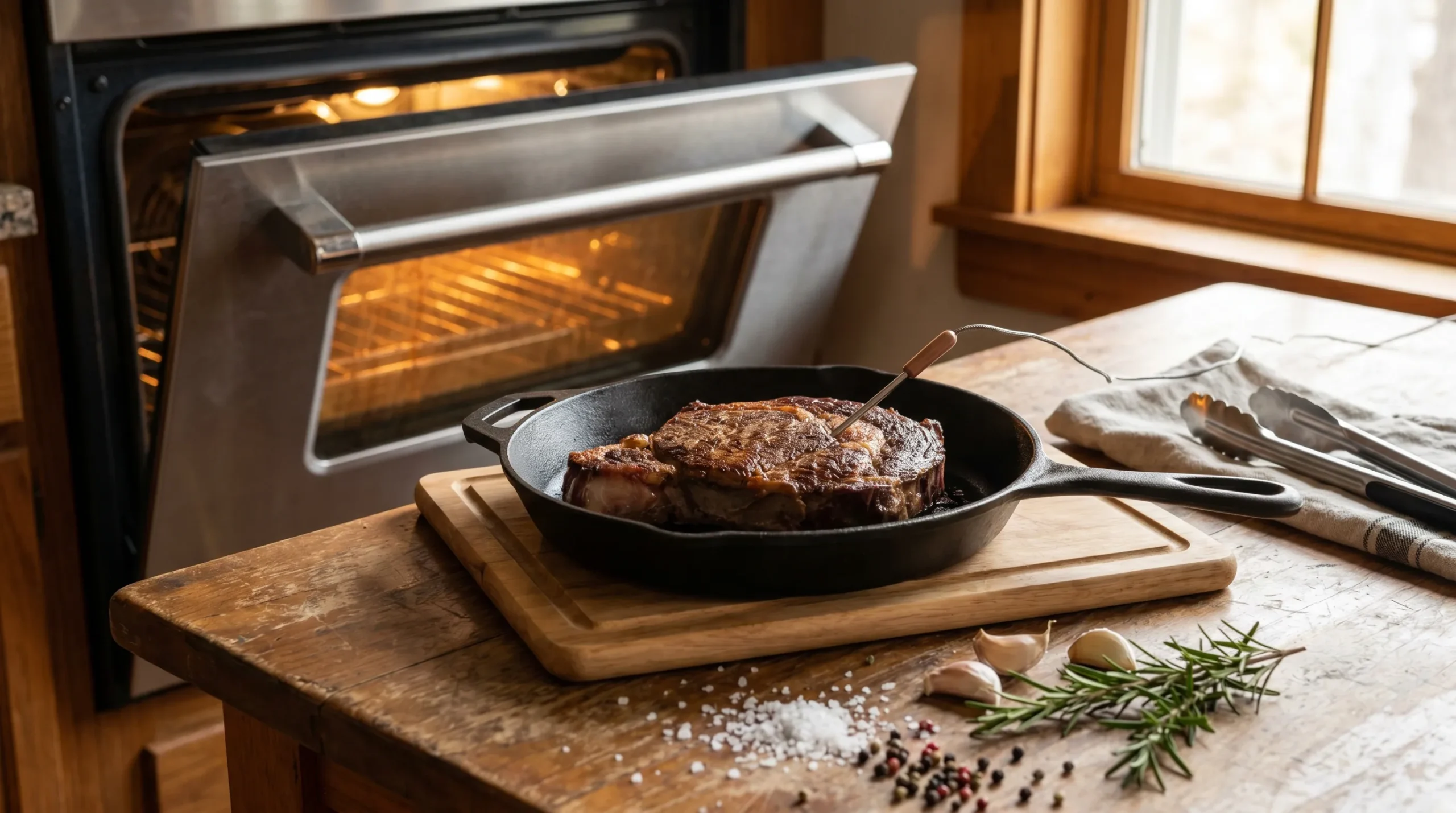
How do i cook ribeye steak in the oven is one of the most common questions home cooks ask when they want a juicy, tender, steakhouse-style ribeye without using a grill. The best method is simple: season the ribeye well, sear it in a hot cast iron skillet, finish it in a 400°F oven, check the internal temperature with a meat thermometer, and let it rest before slicing.
A great ribeye steak in the oven should have a deep brown crust, a warm pink center, and rich, beefy flavor from its natural marbling. The oven gives you steady heat, while the skillet gives you the crust. That combination is what makes an oven ribeye taste closer to a restaurant steak.
This guide will show you exactly how to cook ribeye steak in the oven, how long to cook it by thickness, what temperature to use, how to avoid dry steak, and what to do if you do not have a cast iron skillet.
Quick Answer: The Best Way to Cook Ribeye Steak in the Oven
The best way to cook ribeye in the oven step by step is to use the pan sear then finish in oven method. Start by taking the steak out of the fridge for about 30–45 minutes. Pat it dry with paper towels, season it generously with kosher salt and freshly ground black pepper, then sear it in a very hot cast iron skillet with a high-heat oil like avocado oil or ghee.
Once both sides have a deep brown crust, move the oven-safe skillet into a 400°F / 204°C oven. For a 1.5-inch ribeye, the oven finish usually takes about 4–8 minutes, depending on your preferred doneness. For medium-rare ribeye, pull the steak when it reaches about 125–130°F, because carryover cooking can raise the temperature another 5–10°F while it rests.
Then let the steak rest for 5–10 minutes under a loose foil tent. This helps the juices settle back into the meat, giving you a more juicy texture when you slice.
Why Ribeye Works So Well in the Oven
Ribeye steak is one of the best cuts for oven cooking because it has generous marbling, also called intramuscular fat. This fat melts as the steak cooks, creating a buttery texture, rich flavor, and a tender bite. Compared with leaner cuts, ribeye is more forgiving because the fat helps protect the meat from drying out too quickly.
A ribeye comes from the rib primal, usually around ribs 6–12. The main muscle is the longissimus dorsi, and many ribeyes also include the prized spinalis, often called the ribeye cap. That cap is especially flavorful and tender.
Both bone-in ribeye and boneless ribeye work in the oven. A bone-in cut can look more impressive and may cook a little more slowly near the bone, while a boneless ribeye is easier to sear evenly and slice. For most beginners, a 1.5-inch boneless ribeye is the easiest choice because it is thick enough to build a crust without overcooking too fast.
Ingredients You Need for Oven Ribeye Steak
You do not need a long ingredient list to make a perfect ribeye steak. Ribeye already has a lot of natural flavor, so the goal is to enhance it, not cover it up.
For a classic oven baked ribeye, you need 1–2 ribeye steaks, kosher salt, freshly ground pepper, and a small amount of high-heat oil. Avocado oil and ghee work well because they handle high heat better than regular butter. Butter tastes amazing, but it can burn if added too early during the sear.
For extra steakhouse flavor, add butter, smashed garlic, fresh thyme, and rosemary near the end of cooking. You can also finish the steak with compound butter, which is softened butter mixed with herbs, garlic, pepper, or a little lemon zest.
A simple seasoning ratio is about 1 teaspoon of kosher salt per pound of steak. If you have time, salt the ribeye at least 30 minutes before cooking. This light dry brine helps season the meat more deeply and improves browning.
Tools You Need: Cast Iron, Thermometer, and Oven-Safe Options
A cast iron skillet is the best pan for cooking ribeye steak in the oven because it holds heat extremely well. That heat helps create the Maillard reaction, the browning process that gives steak its crust, aroma, and deep flavor. A 12-inch skillet is ideal for one large ribeye or two smaller steaks without crowding the pan.
The most important tool, though, is a meat thermometer. An instant-read thermometer or digital meat thermometer removes the guesswork. Time charts are helpful, but steak thickness, starting temperature, oven accuracy, and pan heat can all change the final result. The thermometer tells you exactly when the steak is done.
You will also need tongs, paper towels, and an oven-safe skillet. If you do not have cast iron, use a stainless steel skillet, a heavy oven-safe pan, or a baking sheet with a wire rack. Avoid using a nonstick pan at very high heat unless it is clearly labeled oven-safe for the temperature you need.
An oven thermometer can also help because many home ovens run 25–50°F off, which affects cooking time.
How to Cook Ribeye Steak in the Oven Step by Step
This is the core method for a steakhouse ribeye at home. It works best for a ribeye that is about 1 inch to 1.5 inches thick.
Step 1: Bring the Ribeye Toward Room Temperature
Take the ribeye out of the refrigerator about 30–45 minutes before cooking. This does not need to make the steak fully room temperature, but it does help remove the harsh chill from the center. A steak that starts extremely cold may brown on the outside before the inside warms properly.
Place the steak on a plate and let it sit uncovered. If the steak has excess moisture on the surface, that is normal. You will dry it before seasoning.
Step 2: Pat Dry and Season Generously
Pat the ribeye very dry with paper towels. This step matters because surface moisture creates steam, and steam prevents browning. If you want a deep brown crust, the surface of the steak needs to be as dry as possible.
Season both sides with kosher salt and freshly ground black pepper. You can add garlic powder, onion powder, or smoked paprika, but simple salt and pepper are enough for a classic ribeye. If you salted the steak earlier, add pepper right before cooking.
Step 3: Sear the Ribeye in a Hot Skillet
Preheat your oven to 400°F / 204°C. While it heats, place your cast iron skillet on the stovetop over medium-high to high heat. Add a thin layer of high-heat oil. When the oil is shimmering, carefully place the steak in the pan.
Sear the ribeye for 1–2 minutes per side, or up to 2–3 minutes per side if the steak is thick and the crust needs more time. Do not move it around too much. Let the hot pan do its work. You are looking for strong browning, not just a pale gray surface.
This searing stage builds the crust, while the oven will gently finish the inside.
Step 4: Finish the Ribeye in a 400°F Oven
Once both sides are seared, transfer the entire oven-safe skillet into the preheated oven. Cook until the steak is close to your target internal temperature. For many 1.5-inch ribeyes, this takes about 4–8 minutes after searing.
If you want extra flavor, add a tablespoon of butter, a smashed garlic clove, and a sprig of rosemary or thyme during the last couple minutes of cooking. Avoid adding butter too early, because it can burn in the hot skillet.
Step 5: Check the Internal Temperature
Use a meat thermometer and insert it into the thickest part of the steak, away from bone or large fat pockets. For medium-rare ribeye, look for about 130–135°F after resting. That means you should often pull the steak from the oven around 125–130°F.
For medium, aim for about 135–145°F after resting. If you prefer medium-well, aim for 145–155°F. The USDA recommends 145°F minimum internal temperature with a 3-minute rest for beef steaks, so keep that in mind if food safety is your top concern.
Step 6: Rest Before Slicing
Let the ribeye rest for 5–10 minutes before slicing. This is not optional if you want a juicy steak. During resting, the juices redistribute and the temperature continues to rise slightly because of carryover cooking.
Use a loose foil tent, not a tight wrap. A tight wrap can trap steam and soften the crust. After resting, slice against the grain if possible, or serve the steak whole with a pat of compound butter on top.
Ribeye Steak Oven Time Chart by Thickness and Doneness
Cooking time depends on thickness, sear time, oven accuracy, and how cold the steak was when it started. Use this chart as a guide, but always trust internal temperature over exact minutes.
| Ribeye Thickness | Oven Temperature | Approx. Oven Time After Searing | Best Use |
| 1-inch ribeye | 400°F | 3–5 minutes | Quick medium-rare to medium steak |
| 1.5-inch ribeye | 400°F | 4–8 minutes | Best all-purpose oven ribeye |
| 2-inch ribeye | 400°F | 8–12 minutes | Better with reverse sear |
| Thick-cut ribeye | 275°F then sear | Varies by temperature | Best for reverse sear |
If you are asking how long to cook ribeye steak in the oven, the honest answer is: cook it until it reaches the right temperature, not just until the timer ends. A ribeye steak oven time chart is useful, but a thermometer is what protects you from overcooking.
Ribeye Doneness Chart: Internal Temperatures to Know
A steak doneness chart is one of the most useful parts of any oven ribeye recipe. The center temperature determines whether your steak is rare, medium-rare, medium, or well-done.
| Doneness | Pull From Oven Around | Final Temperature After Resting |
| Rare | 115–120°F | 120–125°F |
| Medium-rare | 125–130°F | 130–135°F |
| Medium | 130–140°F | 135–145°F |
| Medium-well | 140–150°F | 145–155°F |
| Well-done | 150°F+ | 155°F+ |
For the juiciest result, many steak lovers prefer medium-rare ribeye because the fat has started to render, but the center is still tender and pink. However, if you are cooking for children, older adults, pregnant people, or anyone with a weakened immune system, the safer choice is to follow the 145°F minimum internal temperature guideline with a 3-minute rest.
Sear First vs Reverse Sear: Which Oven Method Is Better?
The classic method is to sear first, then finish in the oven. This is best for a 1-inch or 1.5-inch ribeye because it gives you a fast crust and a juicy center without a complicated process.
The reverse sear method works better for thicker steaks, especially a 2-inch ribeye. With reverse searing, you cook the steak slowly in a low oven, often around 275°F / 135°C, until it reaches about 10°F below target. Then you sear it in a screaming hot skillet at the end.
So which is better? For beginners, the sear-first method is faster and easier. For thick-cut steak, reverse sear gives more even doneness from edge to center. If your ribeye is thin, reverse searing is not ideal because the steak can overcook before you get a strong crust.
A simple rule: standard ribeye = sear first; thick ribeye = reverse sear.
Can You Cook Ribeye in the Oven Without Searing?
Yes, you can cook ribeye in the oven without searing, but the final result will be different. An oven-only ribeye steak recipe can still be tender and flavorful, but it usually will not have the same steakhouse crust as a seared steak.
To make baked ribeye steak without searing, place the seasoned steak on a wire rack over a baking sheet. Bake at 400°F until it reaches your desired internal temperature. For better browning, you can finish it under the broiler for a minute or two, watching closely so it does not burn.
This method is useful if you want less smoke, do not have an oven-safe skillet, or are cooking in a small apartment kitchen. Just remember that surface browning comes from high heat, so an oven-only method will be milder in flavor and texture.
How to Cook Ribeye Without a Cast Iron Skillet
You can still make a good ribeye steak in the oven without cast iron skillet. A stainless steel skillet is the best alternative because it can handle high heat and create strong browning. Make sure the handle is oven-safe before transferring it to the oven.
If you do not have an oven-safe pan, sear the steak in a heavy skillet on the stovetop, then move it to a preheated baking sheet or roasting pan to finish in the oven. Another option is to cook the steak on a wire rack over a baking sheet and use the broiler at the end.
Be careful with nonstick pans. Many are not built for very high heat or oven finishing. If you use one, check the manufacturer’s temperature limit first.
The best pan substitute for cast iron steak is one that can get hot, hold heat, and safely move from stovetop to oven.
How to Get a Steakhouse Crust Without Drying Out the Ribeye
A great crust starts before the steak hits the pan. First, pat the ribeye dry. Moisture is the enemy of browning. Second, preheat the skillet until it is very hot. Third, use a thin layer of high-heat oil like avocado oil or ghee.
Do not crowd the pan. If two steaks are squeezed together, they release moisture and steam instead of sear. Give each ribeye enough space so the surface can brown properly.
The Maillard reaction happens when surface proteins and sugars brown under high heat. This creates the savory smell and flavor people associate with a steakhouse steak. To protect the inside from drying out, sear quickly, then finish with controlled oven heat.
Add butter, garlic, and herbs near the end, not at the beginning. Butter adds flavor, but it burns faster than high-heat oil. For the best result, spoon melted butter over the steak during the last 1–2 minutes or add compound butter after resting.
Common Mistakes When Cooking Ribeye Steak in the Oven
One common mistake is cooking the steak straight from the fridge. A slightly warmed steak cooks more evenly than an ice-cold one. Another mistake is skipping the paper towel step. A wet steak will not brown well, and the surface can turn gray.
Many home cooks also use a pan that is not hot enough. Low heat creates a dull, steamed surface instead of a deep brown crust. On the other hand, adding butter too early can burn the milk solids and create a bitter taste.
The biggest mistake is guessing doneness. A ribeye can go from medium-rare to medium-well quickly, especially in a hot skillet. Use an instant-read thermometer and pull the steak before it reaches the final temperature because carryover cooking will continue the process.
Finally, do not slice the steak immediately. Cutting too soon lets the juices run onto the cutting board. Let it rest for 5–10 minutes so the steak stays moist.
As many chefs say, “The thermometer is not a shortcut; it is the difference between guessing and cooking with control.”
Troubleshooting: Dry, Gray, Undercooked, or Smoky Ribeye
If your ribeye is dry, it was probably overcooked or sliced too soon. Next time, pull it 5–10°F below target and let it rest. If your steak is gray, the surface was likely too wet, the pan was not hot enough, or the steak was crowded in the pan.
If your ribeye is undercooked, do not panic. Put it back in a 400°F oven for a few minutes, then check the internal temperature again. You can also return it to the skillet for 30–60 seconds per side if it needs more browning.
If your kitchen gets smoky, turn on the range hood or exhaust fan before searing. Use a high-heat oil, not butter, for the first sear. Also remove excess oil from the pan if it starts smoking heavily.
For apartment cooking, the broiler or oven-only method may be easier. You may sacrifice some crust, but you will reduce smoke and still get a tender steak.
What to Serve With Oven Ribeye Steak
A rich oven ribeye pairs well with sides that balance its fat and flavor. Classic steakhouse sides include garlic mashed potatoes, roasted potatoes, creamed spinach, and sautéed green beans. Lighter choices include asparagus, arugula salad, roasted mushrooms, or grilled vegetables.
For sauces, keep it simple. Compound butter, chimichurri, garlic herb butter, peppercorn sauce, or a light pan sauce all work well. Ribeye is already flavorful, so avoid sauces that overpower the meat.
For drinks, bold red wines such as Cabernet Sauvignon or Malbec pair nicely with ribeye’s fat and beefy flavor. If you prefer nonalcoholic options, sparkling water with citrus or a tart cranberry drink can cut through the richness.
How to Store and Reheat Leftover Ribeye
Let leftover ribeye cool, then store it in an airtight container in the refrigerator. For best quality, eat it within a few days. If you want to freeze cooked ribeye, wrap it tightly to reduce freezer burn, but expect some texture change after thawing.
To reheat ribeye steak without drying it out, use gentle heat. Place the steak on a wire rack over a baking sheet and warm it in a low oven, around 250–275°F, until heated through. Then sear it briefly in a hot pan if you want to refresh the crust.
Avoid microwaving ribeye if possible. It can make the meat tough and unevenly heated. If you must microwave it, use short intervals at lower power.
Leftover ribeye is excellent in steak sandwiches, tacos, salads, breakfast hash, or sliced over rice bowls.
Quick Oven Ribeye Recipe Card
| Recipe Detail | Recommendation |
| Best cut | 1–1.5-inch ribeye steak |
| Prep time | 30–45 minutes resting before cooking |
| Oven temperature | 400°F / 204°C |
| Sear time | 1–2 minutes per side |
| Oven time | 4–8 minutes, depending on thickness |
| Medium-rare temp | 130–135°F after resting |
| Rest time | 5–10 minutes |
To make a simple foolproof ribeye steak in the oven, season the steak with kosher salt and black pepper, sear it in a hot skillet with avocado oil, transfer it to a 400°F oven, cook to your desired internal temperature, and rest before slicing. Finish with butter, garlic, rosemary, or thyme for extra steakhouse flavor.
This quick recipe card works best for a 1.5-inch ribeye. For a thinner steak, reduce oven time. For a thicker steak, consider reverse searing.
FAQs About Cooking Ribeye Steak in the Oven
How long do I cook a ribeye steak in the oven?
For a 1.5-inch ribeye, cook it in a 400°F oven for about 4–8 minutes after searing. A 1-inch ribeye may need only 3–5 minutes, while a 2-inch ribeye may need 8–12 minutes or a reverse sear method. Always use a meat thermometer for accuracy.
What temperature should ribeye be cooked to?
For medium-rare ribeye, aim for 130–135°F after resting. For medium, aim for 135–145°F. The USDA recommends 145°F minimum internal temperature with a 3-minute rest for beef steaks.
Should I sear ribeye before putting it in the oven?
Yes, if you want a deep brown crust and stronger steakhouse flavor. Searing creates browning through the Maillard reaction, while the oven finishes the center more gently.
Is broiling better than baking ribeye?
Broiling is great for browning because it uses intense top heat. Baking at 400°F is better for controlled cooking. Many cooks use both: bake or oven-finish first, then broil briefly if more crust is needed.
Can I cook frozen ribeye in the oven?
You can, but it is harder to control doneness. For best results, thaw the steak first. If cooking from frozen, use a thermometer and expect a longer cooking time.
How do I keep ribeye juicy in the oven?
Do not overcook it, use a meat thermometer, pull it slightly before the final target temperature, and rest it for 5–10 minutes. Ribeye’s marbling also helps keep it juicy.
Where should I insert the thermometer in steak?
Insert the thermometer into the thickest part of the ribeye, away from bone and large fat pockets. This gives the most accurate reading of the steak’s center.
Conclusion: The Best Oven Ribeye Method
Cooking a perfect ribeye steak in the oven is mostly about control. Season it well, dry the surface, sear it in a hot pan, finish it in a 400°F oven, check the internal temperature, and let it rest. That simple process gives you a steakhouse ribeye at home with a deep brown crust, rich marbling, and a juicy center.
Once you understand timing, thickness, and carryover cooking, you do not have to guess. A good skillet and a reliable thermometer are all you need to turn an oven baked ribeye into a confident, repeatable dinner.
Disclaimer: This content is for general informational and educational purposes only. Cooking times and temperatures may vary depending on equipment and steak thickness. Always use a food thermometer for safety. Follow proper food hygiene practices. Results may differ based on personal cooking methods and conditions.