

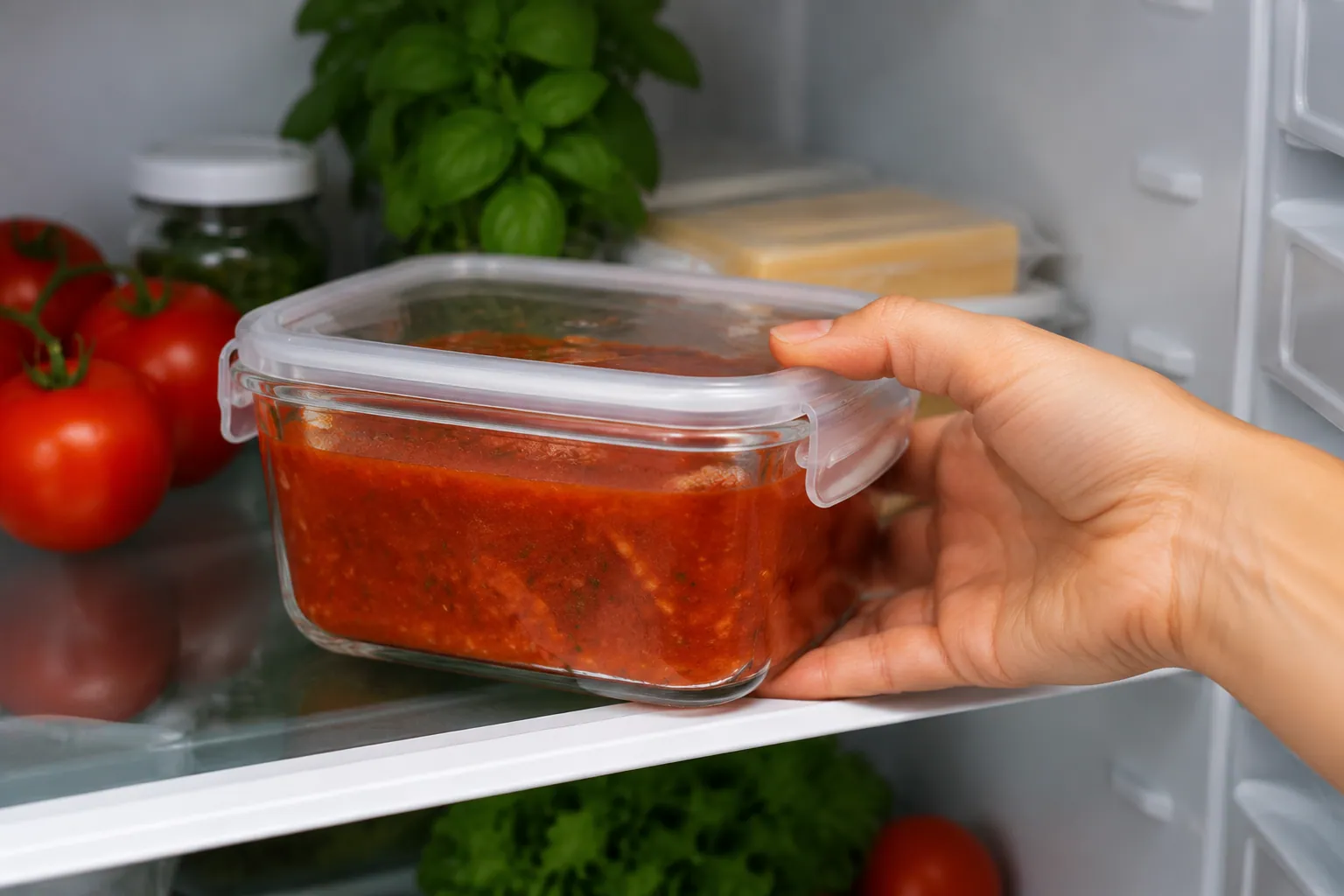
How long is tomato sauce good for in the fridge depends on the type of sauce, how it was stored, and whether it contains ingredients like meat, dairy, seafood, or fresh herbs. As a simple rule, homemade tomato sauce and leftover tomato sauce are usually best within 3–4 days, while opened jarred tomato sauce or opened canned tomato sauce may last about 5–7 days if it has been refrigerated properly in a sealed container.
The key word is properly. Tomato sauce should be stored in the refrigerator at 40°F or below, kept in an airtight container, and handled with a clean spoon every time. The FDA says refrigerators should be kept at 40°F or below, with freezers at 0°F, to help slow bacterial growth and keep food safer.
If your tomato sauce smells sour, looks moldy, tastes off, bubbles, fizzes, or has been sitting in the fridge for too long, the safest choice is simple: throw it away.
Quick Answer: How Long Does Tomato Sauce Last in the Fridge?
Most tomato sauce in the fridge lasts somewhere between 3 and 7 days, depending on whether it is homemade, store-bought, canned, or mixed with other ingredients.
| Type of Tomato Sauce | How Long It Lasts in the Fridge | Best Storage Method |
| Homemade tomato sauce | 3–4 days | Airtight shallow container |
| Opened jarred tomato sauce | 5–7 days | Original jar with tight lid or airtight container |
| Opened canned tomato sauce | 5–7 days | Transfer to glass or plastic airtight container |
| Tomato sauce with meat | 3–4 days | Airtight container |
| Tomato sauce with cream or cheese | 3–4 days | Airtight container |
| Cooked pasta with tomato sauce | 3–4 days | Covered container |
| Frozen tomato sauce | Best within 3–4 months | Freezer-safe bag or container |
USDA food-safety guidance says cooked leftovers should generally be used within 3–4 days when stored in the refrigerator. It also recommends cooling large amounts of food in shallow containers so they chill faster and stay safer.
That means if you made a large pot of homemade tomato sauce, spaghetti sauce, marinara, or red sauce on Monday, you should usually plan to eat, freeze, or discard it by Thursday or Friday.
How Long Homemade Tomato Sauce Lasts
Homemade tomato sauce usually lasts 3–4 days in the fridge. It may sometimes stay good for up to 5 days if it was cooked properly, cooled quickly, stored in an airtight container, and kept at a safe refrigerator temperature.
Homemade sauce often has a shorter tomato sauce shelf life than store-bought sauce because it usually does not contain commercial preservatives. It may also include fresh ingredients such as garlic, olive oil, basil, onions, mushrooms, ground beef, pork, cheese, cream, or seafood, which can shorten its safe storage time.
A plain tomato sauce made from tomatoes, garlic, olive oil, herbs, and salt may hold up better than a meat sauce, Bolognese sauce, or tomato sauce with cream. Still, because homemade food is handled more during cooking and cooling, it should be treated like a leftover.
For large batches, do not put a huge hot pot straight into the fridge. Divide the sauce into shallow containers so it cools faster. USDA notes that large amounts of leftovers should be divided into shallow containers before refrigeration to help them cool safely.
A useful rule is: homemade tomato sauce is a 3–4 day food, not a two-week food.
How Long Opened Jarred Tomato Sauce Lasts
Opened jarred tomato sauce usually lasts about 5–7 days in the fridge if the lid is tightly sealed and the sauce has not been contaminated with food particles or dirty utensils.
This applies to many store-bought tomato-based sauces, including marinara sauce, spaghetti sauce, pizza sauce, and other jarred pasta sauce products. However, always check the label because some brands give specific instructions such as “use within 5 days after opening” or “refrigerate after opening.”
The best-by date on a jar mostly applies before the jar is opened. Once opened, the clock changes. The sauce is now exposed to air, utensils, and bacteria from the kitchen environment. That is why an opened jar should not sit in the refrigerator for weeks just because the printed date is months away.
To keep opened tomato sauce fresh longer, close the lid tightly, avoid double dipping, and write the opening date on the jar. If the sauce reaches the seven-day mark, check it carefully. If it has any sour smell, mold growth, discoloration, bubbling, or off taste, discard it.
How Long Canned Tomato Sauce Lasts After Opening
Canned tomato sauce is shelf-stable before opening, but after opening it should be treated like refrigerated leftovers. Once opened, canned tomato sauce usually lasts about 5–7 days in the fridge if stored properly.
The most important step is to transfer the sauce out of the opened can. Put leftover canned tomato sauce into a glass container, plastic container, or another airtight container. This helps protect flavor, limits exposure to air, and makes storage safer and cleaner.
Do not confuse unopened tomato sauce with opened canned tomato sauce. An unopened can may last a long time in the pantry if it is stored in a cool, dry place and the can is not damaged. But after opening, it belongs in the refrigerator.
Also, never use canned tomato sauce from a can that is badly dented, leaking, bulging, rusty, or spurting liquid when opened. Those are warning signs that the product may not be safe. Be especially careful with home-canned tomato sauce, because improper canning can create serious food-safety risks.
What Affects How Long Tomato Sauce Stays Good?
The answer to how long does tomato sauce last in the fridge is not always the same because several things change the shelf life.
The first factor is the type of sauce. Plain tomato-based sauces often last longer than sauces with meat, dairy, seafood, eggs, cream, butter, or cheese. A simple marinara may be fine for several days, while meat sauce, Alfredo-style tomato sauce, or creamy vodka sauce should be used sooner.
The second factor is fridge temperature. Your refrigerator should stay at 40°F or below. The FDA also recommends using an appliance thermometer because refrigerator controls do not always show the real internal temperature.
The third factor is handling. If you scoop sauce with a dirty spoon, dip cooked pasta directly into the jar, or leave food particles inside the container, spoilage can happen faster. A clean spoon matters.
The fourth factor is how quickly the sauce was refrigerated. FDA food-safety guidance says perishable foods should be refrigerated or frozen within 2 hours, or within 1 hour if the temperature is above 90°F.
So, a sauce that was cooled quickly, sealed tightly, and kept cold will last longer than sauce left on the counter for hours.
How to Store Tomato Sauce After Opening
To store tomato sauce after opening, place it in an airtight container, refrigerate it promptly, and keep it cold until you are ready to use it again. This simple habit protects both freshness and food safety.
If the sauce came in a jar, you can usually keep it in the original jar as long as the lid closes tightly. If it came from a can, transfer it to a clean glass or plastic container. If it is homemade sauce, use shallow containers so the sauce cools quickly.
Label the container with the date. This is one of the easiest ways to avoid guessing later. Write “opened Monday” or “made May 4” on tape or directly on the lid with a marker. This helps you follow a first in, first out storage habit.
Keep the sauce away from the refrigerator door if possible. The door is often warmer because it opens frequently. A middle or back shelf is usually better for leftovers.
When serving sauce, do not leave the whole jar sitting out during dinner. Scoop what you need, then return the container to the fridge. Use clean utensils every time, and do not put leftover pasta, meat, or cheese back into the sauce jar.
Good storage does not make tomato sauce last forever, but it can help it stay safe for its expected window.
How to Tell If Tomato Sauce Has Gone Bad
You can often tell spoiled tomato sauce by its smell, appearance, texture, or taste. The most obvious warning sign is mold. If you see fuzzy spots, white patches, green mold, black mold, or anything growing on the surface, throw the sauce away.
A sour, rotten, pungent, or funky smell is another sign the sauce may no longer be safe. Tomato sauce naturally smells acidic, but it should not smell fermented, rancid, or unpleasant.
Texture changes also matter. If the sauce looks slimy, clumpy, fizzy, foamy, or unusually watery, it may be spoiled. Some separation in tomato sauce can be normal after refrigeration, especially if it contains oil or fresh tomatoes. But bubbling, pressure under the lid, or fizzing can be a warning sign.
The FDA advises throwing away food that looks or smells suspicious, and it notes that mold is a sign of spoilage even when food has been refrigerated.
Do not taste old tomato sauce just to test it. If the sauce is beyond the safe timeline or has clear spoilage signs, tasting it is not worth the risk.
Can Tomato Sauce Still Be Bad If It Looks Fine?
Yes, tomato sauce can go bad in the fridge even if it looks fine. This is one reason people get confused. They open a jar after 10 days or two weeks and think, “There is no mold, no off smell, and it tastes fine — can I still eat it?”
The safer answer is: do not rely only on appearance. Smell and sight are helpful, but they are not perfect food-safety tests. Some bacteria or toxins may not create obvious visual signs right away.
This is especially important with homemade tomato sauce, meat sauce, sauce with dairy, or sauce that has been opened many times. Every opening gives air and possible contamination another chance to enter.
If your tomato sauce is three weeks old, even with no visible mold, it should be discarded. If it is 14 days old, the safer choice is also to throw it away. The risk is not worth saving a small amount of sauce.
A practical rule: if you cannot remember when you opened it, do not eat it.
Can You Eat Tomato Sauce After 7, 10, or 14 Days?
This is one of the most common user questions because many people find a half-used jar in the fridge and wonder whether it is still okay.
After 7 days, opened jarred tomato sauce may still be within the outer edge of the typical 5–7 day window, but it should be checked carefully. Homemade tomato sauce, sauce with meat, or sauce with dairy should usually be discarded before that.
After 10 days, tomato sauce is much more questionable. Even if it looks normal, it is generally safer to throw it away, especially if it is homemade, mixed with pasta, or repeatedly opened.
After 14 days, tomato sauce should usually be discarded. Two-week-old opened sauce is past the safe window for most household storage situations. It may not always look spoiled, but that does not mean it is safe.
After three weeks, do not eat it.
For food safety, it is better to lose a little sauce than risk food poisoning, stomach cramps, nausea, or a foodborne illness. A helpful kitchen quote applies here: “When in doubt, toss it out.”
How Long Can Tomato Sauce Sit Out?
Tomato sauce should not sit out at room temperature for more than 2 hours. If the room or outdoor temperature is very hot, above 90°F, the safer limit is 1 hour. FDA safe food handling guidance gives this same timing for perishable foods.
This matters because bacteria grow faster in the temperature danger zone. FoodSafety.gov explains that perishable food enters the danger zone after two hours, and that leftovers should be reheated properly when used again.
If tomato sauce was left out overnight, throw it away. Refrigerating it the next morning does not reverse the time it spent at unsafe temperatures.
This applies to cooked tomato sauce, pasta sauce, spaghetti sauce, pizza sauce, and sauce mixed with meat or dairy. A sealed store-bought jar that has never been opened is different, but once sauce is opened or cooked, it needs safe handling.
Does Reheating Old Tomato Sauce Make It Safe?
Reheating old tomato sauce does not automatically make it safe. Heat can kill some bacteria, but it may not remove all toxins or undo spoilage that has already happened.
This is a common mistake. Someone finds old pasta sauce, boils it, and assumes it is fine. But if the sauce has been stored too long, left out overnight, or shows mold, sour smell, bubbling, or slimy texture, reheating is not a reliable fix.
Reheat only tomato sauce that was stored safely and is still within the safe fridge window. FoodSafety.gov says leftovers should be reheated to an internal temperature of 165°F / 74°C.
For best results, reheat sauce gently on the stovetop over low to medium heat, stirring occasionally so it does not scorch. If reheating frozen sauce, thaw it in the refrigerator first when possible.
But remember: reheating is for safe leftovers, not spoiled food.
Can You Freeze Tomato Sauce?
Yes, you can freeze tomato sauce to make it last longer. Freezing is one of the best ways to reduce food waste if you know you will not use the sauce within a few days.
For best quality, use frozen tomato sauce within about 3–4 months. Some sauces may remain usable for up to six months, but flavor and texture can decline over time. The FDA recommends keeping the freezer at 0°F.
Freeze tomato sauce in meal-sized portions so you do not have to thaw a large batch at once. Freezer-safe bags work well because they can be flattened and stacked. You can also use freezer-safe containers or ice cube trays for small portions.
Leave a little space in the container because sauce expands as it freezes. Label the date before freezing.
When thawing tomato sauce, use the refrigerator rather than the counter. Thawing on the counter can allow parts of the sauce to warm into an unsafe temperature range before the center is fully thawed.
Common Tomato Sauce Storage Mistakes
Many people shorten the life of tomato sauce without realizing it. One common mistake is leaving sauce out during a long dinner, then putting it back in the fridge hours later. Another is storing homemade sauce in a deep container while it is still very hot, which can slow cooling.
Using dirty utensils is another problem. If a spoon has touched pasta, meat, cheese, or someone’s mouth, it should not go back into the sauce jar. Food particles can introduce bacteria and make sauce spoil faster.
Storing opened canned tomato sauce in the can is also not ideal. Transfer it to a clean airtight container instead.
Another mistake is forgetting the opening date. Without a date, people often keep sauce for 10 days, 14 days, or longer because it “still looks okay.” Labeling prevents that.
Finally, do not wait until sauce is almost old before freezing it. Freeze leftover tomato sauce while it is still fresh. Freezing does not improve old sauce; it only preserves the quality it already has.
When Should You Throw Tomato Sauce Away?
Throw tomato sauce away if it has been in the fridge too long, smells bad, looks moldy, bubbles, fizzes, or has an unusual texture. Also discard it if it was left out overnight or if you do not remember when it was opened.
You should also throw it away if it contains meat, cream, cheese, seafood, or eggs and is older than 3–4 days. Those ingredients make the sauce more perishable.
Discard tomato sauce immediately if you notice:
- Mold or fuzzy spots
- Sour, rotten, or pungent smell
- Bubbling, fizzing, or pressure under the lid
- Slimy, clumpy, or strange texture
- Dark discoloration
- Off taste
- Unknown opening date
- Storage longer than the safe timeline
This is not about being wasteful. It is about avoiding unnecessary risk. Tomato sauce is replaceable; your health is not.
FAQs About Tomato Sauce in the Fridge
Can tomato sauce go bad in the fridge?
Yes. Refrigeration slows bacterial growth, but it does not stop spoilage forever. Tomato sauce in the fridge can still go bad after several days, especially if it was opened, homemade, or handled with unclean utensils.
Is tomato sauce still good after a week?
Sometimes, but it depends on the sauce. Opened jarred tomato sauce may last up to 5–7 days if stored properly. Homemade tomato sauce or sauce with meat or dairy should usually be used within 3–4 days.
Is tomato sauce safe after 10 days?
Usually, it is better to throw it away. Ten days is beyond the typical safe window for most opened or homemade tomato sauces.
Is tomato sauce safe after 14 days in the fridge?
No, not in most cases. Two-week-old tomato sauce should generally be discarded, even if it looks fine.
Can I store tomato sauce in the opened can?
It is better to transfer opened canned tomato sauce into a clean glass or plastic airtight container. This keeps the sauce fresher and avoids storing acidic tomato sauce in an opened metal can.
Does the best-by date matter after opening?
The best-by date matters most before opening. After opening, follow refrigerated storage rules and any label instructions. Do not keep opened sauce for weeks just because the printed date has not passed.
Can you refreeze tomato sauce?
You can refreeze tomato sauce if it was thawed safely in the refrigerator and has not been left out too long. However, quality may decline, so it is better to freeze sauce in small portions from the start.
Final Tips for Keeping Tomato Sauce Fresh
To keep tomato sauce fresh, refrigerate it quickly, seal it tightly, and use it within the right timeline. Keep your fridge at 40°F or below, use an airtight container, and label the date so you do not have to guess later.
If you made a big batch of homemade sauce, divide it into shallow containers. If you opened a jar, close the lid tightly and use a clean spoon every time. If you opened a can, transfer the leftover sauce to glass or plastic.
Disclaimer: This article is for general informational and educational purposes only and does not constitute medical, nutritional, food safety, or professional health advice. Food storage times can vary based on ingredients, preparation methods, handling practices, and refrigerator temperature. Always follow current food safety guidelines and discard any tomato sauce that shows signs of spoilage or has been stored beyond recommended timeframes.