

Introduction
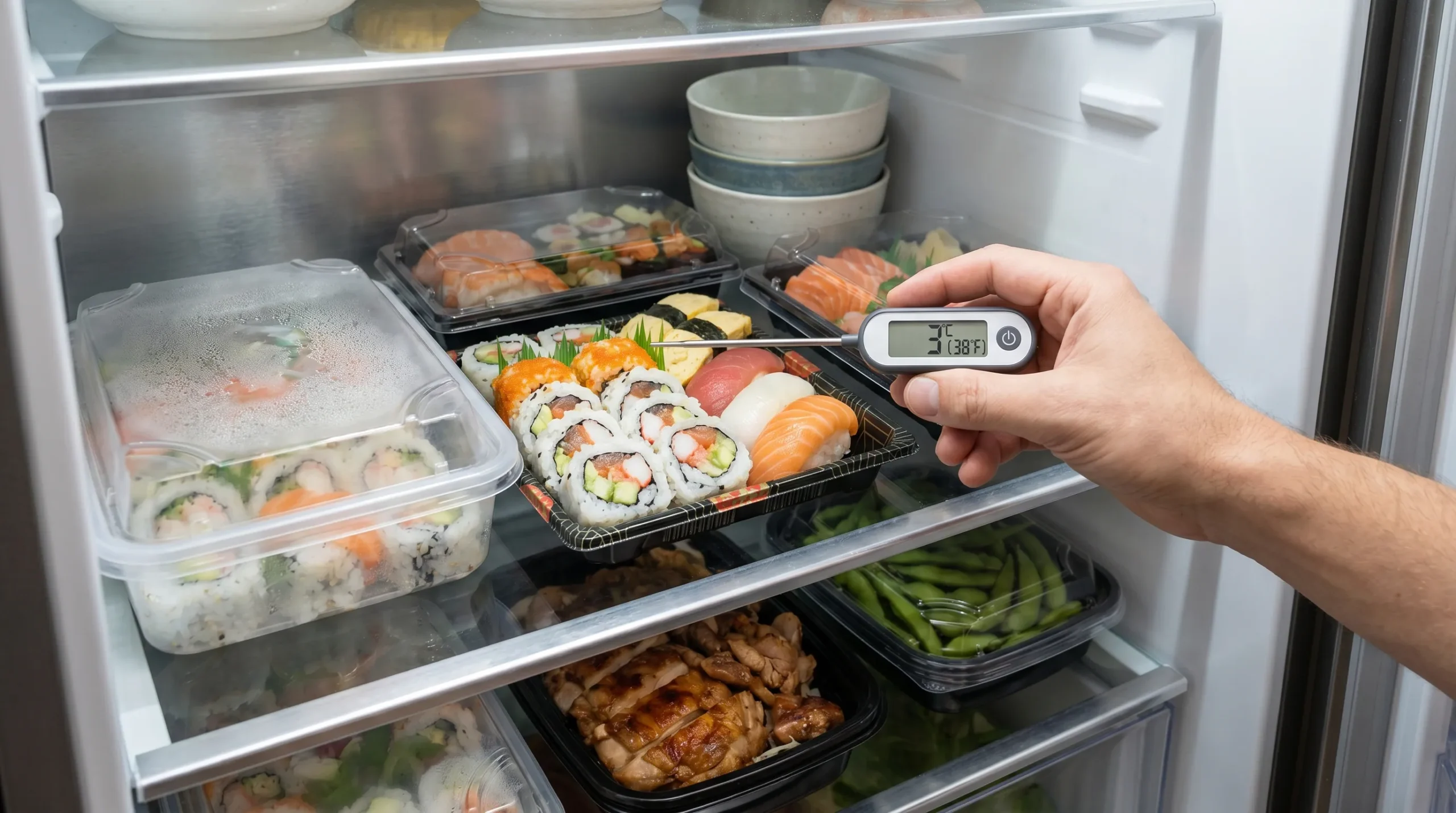
How long does sushi last in the fridge depends on what kind of sushi you have, how fast you refrigerated it, and how cold your fridge actually is. In general, sushi made with raw fish should be eaten the fastest, while cooked sushi usually lasts a bit longer. U.S. food-safety guidance says seafood for short-term use should be kept at 40°F (4°C) or below, and perishable food should not sit out for more than 2 hours—or 1 hour if the temperature is above 90°F (32°C).
That is the short answer, but real life is a little messier. Leftover sushi, grocery store sushi, takeout sushi, and homemade sushi do not all behave the same way. A California roll is not the same as sashimi, and a cooked shrimp tempura roll is not the same as nigiri with raw salmon. This guide breaks it down in a simple way so you can tell whether your sushi is still worth eating, how to store it properly, and when it is smarter to throw it out.
Quick Answer: How Long Is Sushi Good for in the Fridge?
The most practical way to think about sushi shelf life is by type and risk level.
| Type of sushi | Best quality window | Safer fridge window | Notes |
| Raw fish sushi like sashimi or nigiri | Same day | About 24 hours, sometimes up to 1–2 days at most if kept very cold | Highest caution |
| Cooked sushi like shrimp tempura rolls or cooked crab-style rolls | Same day to next day | About 3–4 days as a cooked leftover guideline | Quality drops before safety sometimes |
| Vegetarian sushi like cucumber or avocado rolls | Same day to next day | Often 1–2 days, sometimes longer for ingredients, but rice and nori degrade quickly | Texture goes downhill fast |
| Grocery store sushi / store-bought sushi | Same day | Follow package timing, but treat it conservatively | Travel and display time matter |
The reason these windows vary is simple. Raw fish is more delicate and riskier than cooked fillings. FDA guidance says fresh seafood meant for short use should be stored at 40°F or below and used within 2 days after purchase. For cooked leftovers, USDA-style guidance commonly points to about 3–4 days in the refrigerator.
So if you are asking, “how long can raw sushi stay in the fridge?”, the safest mindset is the sooner, the better. If you are asking, “how long does cooked sushi last in the fridge?”, you usually have a little more room, but that does not mean it will still taste fresh.
Sushi Storage Time and Temperature Matter More Than People Think
A lot of people focus only on the number of days. That misses the bigger issue: temperature abuse.
Sushi is a perishable food, especially when it contains raw fish, cooked seafood, or even cooked rice. Food-safety guidance is very clear that perishable food should not stay at room temperature for more than 2 hours, and that limit drops to 1 hour if the food has been sitting in heat above 90°F (32°C). Bacteria grow quickly in the danger zone between 40°F (4°C) and 140°F (60°C).
That means two containers of sushi can look identical but have very different safety profiles:
- One went from the restaurant to the fridge in 20 minutes
- The other sat in a car, on a desk, or on the counter for 2 hours
Those are not the same. Even if both end up in the fridge overnight, the second one may already be in the discard zone.
This is why takeout sushi, delivery sushi, and restaurant sushi leftovers need a little extra caution. Travel time counts. Waiting counts. A warm car counts. A bag sitting at the door counts. FoodSafety.gov and USDA safety pages both emphasize cooling and refrigerating quickly, not just storing later.
How Long Different Types of Sushi Last in the Fridge
Raw Fish Sushi, Sashimi, and Nigiri
If your sushi contains raw salmon, raw tuna, or other raw seafood, be conservative. This is the category people should eat fastest. FDA guidance for fresh seafood says that if you will use it soon, keep it refrigerated at 40°F or below and use it within 2 days after purchase. In practice, many people treat raw sushi in the fridge as best eaten within about 24 hours, with 1–2 days being the outer cautious limit depending on how fresh it was when bought.
For premium items like sashimi and nigiri, quality loss also happens fast. The fish may not smell bad right away, but the texture and taste can become dull long before it feels restaurant-fresh.
Cooked Sushi Rolls
If the filling is cooked—such as shrimp tempura, cooked eel, imitation crab-style filling, or other cooked seafood—your sushi usually falls closer to the cooked-leftover category. USDA and FoodSafety.gov guidance says most cooked leftovers are best used within 3–4 days in the refrigerator.
That does not mean every cooked roll will still taste great on day four. It means the safety window is often a little more forgiving than raw fish sushi, especially if it was refrigerated quickly.
Vegetarian and Veggie-Only Rolls
A cucumber roll, avocado roll, or sweet potato roll may seem safer, and in some ways it is, because there is no raw fish involved. But sushi is not just about the filling. Sushi rice and nori degrade quickly. Rice can become hard, dry, or crumbly, and seaweed can turn soggy. So even if the fillings are still okay, the overall roll may not be appealing after a day or two.
Grocery Store Sushi vs. Restaurant Sushi vs. Homemade Sushi
This is where people get tripped up.
Grocery store sushi or store-bought sushi may already have spent time in production, packaging, display, and transport before you even bought it. So the safe approach is to check the expiration date or made-on date, keep it cold, and avoid stretching the timeline. FDA’s storage guidance also notes that product dates alone are not a complete safety guide; temperature and handling still matter.
Restaurant sushi leftovers can be excellent if refrigerated fast, but the same 2-hour and 40°F rules still apply.
Homemade sushi depends heavily on your ingredient quality, cleanliness, and fridge habits. If you made it with very fresh ingredients and chilled it quickly, it may hold up well for a short period. But homemade sushi is not magically safer than store-bought sushi.
What Affects How Long Sushi Lasts?
If you have ever wondered why one leftover roll seems fine the next day while another turns unpleasant fast, a few factors explain almost everything.
The first is time before refrigeration. Sushi that went straight into the fridge is always safer than sushi that sat out during a movie, lunch break, or long drive home. Food-safety agencies consistently stress this point.
The second is fridge temperature. Many people assume their fridge is cold enough, but unless it is truly at 40°F (4°C) or below, your leftover sushi may age faster than expected. FDA specifically recommends using a refrigerator thermometer.
The third is the type of fish or filling. Raw fish rolls, sashimi, and nigiri are more fragile than cooked rolls. A California roll or shrimp tempura roll may hold up longer than a raw spicy tuna roll.
The fourth is freshness at the moment you bought it. Sushi that was already sitting in a display case or that had a long delivery window is simply starting with less margin.
The fifth is packaging and moisture. Too much air exposure dries out the rice. Too much trapped moisture can make the seaweed limp and the texture unpleasant.
That is why safe to eat and worth eating are not always the same thing. Sushi can lose the qualities people love—firm rice, clean flavor, fresh texture—even before obvious spoilage appears.
How to Store Sushi in the Fridge for Best Results
If you want the best chance of keeping sushi fresh overnight, focus on speed, cold temperature, and protection from air.
Start by refrigerating it as soon as possible. Do not wait until later in the evening. The clock starts the moment you buy it, make it, or finish serving it.
Next, wrap tightly or move it into an airtight container. FDA says seafood should be wrapped tightly for storage, and that principle helps sushi too. A good container reduces air exposure, which helps slow down drying and keeps outside odors from affecting the food.
Store it in the coldest practical area of the fridge, not in the door. The door warms up every time it opens. A lower shelf or a more stable cold zone is better.
If possible, keep raw and cooked sushi separate. This helps with cross-contamination and keeps flavors cleaner.
For grocery store sushi, keep the original package only if it is sealed well and still cold. Otherwise, transfer it to a better container. If you know you will not eat it soon, label it with the date so you are not guessing later.
A simple storage routine
- Put it away fast
- Keep it at 40°F (4°C) or below
- Use an airtight container
- Avoid the fridge door
- Eat raw sushi first
- When in doubt, throw it out
That is the best answer to how to store sushi in the fridge for best results.
How to Tell if Sushi Has Gone Bad
Spoiled sushi does not always announce itself dramatically, but it usually gives clues.
The first clue is smell. Fresh sushi should not smell sharply sour, rotten, or strongly “off.” A harsh ammonia-like odor is a major warning sign.
The second clue is appearance. If the fish looks dull, gray, or oddly wet, be careful. If the container is leaking or the roll looks collapsed, that is not a good sign either.
The third clue is texture. Bad sushi often develops a slimy coating, while the rice may become hard, dry, or crumbly. The nori may turn limp and soggy. These changes do not always mean dangerous spoilage by themselves, but they do mean the sushi is far from fresh.
The last clue is your overall judgment. If you are asking yourself, “should I risk it?”, you probably already know the answer.
Red flags that mean throw it away
- Sour smell
- Ammonia-like odor
- Slimy fish
- Odd discoloration
- Leaking package
- It sat out too long
- You do not know how long it has been there
Food-safety rules are not designed to help you salvage questionable seafood. They are designed to help you avoid getting sick.
Can You Eat Sushi the Next Day?
Usually, yes—but it depends on the type and how it was stored.
If it was refrigerated quickly and stayed cold, day-old sushi is often still okay, especially if it is cooked sushi or a simple California roll. Raw fish sushi is where you want to be more careful.
This is the answer many people are really looking for when they search “can I eat sushi the next day” or “is sushi okay the day after”. The practical rule is this:
- Next-day cooked sushi: often reasonable
- Next-day veggie sushi: often okay, but texture may be poor
- Next-day raw sushi: use caution, inspect carefully, and do not stretch it casually
Even if it is technically within a safe window, sushi often loses quality overnight. The rice firms up, the seaweed softens, and the fish is rarely as clean-tasting as it was fresh.
What if Sushi Was Left Out? The 2-Hour Rule Explained
This section matters because it answers the panic-search versions of the topic:
- left sushi out overnight
- sushi left out for 2 hours
- can you eat sushi left out overnight
- how long can sushi stay out
The official rule is simple: perishable food should not stay out longer than 2 hours, or 1 hour if the temperature is above 90°F (32°C). That applies to seafood, leftovers, takeout, and delivery foods too.
So if your sushi was:
- Left on the counter all evening
- Forgotten in the car
- Sitting in an office bag
- On a buffet without ice
- Out overnight
You should discard it.
People often hope the fridge can “fix” food that sat out too long. It cannot. Refrigeration slows bacterial growth; it does not rewind unsafe time spent in the danger zone.
Can You Freeze Sushi? What Works and What Doesn’t
You can freeze some sushi, but it is rarely the best way to preserve the full experience.
FDA storage guidance says seafood that will not be used quickly should be wrapped tightly and frozen. That helps from a safety standpoint. But sushi is not just raw protein. It is also about delicate texture.
Cooked sushi may freeze a little better than premium raw sushi. Sushi rice, however, often suffers. It can become dry, tough, or grainy after thawing. Raw fish sushi may also lose its texture and clean flavor.
So yes, can sushi be frozen to increase shelf life? Technically, yes. But for most people, the better answer is:
- Freeze only if you must
- Expect a drop in quality
- Cooked components freeze better than finished high-quality sushi
- Do not expect thawed sushi to feel restaurant-fresh
Sushi Food Poisoning: When to Be Extra Careful
This is the part many articles barely explain.
FDA warns that raw fish, including sushi and sashimi, is more likely to contain parasites or bacteria than cooked fish. That is especially important for people at higher risk of foodborne illness, including pregnant women and other vulnerable groups.
If you are in a higher-risk group, leftover raw sushi is not something to push. The caution should be stronger, not weaker.
Who should be extra careful
- Pregnant women
- Older adults
- Young children
- People with weakened immune systems
If someone feels unwell after eating suspicious sushi, food-poisoning symptoms can include nausea, vomiting, diarrhea, stomach cramps, or fever. A mild case may pass, but severe or persistent symptoms deserve medical attention.
FAQ: Common Sushi Storage Questions
How long does grocery store sushi last?
Treat grocery store sushi conservatively. Check the package date, keep it cold, and do not assume it is as fresh as restaurant-made sushi that just arrived at the table.
How long does takeout sushi last in the fridge?
Takeout sushi follows the same rule as other sushi, but travel time matters. Get it into the fridge quickly. If it sat out too long on the trip home, the safe window shrinks.
Can I eat sushi after 24 hours?
Often yes, especially if it was refrigerated quickly and it is cooked or vegetarian. For raw fish sushi, 24 hours is a much more cautious checkpoint than a casual green light.
Is sushi still good after 2 days?
Sometimes cooked sushi may still be within a safer leftover window, but raw sushi after 2 days is where caution should increase sharply. Inspect it carefully, and do not gamble if anything seems off.
How long does sushi rice last in the fridge?
From a safety angle, rice can be refrigerated, but for sushi quality it degrades fast. Texture becomes the main problem long before it becomes enjoyable to eat.
What if it’s just a California roll?
A California roll is usually less risky than raw sashimi or nigiri, but it is still perishable. Rice, sauces, and fillings still need cold storage and quick handling.
Conclusion
How long does sushi last in the fridge comes down to a few simple rules: keep it cold, refrigerate it fast, and be stricter with raw fish sushi than with cooked rolls. Use 40°F (4°C) as your fridge target, remember the 2-hour rule, and do not ignore signs like sour smell, slimy fish, or dry, crumbly rice.
If you want the safest practical takeaway, it is this: eat sushi as soon as you can, treat raw sushi with extra caution, and when you are unsure, throw it away. That is always cheaper than food poisoning.