

Introduction:
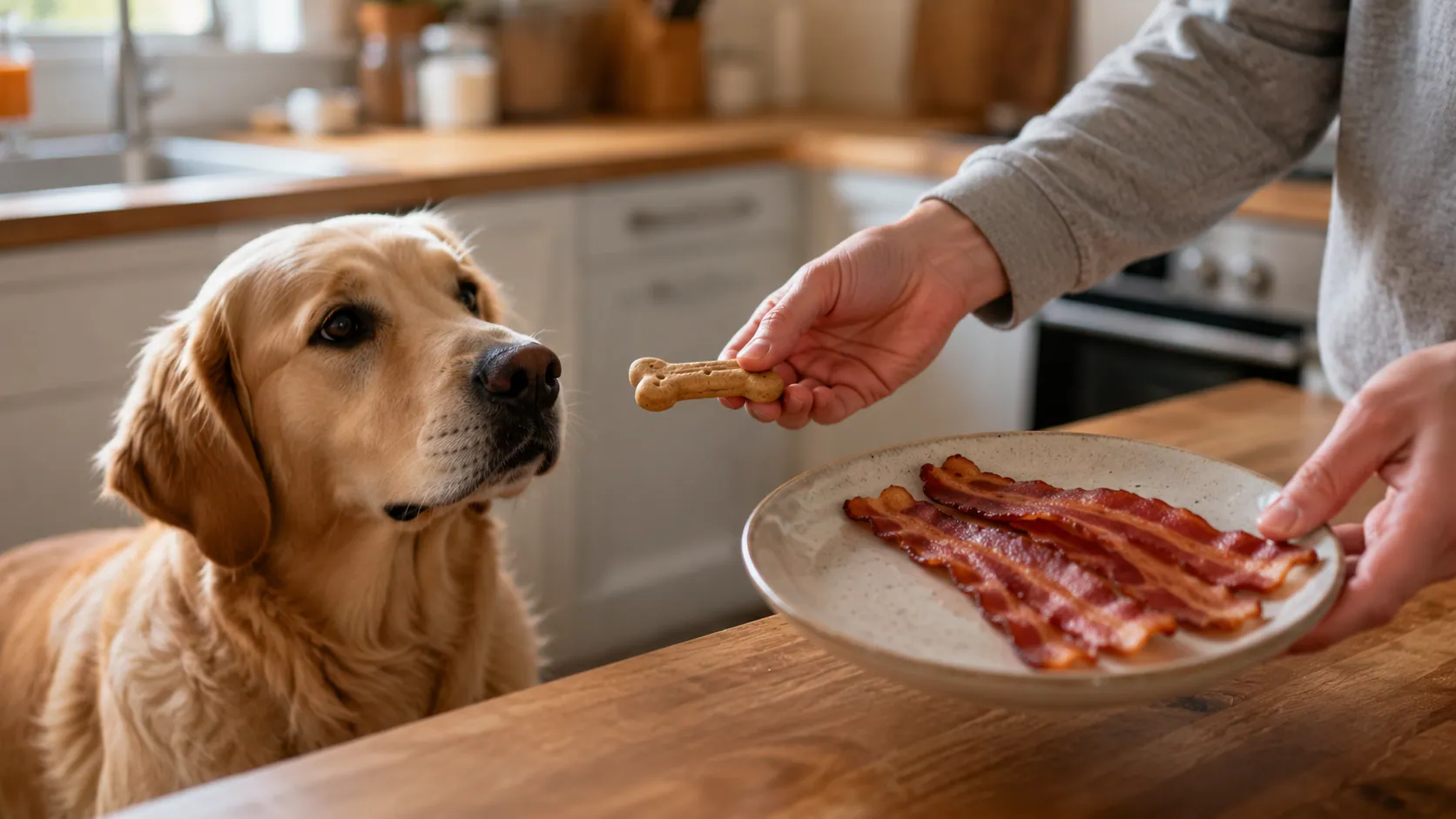
Can dogs eat bacon? Dogs may be able to eat a tiny piece of plain cooked bacon without immediate harm, but bacon is not a healthy or recommended treat for them. It is high in fat, salt, grease, and processing additives, and it is often cooked with seasonings or ingredients that are not ideal for dogs.
The biggest concern with bacon for dogs is usually not “poisoning” from one small bite. The real risks come from digestive upset, vomiting, diarrhea, unhealthy weight gain, and the possibility of pancreatitis, especially if a dog eats a large amount or already has medical problems. Dogs with sensitive stomachs, heart disease, kidney issues, obesity, or a history of pancreatitis should be kept away from bacon completely unless a veterinarian says otherwise.
Many dogs love the smell of bacon, and it is easy to understand why pet parents are tempted to share a small piece. But just because a dog enjoys a food does not mean it is good for them. When it comes to dog bacon safety, the safest choice is to treat bacon as an occasional accident, not a regular snack.
Is Bacon Bad for Dogs or Just an Unhealthy Treat?
Bacon is not usually considered a direct toxin for dogs in the same way as chocolate, grapes, raisins, or xylitol. That means one tiny piece of plain cooked bacon may not immediately harm a healthy large dog. However, that does not make bacon a good or safe treat. The better way to understand it is this: bacon may not be “poisonous” in small amounts, but it is still unhealthy for dogs.
The main problem is that bacon is a fatty, salty, processed meat. It contains a lot of saturated fat, sodium, grease, and curing ingredients that dogs do not need. These can upset a dog’s stomach and may be especially risky for dogs that are small, overweight, older, or sensitive to rich foods. Over time, regular bacon feeding can also support unhealthy weight gain and poor eating habits.
Bacon should not be used as a training reward, daily treat, meal topper, or special breakfast food for dogs. It may smell exciting, but it does not offer the balanced nutrition dogs need. A healthy dog diet should provide the right mix of protein, fat, vitamins, minerals, fiber, calories, and other nutrients in proper amounts. Bacon mostly adds flavor, salt, and fat, without giving dogs anything they cannot get from safer foods.
Veterinary nutrition advice generally supports keeping treats limited and avoiding rich table scraps, especially for dogs prone to vomiting, diarrhea, pancreatitis, or weight problems. So, when pet parents ask, “is bacon bad for dogs?” the safest answer is yes, bacon is a poor choice. It is better to choose dog-safe treats or small pieces of plain lean meat instead of giving dogs salty, greasy bacon.
Why Bacon Can Be Risky for Dogs
Bacon can be risky for dogs because it is rich, salty, greasy, and processed. While a tiny plain piece may not cause a problem for every dog, bacon is still one of those human foods for dogs that can quickly become unhealthy, especially when the amount gets bigger or the dog has a sensitive stomach.
One of the biggest bacon risks for dogs is the high fat content. Bacon is a high-fat food, and rich greasy foods can trigger vomiting, diarrhea, gas, stomach pain, and loss of appetite. In some dogs, especially those with a history of digestive trouble, fatty foods may also increase the risk of pancreatitis in dogs, which is a painful inflammation of the pancreas that may need urgent veterinary care.
Bacon is also a high-sodium food for dogs. Too much salt can make a dog unusually thirsty and may lead to stomach upset. It can be more concerning for small dogs because a small amount of salty food affects them more than it would a large dog. Dogs with heart disease, kidney disease, blood pressure concerns, or other medical conditions should avoid salty foods like bacon unless a vet gives specific advice.
Another issue is that bacon is a cured and processed meat. Many types contain nitrates, nitrites, smoke flavoring, sugar, preservatives, or other additives that dogs do not need. These ingredients may make bacon taste better to humans, but they do not make it a healthy choice for pets.
Seasonings can make bacon even more dangerous. Bacon cooked with onion powder, garlic powder, spicy rubs, maple glaze, brown sugar, pepper, barbecue sauce, or other sauces may cause more digestive upset or expose dogs to ingredients that are unsafe for them. Even if the bacon itself seems plain, it may have picked up grease, seasoning, or sauce from the pan.
Bacon grease for dogs is especially risky because it is concentrated fat. Pouring bacon grease over kibble or letting a dog lick a greasy pan can upset the digestive system faster than a small crumb of lean meat. It may also encourage dogs to expect fatty table scraps instead of their balanced food.
The level of risk depends on several things: your dog’s size, age, health, normal diet, and how much bacon they ate. It also matters whether the bacon was raw, cooked, greasy, heavily seasoned, moldy, spoiled, or part of another food like a sandwich, burger, breakfast plate, or trash scraps. A healthy large dog that steals a tiny cooked piece may be fine, but a small dog that eats several strips or bacon grease could become sick and may need veterinary guidance.
What Happens If a Dog Eats Bacon?
What happens after a dog ate bacon depends on the dog, the amount eaten, and the type of bacon. A healthy dog that eats one tiny bite of plain cooked bacon may not show any symptoms at all. But a dog that eats several strips, raw bacon, bacon grease, spoiled bacon, or bacon from the trash may develop digestive problems or more serious health issues.
Common dog ate bacon symptoms can include vomiting, diarrhea, drooling, stomach gurgling, gas, loss of appetite, unusual thirst, restlessness, weakness, belly pain, fever, or lethargy. Some dogs may also stand with a hunched posture because their abdomen hurts. If you notice dog vomiting after bacon or dog diarrhea after bacon, it may be a sign that the bacon was too rich, greasy, salty, or irritating for their stomach.
One concern is bacon pancreatitis in dogs. Pancreatitis is inflammation of the pancreas, and fatty foods can be a trigger for some dogs. Possible signs include repeated vomiting, loss of appetite, dehydration, abdominal pain, fever, weakness, lethargy, or a hunched back. Suspected pancreatitis should always be taken seriously because it can become severe and may need veterinary treatment.
Timing can also vary. Mild stomach upset may appear within a few hours after eating bacon, especially if the dog ate a greasy piece or licked bacon fat. More serious digestive inflammation may develop later, so it is wise to keep watching your dog even if they seem fine at first.
Do not wait too long if symptoms are severe, repeated, or getting worse. Call your veterinarian promptly if your dog ate a large amount of bacon, ate raw bacon, consumed bacon grease, has a medical condition, or shows signs such as repeated vomiting, painful belly, weakness, dehydration, bloody diarrhea, collapse, or extreme lethargy.
How Much Bacon Can a Dog Eat?
There is no true healthy serving size or safe recommended bacon portion for dogs. Bacon is not a food dogs need, so the safest answer is to avoid intentionally feeding it. A tiny crumb of plain cooked bacon is very different from a full strip, and a small Chihuahua will be affected much faster than a large Great Dane.
If you are wondering, can dogs eat a little bacon, the answer is that a very small plain cooked piece is often unlikely to harm a healthy adult dog. Still, it is not ideal. Bacon is rich in fat and salt, so even a small amount can bother some dogs, especially those with sensitive stomachs or health problems.
If your dog ate one piece of bacon, watch them closely. A large, healthy dog may be fine, while a small dog may be more likely to have vomiting, diarrhea, thirst, or stomach discomfort. If your dog ate a lot of bacon, such as a full strip, several pieces, or bacon from a plate, the risk becomes higher because of the extra fat, salt, and grease.
A dog that eats bacon grease, trash bacon, raw bacon, spoiled bacon, or bacon cooked with seasonings needs extra caution. In those cases, it is best to call a veterinarian for guidance, especially if the dog is small, older, overweight, already sick, or has a history of pancreatitis.
Repeated feeding is another problem. Even if your dog seems fine after one bite, giving bacon often can increase the risk of unhealthy weight gain, digestive problems, and bad feeding habits. Dogs can quickly start expecting table scraps, which may make it harder to keep them on a balanced diet.
When in doubt, ask your veterinarian. What counts as a “small amount” depends on your dog’s weight, age, health, normal diet, and medical history. For most dogs, the better choice is simple: skip the bacon and offer a safer dog-friendly treat instead.
Can Dogs Eat Cooked Bacon, Raw Bacon, Turkey Bacon, or Bacon Grease?
Not all bacon products carry the same level of risk, but none of them should be treated as a healthy everyday food for dogs. Some forms are less risky than others, but bacon is still usually too fatty, salty, and processed to be a good choice.
Can dogs eat cooked bacon? Plain cooked bacon is less risky than raw bacon because cooking can reduce some food safety concerns. However, cooked bacon is still high in fat, sodium, and grease. A tiny bite may not harm every healthy dog, but cooked bacon should not become a regular treat, training reward, or meal topper.
Can dogs eat raw bacon? No, dogs should not eat raw bacon. Raw bacon may contain harmful bacteria or parasites, and raw pork products can make dogs sick. Raw meat can also carry bacteria such as Salmonella and E. coli, which may affect both pets and people in the home. If your dog eats raw bacon, especially a large amount, it is best to call your veterinarian for advice.
Can dogs eat turkey bacon? Turkey bacon may sound like a lighter option, but it is still usually processed, salty, and sometimes seasoned. It may contain additives, preservatives, smoke flavoring, sugar, or spices. Because of that, turkey bacon is not automatically safe or healthy for dogs.
Can dogs eat bacon grease? No, bacon grease should be avoided. Bacon grease is concentrated fat, and it can upset a dog’s stomach faster than a small piece of cooked bacon. Pouring bacon grease over kibble may seem like a flavor boost, but it can increase the risk of vomiting, diarrhea, weight gain, and pancreatitis in sensitive dogs.
Are bacon bits safe for dogs? Most bacon bits are not a good choice. Many are salty, processed, artificial, seasoned, or made with flavorings that dogs do not need. They should not be sprinkled on dog food or used as a regular topper.
What about bacon-flavored dog treats? Bacon-flavored dog treats are usually safer than real bacon when they are made specifically for dogs. Still, they should be given in moderation and according to the package directions. Treats add calories, so they should not replace balanced dog food or push your dog beyond a healthy daily intake.
Overall, real bacon, raw bacon, turkey bacon, bacon grease, and bacon bits are all poor choices for regular feeding. If you want to give your dog a savory reward, choose a dog-safe treat or a tiny piece of plain lean cooked meat instead.
Dogs That Should Never Eat Bacon
Some dogs are much more vulnerable to bacon-related problems than others. While one tiny bite may not bother every healthy adult dog, bacon can be a bigger risk for dogs with sensitive digestion, small body size, or existing medical conditions. For these dogs, the safest choice is to avoid bacon completely.
Puppies should not eat bacon because their digestive systems are still developing. Rich, greasy, salty foods can upset a puppy’s stomach quickly and may lead to vomiting, diarrhea, or poor eating habits. Puppies need balanced puppy food that supports growth, not fatty table scraps.
Senior dogs should also avoid bacon, especially because older dogs may have hidden health problems. Kidney disease, heart concerns, liver issues, weight gain, and digestive sensitivity become more common with age. Even a small amount of fatty food may be harder for an older dog to handle.
Bacon is also a poor choice for overweight dogs. It adds extra calories, fat, and salt without offering meaningful nutrition. Regularly giving bacon to an overweight dog can make weight control harder and may increase stress on the joints, heart, and overall health.
Dogs with a history of pancreatitis should never be given bacon on purpose. Fatty foods can be a trigger for pancreatitis in some dogs, and bacon is one of the richer table foods. Dogs with sensitive stomachs, inflammatory bowel disease, frequent vomiting, or chronic diarrhea may also react badly to greasy processed meat.
Bacon should also be avoided for dogs with diabetes, kidney disease, heart disease, liver disease, gallbladder problems, food allergies, or blood pressure concerns. The fat, salt, preservatives, and seasonings in bacon can work against the careful diet these dogs often need.
If your dog is on a prescription diet or special veterinary meal plan, do not add bacon without asking your vet first. Even small extras can interfere with the purpose of the diet, especially if it is designed for weight control, digestion, kidney support, heart health, or pancreatitis prevention.
Toy breeds and very small dogs need extra caution too. A piece of bacon that looks tiny to a person may be a large amount of fat and salt for a small dog. When in doubt, skip the bacon and choose a safer treat that fits your dog’s age, size, and health needs.
What to Do If Your Dog Ate Bacon
If your dog ate bacon, stay calm and first check the situation. Remove any remaining bacon, bacon grease, wrappers, bones, toothpicks, napkins, or trash so your dog cannot eat more. This is especially important if the bacon came from a plate, sandwich, garbage bag, or greasy pan.
Next, try to figure out what your dog ate. Was it a tiny piece of plain cooked bacon, several strips, raw bacon, bacon grease, or bacon cooked with garlic, onion, spices, sauce, or other unsafe ingredients? Also think about your dog’s size, age, and health history. A small dog, puppy, senior dog, or dog with pancreatitis or stomach problems may be more at risk than a healthy large dog.
Offer fresh water, especially because bacon is salty, but do not force your dog to drink or eat. Do not try to make your dog vomit unless a veterinarian or poison control professional tells you to. Making a dog vomit at home can be risky in some situations and may cause more harm.
Watch your dog closely for symptoms such as vomiting, diarrhea, belly pain, weakness, restlessness, bloating, loss of appetite, unusual thirst, drooling, or lethargy. Mild stomach upset may pass, but repeated or worsening symptoms should not be ignored.
Call your vet promptly if your dog ate a large amount of bacon, ate raw bacon, ate bacon grease, swallowed trash with bacon, or ate bacon that contained garlic, onion, spicy seasoning, sauces, or other questionable ingredients. You should also call if your dog is very small, already unwell, has a history of pancreatitis, or is showing symptoms. If you are wondering, “should I call a vet if my dog ate bacon?” it is always safer to ask, especially when the amount or ingredients are unclear.
Seek urgent veterinary help if your dog has repeated vomiting, severe lethargy, a painful or swollen belly, collapse, bloody diarrhea, weakness, bloating, pale gums, or signs of dehydration such as dry gums, sunken eyes, or extreme tiredness. These signs may point to a more serious reaction and need fast care from an emergency vet.
Safer Treats to Give Instead of Bacon
If your dog loves the smell of bacon, you can still offer a tasty reward without using salty, greasy processed meat. The best bacon alternatives for dogs are simple, plain, and easy on the stomach. They should add a little excitement without replacing your dog’s balanced food.
Good safe treats for dogs include small pieces of plain cooked chicken, plain cooked turkey, or tiny bits of lean cooked beef. These should be unseasoned, fully cooked, and served without skin, bones, sauces, butter, garlic, onion, or heavy oil. For dogs that enjoy meat-based rewards, dog-safe freeze-dried meat treats or low-fat training treats can also be a better choice than real bacon.
Some dogs also enjoy lighter dog-safe human foods such as carrot pieces, green beans, cucumber slices, or apple slices with the seeds and core removed. These can be helpful for dogs that need lower-calorie snacks. A small amount of plain cooked egg may also work for some dogs, as long as it does not upset their stomach.
Vet-approved dental treats can be another useful option, especially if they are matched to your dog’s size and chewing style. They should still be given according to package directions because treats add calories, even when they are made for dogs.
Introduce any new treat slowly and in small amounts. Even healthy dog treats can cause stomach upset if your dog eats too much too quickly. Treats should also stay as extras, not replacements for complete and balanced dog food.
If your dog needs a low-fat diet or has a history of pancreatitis, digestive disease, obesity, kidney disease, or another medical condition, ask your veterinarian before using meat-based treats. What is safe for one dog may not be the best choice for another.
A helpful training tip is to keep treats tiny and soft. Most dogs care more about the reward moment than the size of the snack. A pea-sized piece of plain chicken or a small low-fat training treat can work better than a large bite because it keeps your dog focused without adding too many extra calories.
FAQs
Can dogs eat bacon every day?
No. Dogs should not eat bacon every day. Bacon is high in fat, salt, grease, and processing additives, so it is not a safe daily food or regular treat for dogs.
Can dogs eat one small piece of bacon?
A tiny piece of plain cooked bacon may not harm a healthy adult dog, but it is still not the best choice. A safer treat, such as plain cooked chicken or a dog-friendly training treat, is a better option.
Can bacon cause pancreatitis in dogs?
Yes, bacon can increase the risk of pancreatitis in dogs, especially because it is a rich, fatty food. Dogs with sensitive stomachs or a previous history of pancreatitis should avoid bacon completely.
Can dogs eat bacon grease on kibble?
No. Bacon grease should not be poured over kibble. It is concentrated fat and can cause vomiting, diarrhea, stomach pain, or more serious digestive problems in some dogs.
Can dogs eat raw bacon?
No. Dogs should not eat raw bacon. Raw bacon may expose dogs to bacteria, parasites, or other food safety risks, and it can make them sick.
Can dogs eat turkey bacon?
Turkey bacon is still usually processed, salty, and sometimes seasoned. It may sound healthier than pork bacon, but it is not a good or healthy treat for dogs.
Can puppies eat bacon?
No. Bacon is not safe for puppies as an intentional treat. Puppies have sensitive digestive systems and need balanced puppy food to support healthy growth.
Should I panic if my dog ate bacon?
Not always. If your dog ate a tiny piece of plain cooked bacon and seems normal, monitor them closely. If your dog ate a lot of bacon, raw bacon, bacon grease, or bacon with unsafe ingredients, call your veterinarian for advice. Watch for vomiting, diarrhea, belly pain, weakness, bloating, or unusual tiredness.
Conclusion:
So, can dogs eat bacon? Technically, a tiny bite of plain cooked bacon may not hurt every healthy dog, but bacon is not a safe, healthy, or recommended treat. It is fatty, salty, processed, and greasy, which makes it a poor choice for regular feeding.
The main concern with bacon for dogs is that it can upset the stomach and may cause vomiting, diarrhea, gas, belly pain, or loss of appetite. In some dogs, especially those with sensitive digestion or a history of illness, fatty foods like bacon may also increase the risk of pancreatitis. Raw bacon and bacon grease are even more concerning because they carry higher food safety and fat-related risks.
Puppies, senior dogs, overweight dogs, small breeds, and dogs with pancreatitis, kidney disease, heart disease, diabetes, or other health problems should avoid bacon completely. If your dog eats a large amount of bacon or shows symptoms, it is best to call your veterinarian for proper pet parent advice.
Your dog may love the smell of bacon, but the kinder choice is a safer dog-friendly treat that gives them the reward without the risk. A good dog feeding guide should always focus on balanced meals, clean water, and healthy dog treats that support your dog’s long-term well-being.
Disclaimer:
This article is for general informational purposes only and should not replace professional veterinary advice. Every dog’s health, diet needs, size, age, and medical history can vary, so reactions to foods like bacon may be different. If your dog eats a large amount of bacon, bacon grease, raw bacon, or shows any concerning symptoms, contact your veterinarian promptly.