

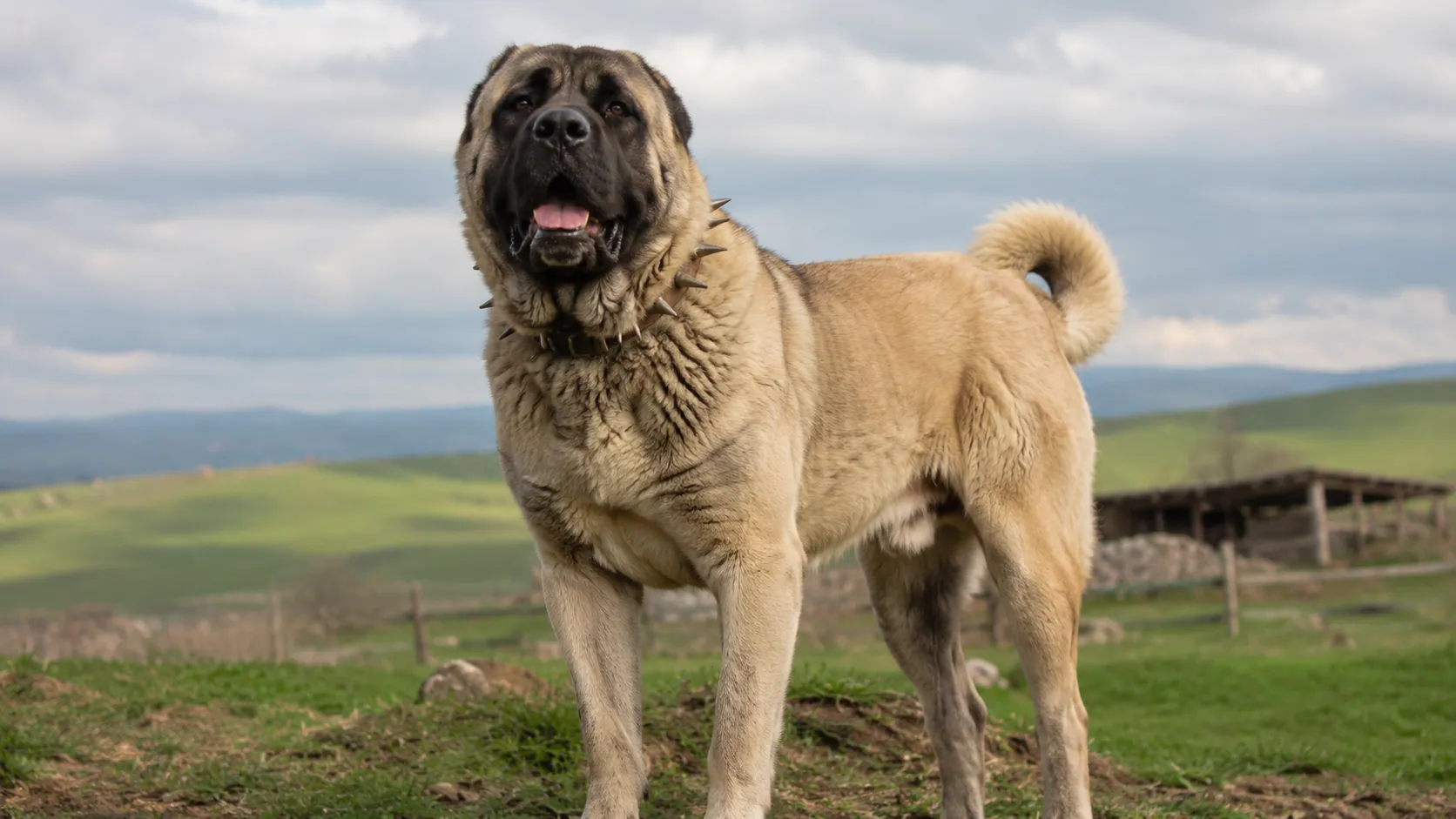
What canine has the strongest bite is a common question, and the best answer depends on whether you mean a domestic dog breed or a wild canine. In most dog breed rankings, the Kangal is widely listed as the domestic dog with the strongest bite force, often cited at around 743 PSI. That makes the Kangal bite force one of the most talked-about measurements in the world of powerful dog breeds.
But the word canine can mean more than just pet dogs. It can also refer to members of the Canidae family, including wolves, coyotes, jackals, foxes, African wild dogs, and other wild canids. That is where the answer becomes more complicated. A gray wolf may have an extremely powerful bite, but wild animal bite force is harder to measure consistently than domestic dog bite force.
So, the simple answer is this: the Kangal is generally considered the domestic dog with the strongest bite force, while wild canine comparisons are less exact because bite force numbers vary by species, testing method, body size, skull shape, and measurement conditions.
Quick Answer: Which Canine Has the Strongest Bite?
If you are asking what dog has the strongest bite force, the answer is usually the Kangal. This large Turkish livestock guardian dog is commonly credited with a bite force of about 743 PSI, which places it above other powerful breeds like the Bandog, Cane Corso, Boerboel, Dogue de Bordeaux, Tosa Inu, English Mastiff, and Rottweiler.
PSI means pounds per square inch, a way of measuring pressure. When people discuss dog bite force PSI, they are usually talking about how much pressure a dog’s jaws can apply in a bite. A higher PSI can mean more potential crushing force, but it does not automatically mean a dog is more aggressive.
If you are asking about wild canine bite force, the gray wolf is usually one of the strongest contenders. Wolves are powerful predators with strong jaws, large teeth, and skull structures designed for hunting, gripping, and tearing. However, comparing Kangal vs wolf bite force is difficult because the numbers often come from different sources, estimates, or testing methods.
The most accurate way to phrase the answer is: the Kangal has the strongest commonly cited bite force among domestic dogs, while the gray wolf is one of the strongest wild canines.
Canine vs Dog: Why the Answer Depends on the Meaning
Many people use the word canine to mean “dog,” but scientifically, it can be broader. A domestic dog is one type of canine, but the Canidae family also includes wolves, coyotes, jackals, foxes, African wild dogs, and other wild canids.
That distinction matters because most online articles about the strongest dog bite force focus only on dog breeds with the strongest bite force. They rank breeds like the Kangal, Cane Corso, Boerboel, Mastiff, Rottweiler, and Pit Bull. Those rankings are useful, but they do not fully answer the broader question: which canine has the strongest bite force?
A better article needs to explain both sides. Among domestic dogs, the Kangal is usually the top answer. Among wild canines, the gray wolf is the most common comparison because it has a strong jaw, powerful neck muscles, and a hunting lifestyle that requires a forceful bite.
Still, domestic dog bite-force rankings and wild animal bite-force estimates are not always measured the same way. That is why this topic should be handled carefully. A number like 743 PSI for a Kangal bite force is useful for comparison, but it should not be treated as a perfect measurement for every Kangal or every bite.
Strongest Dog Bite Force Ranking Chart
The following chart shows commonly cited dog bite force PSI numbers for some of the strongest-biting domestic dog breeds. These figures are widely repeated across dog breed and legal websites, but they should be understood as common estimates, not exact scientific guarantees for every dog.
| Rank | Dog Breed | Commonly Cited Bite Force | Key Trait |
| 1 | Kangal | 743 PSI | Turkish livestock guardian |
| 2 | Bandog / American Bandogge | 730 PSI | Mastiff-type guardian dog |
| 3 | Cane Corso | 700 PSI | Italian mastiff and protector |
| 4 | Boerboel | 660 PSI | South African farm guardian |
| 5 | Dogue de Bordeaux | 556 PSI | French mastiff breed |
| 6 | Tosa Inu | 556 PSI | Japanese mastiff-type dog |
| 7 | English Mastiff | 552 PSI | Large mastiff breed |
| 8 | Dogo Canario / Presa Canario | 540 PSI | Canary Islands guardian breed |
| 9 | Dogo Argentino | 500 PSI | Big-game hunting dog |
| 10 | Rottweiler | 328–330 PSI | Working and protection dog |
This ranking shows why the Kangal 743 PSI claim dominates search results. It is far above popular breeds like the Rottweiler, German Shepherd, American Bulldog, and Pit Bull in most bite-force lists.
The Cane Corso bite force is also frequently searched because the breed is large, muscular, and increasingly popular as a protection dog. The Boerboel bite force is another major topic because Boerboels were bred for farm protection in South Africa. Breeds like the Dogue de Bordeaux, English Mastiff, Tosa Inu, and Presa Canario also appear often because they have large heads, powerful jaws, and strong guarding histories.
However, it is important to remember that bite force depends on the individual dog. Age, body size, skull shape, muscle mass, health, motivation, and testing conditions can all affect how hard a dog bites.
Why the Kangal Has Such a Powerful Bite
The Kangal is usually named as the dog with the strongest bite force because it was bred for serious working purposes. This breed comes from Turkey, where it has traditionally been used as a livestock guardian dog. Its job was to protect sheep, goats, and other livestock from predators.
That kind of work requires courage, strength, alertness, and a strong physical build. The Turkish Kangal has a large head, strong neck, deep chest, and powerful jaw structure. These traits help explain why the Kangal bite force is so often listed at 743 PSI.
But the Kangal’s power should not be misunderstood. A strong bite does not mean the breed is naturally reckless or randomly aggressive. Like many guardian dog breeds, Kangals are often calm, watchful, and loyal when properly trained and managed. Their strength was developed for predator deterrence, not unnecessary aggression.
This is an important distinction because many people confuse jaw strength with temperament. A dog can have a powerful bite and still be steady, controlled, and safe in the right environment. At the same time, powerful breeds require experienced owners, proper training, early socialization, and responsible handling.
The Kangal is not a casual pet for every home. It is a strong working breed with protective instincts, and it needs structure, space, and knowledgeable ownership.
Kangal vs Wolf Bite Force: Domestic Dog vs Wild Canine
One of the biggest questions around this topic is Kangal vs wolf bite force. Many readers want to know: does a Kangal bite harder than a wolf?
The answer is not as simple as comparing two numbers. The Kangal is often listed at 743 PSI, while gray wolf bite force is commonly cited differently depending on the source. Some sources list lower everyday bite estimates, while others describe higher possible bite pressure under intense survival or hunting conditions.
The challenge is that domestic dog bite force and wild canine bite force are not always measured in the same way. A domestic dog may be tested with a bite force transducer or estimated based on breed size and jaw structure. A wild wolf is much harder to test safely and consistently. That means many wolf bite-force figures are estimates rather than controlled, repeatable measurements.
Still, the gray wolf is one of the most powerful wild canines. Wolves have strong jaws, large teeth, and skulls adapted for hunting prey, cracking bones, and surviving in harsh conditions. They are not built like domestic guardian dogs, but they are highly efficient predators.
A fair conclusion is this: the Kangal is the strongest commonly cited domestic dog, while the gray wolf is one of the strongest wild canines. Saying one definitely bites harder than the other is risky unless both are measured under the same scientific conditions.
How Dog Bite Force Is Measured: PSI, Newtons, and Real-World Limits
To understand dog bite force, you first need to understand the measurement terms. PSI, or pounds per square inch, measures pressure. When someone says a dog has a bite force of 743 PSI, they mean the bite can apply that much pressure over one square inch.
Scientific studies may also use Newtons, which measure force rather than pressure. Some researchers use a bite force transducer or force transducer, a device that records how much force an animal applies when biting. Other models may use skull measurements, jaw mechanics, or Finite Element Analysis to estimate bite performance.
The problem is that bite force is not fixed. A dog does not bite with the exact same power every time. The result can change based on:
- Jaw size
- Skull shape
- Muscle mass
- Masticatory muscles
- Bite angle
- Bite location
- Motivation
- Testing conditions
- Age and health of the dog
This is why dog bite force numbers vary online. One article may list a Pit Bull bite force as 235 PSI, while another may cite 310 PSI. One source may list a Rottweiler bite force as 328 PSI, while another rounds it to 330 PSI. These differences do not always mean one source is intentionally wrong. They often reflect different estimates, repeated figures, or measurement assumptions.
A useful way to think about bite force is this: PSI numbers are comparison tools, not perfect guarantees. They can help rank powerful dog breeds, but they should not be used as the only measure of danger, behavior, or breed suitability.
Does Strong Bite Force Make a Dog Dangerous?
A strong bite can make a dog bite injury more serious, but bite force does not equal aggression. This is one of the most important points in the entire article.
A dog with a powerful bite may cause more damage if it bites, but whether a dog is dangerous depends on many other factors. Temperament, training, socialization, environment, owner responsibility, and management all matter. A well-trained large dog may be safer than a poorly managed smaller dog.
For example, Kangals, Cane Corsos, Boerboels, Rottweilers, and Mastiff-type dogs are powerful breeds, but many can be loyal and stable with experienced owners. Problems often happen when strong dogs are poorly bred, under-socialized, mishandled, chained, neglected, encouraged to act aggressively, or placed in homes that do not understand their needs.
It is also unfair to assume that a breed is automatically dangerous because of its bite force. Pit Bulls, for example, are often discussed in dog bite searches, but they usually do not rank at the top of strongest dog bite force lists. The public conversation around them often mixes bite statistics, media coverage, breed identification issues, and owner behavior.
The better approach is balanced: respect the power of strong-bite dogs, but do not judge them by PSI alone. Responsible ownership is the real deciding factor.
Bite Force Myths: Pit Bulls, Wolves, and Internet PSI Claims
There are many myths about dog bite force PSI, especially online. Some are based on repeated claims, while others come from misunderstandings about breed behavior.
One common myth is that Pit Bulls have the strongest bite. In most published breed rankings, this is not true. The Pit Bull bite force is usually listed below the Kangal, Bandog, Cane Corso, Boerboel, Mastiff, and Rottweiler. Pit bull-type dogs may be strong and athletic, but they are not usually ranked as the highest PSI breed.
Another myth is that every Kangal bites at exactly 743 PSI. That number is widely cited, but individual dogs vary. A young, old, injured, smaller, or less motivated dog may not bite with the same force as a large, healthy adult under peak conditions.
A third myth is that higher PSI means higher aggression. This is false. Bite force measures pressure, not personality. Aggression is shaped by genetics, environment, training, health, fear, stress, and human handling.
A fourth myth is that wolf bite force and dog bite force can always be compared directly. In reality, wild animals and domestic breeds are rarely tested under identical conditions. That makes direct comparisons interesting, but not always scientifically clean.
The smartest way to read bite-force rankings is to treat them as estimated comparisons, not absolute truths.
Common Injuries From High-Force Dog Bites
Understanding dog bite force matters because high-force bites can cause serious injuries. A bite from a powerful breed may create deep pressure, tearing, or crushing damage, especially if the dog bites and holds, shakes its head, or bites a vulnerable area like the face, neck, or hands.
Common injuries from high-force dog bites may include puncture wounds, lacerations, tissue damage, broken bones, fractures, nerve damage, tendon damage, infection, permanent scarring, and disfigurement. In severe cases, victims may need emergency medical treatment, reconstructive surgery, or long-term care.
A serious dog bite should not be ignored. Even if the wound looks small, bacteria from dog saliva can increase infection risk. It is important to clean the wound, seek medical care when needed, confirm the dog’s rabies vaccination status, and report serious incidents to local animal control according to local rules.
This section is not meant to make strong dogs sound frightening. It simply explains why responsible ownership, safe handling, and bite prevention matter so much when dealing with large, powerful breeds.
Safety Tips Around Powerful Dog Breeds
Powerful dog breeds can be wonderful companions, but they need responsible handling. If someone owns or interacts with a strong-bite dog like a Kangal, Cane Corso, Boerboel, Rottweiler, Mastiff, or Dogo Argentino, safety should be built into daily life.
The most important safety foundation is early socialization. Dogs should learn how to behave around people, children, other pets, visitors, and new environments. Obedience training also matters because a powerful dog must be controllable in public and at home.
Owners should use secure fencing, follow leash laws, avoid encouraging aggressive behavior, and supervise interactions with unfamiliar people or animals. Families with children should teach kids not to tease, climb on, corner, or disturb dogs while they are eating or sleeping.
For some powerful breeds, muzzle training can also be useful. A muzzle should not be used as punishment. When introduced properly, it can be a safety tool for vet visits, crowded places, or stressful situations.
The main rule is simple: the stronger the dog, the more responsible the owner must be.
Are Strong-Bite Dogs Good Family Pets?
Some strong-bite dogs can be good family pets, but they are not the right fit for everyone. Breeds like the Kangal, Cane Corso, Boerboel, Rottweiler, and Mastiff often need confident owners, space, training, and consistent structure.
A powerful dog may be loving with family members but cautious around strangers. That trait can be useful in a working guardian dog, but challenging in a busy neighborhood or small apartment. Before choosing one of these breeds, owners should think about lifestyle, local laws, insurance rules, children, other pets, exercise needs, and training experience.
A strong dog with poor boundaries can become difficult to manage. A strong dog with clear rules, socialization, and calm leadership can be steady and reliable.
So, are strong-bite dogs good family pets? Sometimes, yes — but only in the right home. PSI should never be the only reason someone chooses a dog. Temperament, health, breed purpose, owner skill, and daily management matter much more.
Final Answer: So, What Canine Has the Strongest Bite?
The final answer is: the Kangal is generally considered the domestic dog with the strongest bite, with a commonly cited Kangal bite force of 743 PSI. If the question is what dog has the strongest bite force, the Kangal is the best-known answer.
If the question means all canines, including wild members of the Canidae family, the answer is less certain. The gray wolf is one of the strongest wild canines and deserves comparison, but wild canine bite-force numbers are not always measured in the same way as domestic dog breed rankings.
The most accurate conclusion is this: the Kangal has the strongest commonly cited bite force among domestic dogs, while wolf and wild canine comparisons require more caution. And no matter the breed or species, bite force should always be understood alongside training, temperament, socialization, and responsible ownership.
FAQs About the Strongest Canine Bite
What dog has the strongest bite force?
The Kangal is commonly listed as the dog with the strongest bite force, often cited at around 743 PSI. It is a large Turkish livestock guardian dog bred to protect animals from predators.
What canine has the strongest bite overall?
Among domestic dogs, the answer is usually the Kangal. Among wild canines, the gray wolf is one of the strongest contenders, but direct comparisons are difficult because wild animal bite force is harder to measure consistently.
Does a Kangal bite harder than a wolf?
Many dog breed rankings list the Kangal bite force at 743 PSI, which is higher than some commonly cited wolf bite estimates. However, Kangal vs wolf bite force comparisons are not always reliable because domestic dogs and wild wolves are often measured or estimated differently.
Do Pit Bulls have the strongest bite?
No. Pit Bulls are often discussed in dog bite topics, but they are usually not listed as the dog with the strongest bite force. Most rankings place the Kangal, Bandog, Cane Corso, Boerboel, and Mastiff-type dogs above the Pit Bull bite force.
What does PSI mean in dog bite force?
PSI means pounds per square inch. It measures pressure. In dog bite discussions, dog bite force PSI describes how much pressure a dog’s jaws may apply during a bite.
Does bite force make a dog dangerous?
Not by itself. Bite force does not equal aggression. A strong bite can make injuries more severe, but a dog’s danger level depends on temperament, training, socialization, environment, and owner responsibility.
Which breeds have the strongest dog bite force?
The breeds most often listed among the strongest include the Kangal, Bandog, Cane Corso, Boerboel, Dogue de Bordeaux, Tosa Inu, English Mastiff, Presa Canario, Dogo Argentino, and Rottweiler.
Why do dog bite force numbers vary online?
Dog bite force numbers vary because of testing methods, dog size, skull shape, jaw muscles, bite angle, motivation, and whether the number is measured or estimated. That is why PSI rankings should be used as helpful comparisons, not perfect scientific facts.
Disclaimer: This article is for general informational and educational purposes only and does not constitute veterinary, animal behavior, dog-training, legal, or safety advice. Bite-force estimates can vary by source, testing method, breed standards, and individual animals. Always prioritize responsible ownership, proper training, socialization, and safe interactions around all dogs regardless of breed or reported bite force.
 admre88mb