

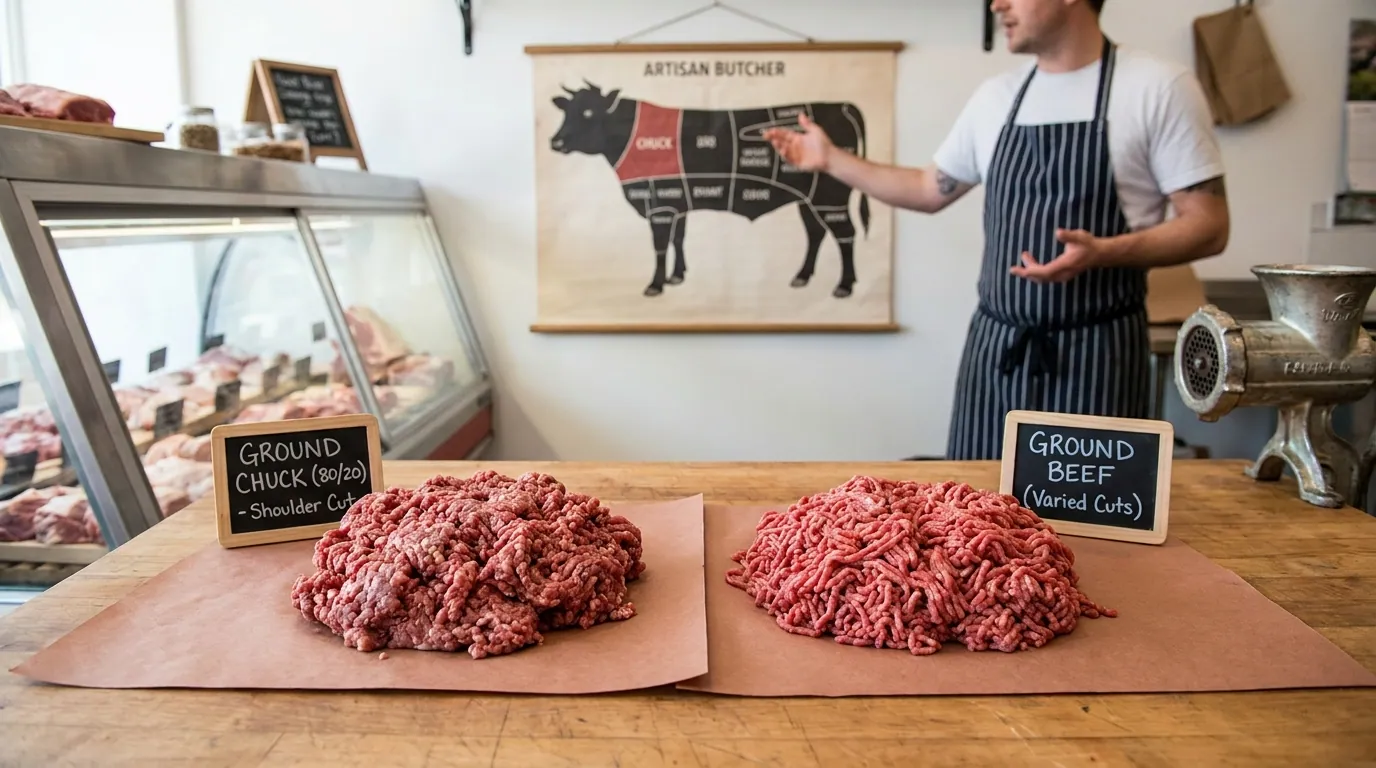
Not exactly. Ground chuck is a type of ground beef, but it is more specific because it usually comes from the chuck primal cut, which is around the shoulder and neck area of the cow. Regular ground beef, on the other hand, can come from different beef cuts or beef trimmings, depending on the package, butcher, or grocery store label.
That difference matters when you are cooking. Ground chuck vs ground beef is not just a label comparison; it affects fat content, flavor, juiciness, texture, price, and the way the meat behaves in recipes. If you are making burgers, meatloaf, or meatballs, ground chuck may be the better choice. If you are making tacos, chili, pasta sauce, or meal prep bowls, leaner ground beef may work better.
This guide explains the difference between ground chuck and ground beef in simple terms, including fat ratios like 80/20, 85/15, 90/10, and 93/7, so you can choose the right meat with confidence.
Quick Answer: Is Ground Chuck the Same as Ground Beef?
No, ground chuck is not exactly the same as ground beef. The simplest way to understand it is this: all ground chuck is ground beef, but not all ground beef is ground chuck.
Ground chuck usually comes from the chuck section of the cow, which is near the shoulder and neck. This cut naturally has a good balance of meat and fat, so it is often sold around an 80/20 lean-to-fat ratio, meaning 80% lean meat and 20% fat.
Ground beef is a broader category. It may come from different cuts, trimmings, or a blend of beef sources. It can be sold as regular ground beef, lean ground beef, or extra-lean ground beef, with fat ratios such as 70/30, 80/20, 85/15, 90/10, or 93/7.
So, when someone asks, “is ground chuck the same as regular ground beef?”, the accurate answer is: they are related, but they are not identical. Ground chuck tells you more about the source cut, while ground beef is a general label that may tell you less unless the package includes a lean-to-fat ratio or specific cut name.
What Is Ground Chuck?
Ground chuck is ground beef made from the chuck roast or chuck primal area of the cow. This area includes muscles around the shoulder and neck, which are flavorful and naturally suited for grinding.
Ground chuck is popular because it offers a useful balance of fat content, flavor, and cohesion. In everyday cooking, that means it usually tastes rich, stays juicy, and holds together well when shaped into burger patties, meatballs, or meatloaf.
Many shoppers associate ground chuck with 80/20 ground beef, although this is not always guaranteed. An 80/20 ratio means the meat is 80% lean and 20% fat. That amount of fat is often enough to keep burgers moist without making them overly greasy.
Ground chuck is especially useful for recipes where the meat is the main focus. For example, in a burger, the beef itself needs to provide flavor, moisture, and structure. Ground chuck does that well because it has enough marbling and fat to stay tender during cooking.
In short, if you are wondering what part of the cow ground chuck is from, it usually comes from the chuck area near the shoulder and neck. If you want beef that is flavorful, juicy, and good for shaping, ground chuck is one of the most reliable choices.
What Is Ground Beef?
Ground beef is beef that has been ground into small pieces, but the label does not always tell you which specific cut it came from. It may include meat from several parts of the cow, including trimmings from larger cuts.
That is why regular ground beef can vary so much. One package may be rich and fatty, while another may be much leaner. The most important detail on a ground beef package is often the lean-to-fat ratio.
Common ground beef ratios include:
| Ground Beef Ratio | Meaning | Common Use |
| 70/30 | 70% lean, 30% fat | Very juicy but greasy; sometimes used for burgers |
| 80/20 | 80% lean, 20% fat | Burgers, meatloaf, meatballs |
| 85/15 | 85% lean, 15% fat | Tacos, chili, casseroles |
| 90/10 | 90% lean, 10% fat | Meal prep, sauces, leaner meals |
| 93/7 | 93% lean, 7% fat | Extra-lean meals and lower-fat recipes |
USDA food-safety guidance says ground meats should be cooked to 160°F for safety. USDA FSIS also advises keeping refrigerated ground beef at 40°F or below and using it within 1 or 2 days.
So, while ground chuck is a specific kind of ground beef, ground beef itself is a wider category. To know what you are buying, always check the package for the cut name, lean percentage, and fat percentage.
Ground Chuck vs Ground Beef: Side-by-Side Comparison
| Feature | Ground Chuck | Ground Beef |
| Source | Usually from the chuck primal cut | May come from different cuts or trimmings |
| Common fat ratio | Often 80/20 | Can be 70/30, 80/20, 85/15, 90/10, or 93/7 |
| Flavor | Rich, beefy, juicy | Varies by cut and fat content |
| Texture | Holds together well | Can be loose, lean, or fatty depending on blend |
| Best for | Burgers, meatloaf, meatballs | Tacos, chili, sauces, casseroles, meal prep |
| Price | Often slightly higher | Varies by fat ratio and quality |
| Health factor | Depends on fat content | Depends on fat content |
| Shopping clue | May say “ground chuck” on label | May only say “ground beef” with a lean ratio |
The biggest takeaway is that ground chuck vs ground beef is mostly about specificity. Ground chuck tells you the beef likely came from the chuck area. Ground beef is more general and needs a closer look at the label.
The Biggest Differences Between Ground Chuck and Ground Beef
The main difference between ground chuck and ground beef comes down to source, fat content, flavor, texture, and best use.
Source Cut
Ground chuck usually comes from the chuck roast or chuck primal cut. Regular ground beef may come from a mix of cuts or meat trimmings. This is why ground chuck often feels more consistent, while generic ground beef can vary more from one store or brand to another.
Fat Content
Ground chuck is commonly associated with 80/20, which means 20% fat. Regular ground beef may be leaner or fattier. A 70/30 package will have more fat and grease, while 90/10 or 93/7 ground beef will be much leaner.
Fat matters because it affects moisture, shrinkage, and taste. Higher-fat beef usually tastes juicier but may shrink more as the fat renders. Leaner beef can be healthier for some diets, but it may turn dry if overcooked.
Flavor
Ground chuck often has a richer beefier flavor because of its fat level and source cut. Regular ground beef can also taste great, but the flavor depends on the blend and fat ratio.
Texture and Cohesion
Ground chuck usually has better cohesion, which means it can hold together well. That makes it ideal for burger patties, meatballs, and meatloaf. Lean ground beef can crumble more easily and may need binders or extra moisture.
Price
Ground chuck may cost more than regular ground beef because it comes from a named cut. However, price also depends on the store, region, whether it is grass-fed, and the lean-to-fat ratio.
Does 80/20 Mean Ground Chuck?
No, 80/20 does not always mean ground chuck. This is one of the biggest points of label confusion for shoppers.
80/20 simply means the package contains 80% lean meat and 20% fat. It describes the fat ratio, not always the exact source cut. Ground chuck is often sold as 80/20, but a package labeled 80/20 ground beef is not automatically pure chuck.
This matters because shoppers sometimes assume 80/20 ground beef is the same as ground chuck. It may cook similarly, especially in burgers, but the label must specifically say “ground chuck” if you want beef from the chuck area.
When reading a package, look for two things:
- The cut name — ground chuck, ground round, ground sirloin, or ground beef
- The lean-to-fat ratio — 80/20, 85/15, 90/10, or 93/7
For example, 80/20 ground chuck is a great burger choice. But 80/20 ground beef may also work well for burgers, even if it is not labeled as chuck. The cooking result may be similar because the fat percentage is similar, but the source cut may not be the same.
Which Tastes Better: Ground Chuck or Ground Beef?
For many recipes, ground chuck tastes better because it has enough fat to stay juicy and flavorful. It often has a richer, beefier taste than very lean ground beef.
However, taste depends on the recipe. If you are making burgers, ground chuck usually shines because the meat is the main ingredient. The fat helps create a juicy texture and a satisfying bite. If you are making chili, spaghetti sauce, or tacos, the seasonings and sauce may matter more than the specific cut.
Leaner ground beef, such as 90/10 or 93/7, can taste mild or dry if cooked too long. But it can be a smart choice for meals where you want less grease or a lighter texture.
The best choice depends on what you want:
| Cooking Goal | Better Choice |
| Juicy, rich flavor | Ground chuck or 80/20 ground beef |
| Less grease | 85/15, 90/10, or 93/7 ground beef |
| Best burger texture | Ground chuck |
| Lean meal prep | 90/10 or 93/7 ground beef |
So, does ground chuck taste better? Often, yes, especially for burgers and shaped meat recipes. But leaner ground beef can be better when you want less fat or when the meat is mixed into sauce.
Which One Is Better for Burgers?
For burgers, ground chuck is usually better than generic ground beef because it has a strong balance of flavor, juiciness, and patty structure.
A classic burger needs fat. If the beef is too lean, the patty can become dry, dense, and crumbly. That is why many cooks prefer 80/20 ground chuck for burgers. The 20% fat content helps the burger stay moist while cooking.
Ground chuck also tends to hold together well, which is important for grilling, pan-searing, and making smash burgers. A patty that falls apart or dries out can ruin the meal, even if the seasoning is good.
That said, you can still use regular ground beef for burgers if you choose the right fat ratio. If the package says 80/20 ground beef, it can make a good burger even if it is not labeled ground chuck. If it says 90/10 or 93/7, it may be better for tacos, sauces, or meal prep than for juicy burgers.
A simple rule is this: for burgers, choose ground chuck or 80/20 ground beef. For lean meals, choose a leaner ratio.
Best Uses for Ground Chuck vs Ground Beef by Recipe
Choosing between ground chuck and ground beef becomes easier when you match the meat to the recipe.
| Recipe | Better Choice | Why |
| Burgers | Ground chuck or 80/20 beef | Juicy, flavorful, holds shape |
| Smash burgers | Ground chuck | Good fat content for crispy edges |
| Meatloaf | Ground chuck or 80/20 beef | Stays moist and cohesive |
| Meatballs | Ground chuck | Holds together well |
| Tacos | 85/15 or 90/10 ground beef | Less grease, seasoning carries flavor |
| Chili | Lean or regular ground beef | Sauce adds moisture |
| Spaghetti sauce | 85/15 or 90/10 ground beef | Reduces excess grease |
| Casseroles | Lean ground beef | Balanced flavor and texture |
| Meal prep | 90/10 or 93/7 ground beef | Lower fat and easier portion control |
For recipes where the beef must hold a shape, such as burgers, meatloaf, and meatballs, ground chuck is usually a strong choice. Its fat content and texture help the meat stay tender instead of dry.
For recipes where beef is mixed with sauce, spices, beans, pasta, or vegetables, regular lean ground beef may be better. In tacos, chili, and spaghetti sauce, you often do not need as much fat because the recipe already has moisture and flavor from other ingredients.
A good practical approach is to use 80/20 ground chuck for burgers and meatloaf, 85/15 for everyday dinners, and 90/10 or 93/7 for lighter meals.
Can You Substitute Ground Beef for Ground Chuck?
Yes, you can usually substitute ground beef for ground chuck, but try to match the fat ratio.
If a recipe calls for ground chuck and you only have regular ground beef, check the package. If it says 80/20, it should work well in burgers, meatloaf, and meatballs. If it says 90/10 or 93/7, the result may be drier, especially in patties.
For burgers, replacing ground chuck with very lean ground beef can lead to dry patties. To fix that, avoid overcooking, handle the meat gently, and consider adding moisture through ingredients like finely minced onion, Worcestershire sauce, or a small amount of oil.
For tacos, chili, and pasta sauce, substitution is even easier. Lean ground beef works well because the seasonings and sauce provide plenty of flavor.
The best rule is: match the meat to the recipe, not just the name on the label. If you need juiciness and shape, use ground chuck or 80/20 beef. If you need less grease, use lean ground beef.
Is Ground Chuck Healthier Than Ground Beef?
Ground chuck is not automatically healthier than ground beef. Health depends mostly on the lean-to-fat ratio, not just the name.
For example, 80/20 ground chuck has more fat than 90/10 ground beef. That means it may also have more calories and saturated fat. On the other hand, it may taste juicier and work better in burgers.
Beef also provides important nutrients, including protein, iron, zinc, selenium, and vitamin B12. So the question is not whether ground chuck is “good” or “bad.” The better question is: which fat ratio fits your meal and health goals?
If you want a juicy burger, 80/20 ground chuck is a good choice. If you want a calorie-conscious meal, 90/10 or 93/7 extra-lean ground beef may be better. If you want balance for everyday cooking, 85/15 ground beef is often a practical middle ground.
You can also reduce grease by draining cooked ground beef after browning. This is useful for tacos, chili, and sauces where excess fat can make the dish feel heavy.
How to Read Ground Beef Labels at the Grocery Store
The meat section can be confusing because packages may say ground beef, ground chuck, ground round, ground sirloin, lean ground beef, or extra-lean ground beef.
Here is how to read the label:
First, look for the cut name. If it says ground chuck, it likely comes from the chuck area. If it says ground round, it likely comes from the round. If it says ground sirloin, it comes from the sirloin area. If it only says ground beef, it may come from a blend of cuts or trimmings.
Next, look at the lean-to-fat ratio. An 80/20 package is fattier and better for burgers. A 90/10 package is leaner and better for sauces, tacos, and meal prep. A 93/7 package is extra lean, but it can become dry if overcooked.
USDA FSIS lists ground meats at a safe minimum internal temperature of 160°F, and USDA food-safety guidance says refrigerated ground beef should be kept at 40°F or below and used within 1 or 2 days.
One more important labeling point: ground beef and hamburger have specific rules. Ground beef should not be treated as the same thing as every “hamburger meat” product, so it is smart to read the full label instead of buying only by habit.
Ground Chuck vs Ground Round vs Ground Sirloin
To fully understand ground chuck vs ground beef, it helps to compare ground chuck with other named ground beef types.
Ground chuck usually has more fat and flavor. It is excellent for burgers, meatloaf, and meatballs.
Ground round is usually leaner than chuck. It often works well in chili, soups, casseroles, and sauces where extra moisture comes from other ingredients.
Ground sirloin is often leaner and may cost more. It can be a good option for people who want a beefy flavor with less fat, but it may not be as juicy in burgers.
| Type | Common Character | Best Use |
| Ground chuck | Rich, juicy, often 80/20 | Burgers, meatloaf, meatballs |
| Ground round | Leaner, mild | Chili, soups, sauces |
| Ground sirloin | Lean, beefy, often pricier | Lean meals, meal prep |
| Regular ground beef | Varies widely | Depends on fat ratio |
The key is not to assume one is always better. The best choice depends on your recipe, budget, and preferred fat content.
Why Ground Chuck May Cost More Than Ground Beef
Ground chuck may cost more than regular ground beef because it comes from a named cut. Generic ground beef may be made from a wider mix of trimmings, which can make it more flexible and sometimes less expensive.
Price also depends on other factors, such as whether the beef is grass-fed, organic, butcher-ground, store-ground, or sold in bulk. A package from a butcher counter may cost more than a pre-ground chub from a grocery store, even if the fat ratio looks similar.
So, is ground chuck worth paying extra for? For burgers, meatloaf, and meatballs, often yes. The texture, flavor, and moisture can make a noticeable difference. For tacos, chili, or casseroles, regular ground beef may be a better value because spices and sauces do much of the flavor work.
Common Mistakes When Choosing Ground Chuck or Ground Beef
One common mistake is choosing the leanest ground beef for burgers. A 93/7 burger patty may sound healthier, but it can easily become dry and crumbly. For burgers, a little fat helps.
Another mistake is choosing very fatty beef for spaghetti sauce or tacos, then wondering why the dish feels greasy. For saucy dishes, 85/15 or 90/10 often gives better balance.
Shoppers also sometimes assume all 80/20 beef is ground chuck. It is not. The ratio tells you fat content, not necessarily the source cut.
A fourth mistake is ignoring the label entirely. The words ground chuck, ground round, ground sirloin, and ground beef all tell you something, but the lean percentage is just as important.
Finally, many people overcook ground beef. Overcooking drives out moisture, especially in lean beef. For better results, cook only until done, season properly, and avoid pressing burger patties too hard while they cook.
Food Safety Tips for Ground Chuck and Ground Beef
Food safety matters whether you are cooking ground chuck, regular ground beef, or hamburger patties. Because ground meat has more surface area than a whole steak, it should be cooked thoroughly.
USDA FSIS recommends cooking ground meats to 160°F. Use a food thermometer instead of judging doneness by color alone.
For storage, USDA guidance says refrigerated ground beef should be kept at 40°F or below and used within 1 or 2 days. For longer storage, freeze it properly.
You can freeze both ground chuck and ground beef. For best quality, wrap it tightly to prevent freezer burn. Thaw it safely in the refrigerator, in cold water, or in the microwave if you plan to cook it right away.
Do not use ground beef that smells sour, feels slimy, or looks questionable. When in doubt, throw it out.
Regional Note: Ground Beef, Beef Mince, and Minced Beef
In the United States and Canada, the term ground beef is common. In the United Kingdom, Australia, and some other regions, people often say beef mince or minced beef.
The term ground chuck may not appear on labels everywhere. In some places, packages focus more on fat percentage than the source cut. If you are outside the U.S., compare the fat ratio, source information, and intended recipe use instead of relying only on the word “chuck.”
So, if you see beef mince vs ground beef or minced beef vs ground beef, they are usually referring to the same general category of ground or minced beef.
So, Which One Should You Buy?
Choose ground chuck if you are making burgers, meatloaf, meatballs, or any recipe where the beef needs to stay juicy and hold its shape. It is especially useful when you want rich flavor and a satisfying texture.
Choose 80/20 ground beef if you want a similar result but the package does not say ground chuck. It may not be from the chuck area, but the fat ratio can still work well for burgers and patties.
Choose 85/15 ground beef for a balanced everyday option. It works well in tacos, chili, casseroles, and pasta sauces without being too greasy.
Choose 90/10 or 93/7 ground beef if you want a leaner option for meal prep, lower-fat meals, or recipes where sauce adds moisture.
The best buying advice is simple: read both the cut name and the lean-to-fat ratio. Do not choose only by price, and do not assume leaner always means better.
FAQs About Ground Chuck and Ground Beef
Is ground chuck the same as ground beef?
No. Ground chuck is a type of ground beef, but it is not the same as generic ground beef. Ground chuck usually comes from the chuck area, while ground beef may come from different cuts or trimmings.
Is ground chuck always 80/20?
Not always, but ground chuck is commonly sold around 80/20. Always check the package label to confirm the lean-to-fat ratio.
Is ground chuck better than ground beef?
It depends on the recipe. Ground chuck is often better for burgers, meatloaf, and meatballs. Leaner ground beef may be better for tacos, chili, sauces, and meal prep.
Can I use ground beef instead of ground chuck for burgers?
Yes, but choose 80/20 ground beef if possible. Very lean ground beef can make burgers dry.
Is ground chuck good for tacos?
Yes, ground chuck can be used for tacos, but it may produce more grease than lean ground beef. If you want less grease, choose 85/15 or 90/10 ground beef.
Is ground chuck healthier than regular ground beef?
Not automatically. A leaner ground beef, such as 90/10 or 93/7, usually has less fat than 80/20 ground chuck. Health depends mainly on the fat ratio.
What is the best ground beef for meatloaf?
Ground chuck or 80/20 ground beef works well for meatloaf because it stays moist and holds together better.
What is the difference between ground chuck, ground round, and ground sirloin?
Ground chuck usually has more fat and flavor. Ground round is often leaner. Ground sirloin is usually lean and beefy, but it can be more expensive and less juicy.
What temperature should ground beef be cooked to?
Ground beef and other ground meats should be cooked to 160°F for safety, according to USDA FSIS.
Conclusion
So, is ground chuck the same as ground beef? No, but they are closely related. Ground chuck is a specific type of ground beef that usually comes from the chuck area near the shoulder and neck. Regular ground beef is a broader category that may come from different beef cuts or trimmings.
For burgers, meatloaf, and meatballs, ground chuck or 80/20 ground beef is usually the best choice because it offers flavor, juiciness, and structure. For tacos, chili, spaghetti sauce, casseroles, and meal prep, leaner ground beef such as 85/15, 90/10, or 93/7 may be a better fit.
The smartest move is to read the label, compare the lean-to-fat ratio, and choose based on your recipe.
Disclaimer: This article is for general informational and educational purposes only. Ground chuck, ground beef, fat ratios, and labeling practices may vary by butcher, grocery store, region, or manufacturer. Nutritional content, flavor, and cooking performance depend on the specific cut and fat percentage, so always read package labels and follow proper food-safety and cooking guidelines.