

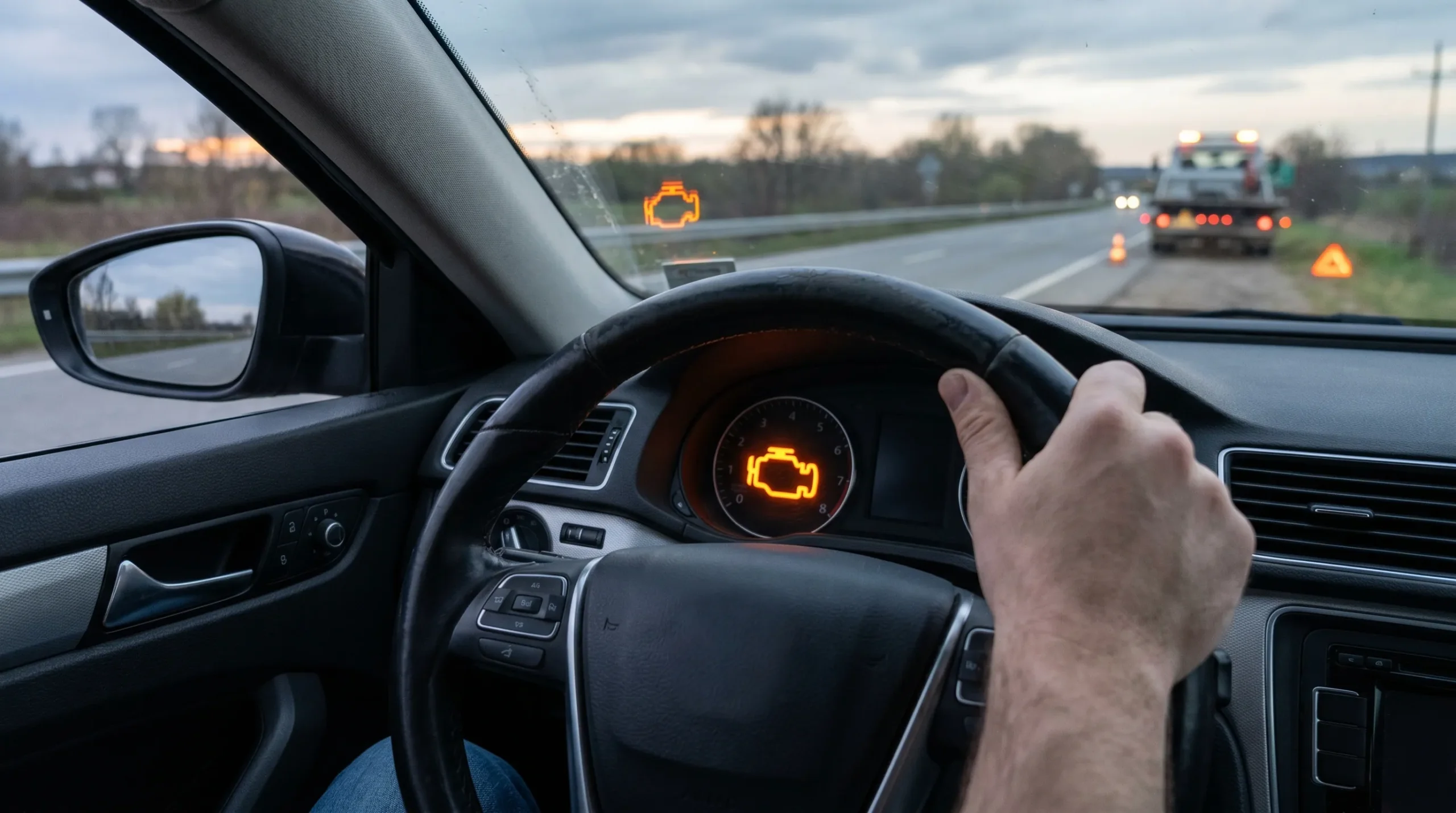
What does the flashing engine light mean? In most cases, it means your car has a serious engine problem, often an active engine misfire, and you should treat it as an urgent warning rather than a minor inconvenience.
A lot of drivers see a flashing check engine light and hope it is something small, like a loose gas cap or a temporary sensor glitch. But a blinking check engine light is very different from a steady check engine light or solid check engine light. When the light is flashing, your car is usually telling you that something is wrong right now, not later. In many cases, unburned fuel can move into the exhaust system, overheat the catalytic converter, and lead to costly repairs if you keep driving.
That is why this warning creates so much panic. People want to know: Is it safe to drive with a flashing check engine light? Can I drive with a flashing check engine light for one mile, two miles, or just to the nearest shop? What causes a flashing check engine light? Those are the right questions to ask, and this guide will walk through each one in plain English.
Whether your car is showing loss of power, rough running, stuttering engine symptoms, car shaking, or even a strange smell like rotten eggs, the goal is the same: understand the warning, reduce the risk of damage, and make the right next move.
Flashing vs. Steady Check Engine Light: What Is the Difference?
Many drivers assume a check engine light is a check engine light, but the difference between a flashing one and a steady one matters a lot.
A steady check engine light often points to a fault that still needs attention, but it is usually less urgent. It could be something in the emissions system, a sensor issue, or another problem that is not causing immediate damage. You should still have it checked, but it does not always mean you need to stop the car at once.
A flashing check engine light, on the other hand, is more like a critical warning. It often signals a major malfunction involving combustion, fuel delivery, or ignition. In simple terms, your engine may not be burning the fuel-air mixture correctly. That creates an active misfire, which can dump raw fuel into the exhaust and put intense heat stress on the catalytic converter.
So if you have ever searched the difference between flashing and solid check engine light, here is the short version:
- Steady light: problem needs diagnosis soon
- Flashing light: problem needs attention now
That is why drivers should not treat a flashing engine light like a standard dashboard reminder. It is closer to a serious issue warning than a routine maintenance message.
Why the Light Flashes: The Most Common Causes
The most common answer to what causes a flashing check engine light is engine misfire. A misfire happens when one or more cylinders do not fire correctly during combustion. Instead of producing smooth power, the engine starts running unevenly. That can trigger rough running, hesitation, and reduced engine performance.
One of the biggest causes is worn or failing spark plugs. If a spark plug cannot ignite the air-fuel mixture properly, the cylinder may misfire. A damaged spark plug boot, weak ignition coils, or bad coil packs can do the same thing. This is why the phrase bad coil or spark plug causing flashing check engine light comes up so often.
Another common cause is a fuel injector problem. If an injector is clogged, leaking, or not spraying fuel correctly, the mixture inside the cylinder can become too rich or too lean. A rich fuel mixture means too much fuel. A lean fuel mixture means too little. Either condition can create poor combustion and eventually set off the malfunction indicator lamp or MIL.
Air-related problems also matter. A bad mass airflow sensor, a faulty oxygen sensor, or even certain vacuum leak symptoms can upset the mixture enough to cause misfire conditions. In some vehicles, faults involving the crankshaft position sensor, engine temperature sensor, or other vehicle speed sensors can also confuse the engine control module or the vehicle’s onboard computer.
Then there is the catalytic converter itself. Sometimes drivers assume converter failure only happens after years of neglect, but a converter can be damaged surprisingly fast when unburned fuel enters the exhaust. If the converter is already weak, the problem becomes even worse. That is one reason the search phrase flashing check engine light can destroy catalytic converter is so relevant.
Mechanical problems are less common, but they do happen. A worn timing chain, damaged timing belt, valve issue, or cylinder head problem can also lead to misfire conditions. That is why diagnose the underlying issue is more important than guessing.
In short, the most likely causes include:
| Possible Cause | How It Can Trigger a Flashing Light | Risk Level |
| Bad spark plugs | Weak or incomplete combustion | High |
| Faulty ignition coils / coil packs | Cylinder misfire | High |
| Fuel injector problems | Too much or too little fuel | High |
| Oxygen sensor / mass airflow sensor faults | Incorrect air-fuel readings | Moderate to High |
| Vacuum leaks | Lean mixture and hesitation | Moderate to High |
| Catalytic converter trouble | Heat buildup and exhaust restriction | High |
| Timing or internal engine issues | Severe combustion disruption | Very High |
What Symptoms Often Come With a Flashing Engine Light?
A flashing check engine light rarely appears alone. Most of the time, your car will also feel or sound different.
You may notice car shaking, especially at idle or during acceleration. You may feel loss of power, poor throttle response, or engine hesitation when trying to merge into traffic. Some vehicles develop a rough idle, while others begin stuttering under load. A few may even sound louder than normal, with knocks from the engine or a faint ticking sound.
Sometimes drivers report that the engine light flashing but car seems normal. That can happen briefly, especially if the misfire is intermittent, but it does not make the issue safe. A small problem can become a much bigger one quickly.
Another clue is smell. If you notice an odor similar to rotten eggs, the catalytic converter may be overheating or struggling with excess fuel. That smell should never be ignored.
Here is a quick symptom-to-cause guide:
| Symptom | What It May Point To | Best Next Step |
| Car shaking / rough idle | Engine misfire, plug or coil issue | Pull over safely and stop |
| Loss of power | Misfire, fuel issue, converter trouble | Avoid hard acceleration |
| Stuttering engine | Ignition or fuel delivery problem | Get a code scan |
| Sulfur / rotten egg smell | Overheating catalytic converter | Shut engine off soon |
| Ticking or knocking | Internal engine stress or severe misfire | Arrange inspection immediately |
This is why search phrases like flashing check engine light and car shaking, check engine light flashing rough idle, and flashing check engine light and loss of power make so much sense. Drivers are not just asking what the light means. They are asking what the combination of the light and symptoms means.
Is It Safe to Drive With a Flashing Engine Light?
For most drivers, the practical answer is no.
If you are wondering is it safe to drive with a flashing check engine light, the safest advice is to pull over safely, reduce engine load, and avoid continuing the trip unless you absolutely must move the vehicle to reach a safe location. A flashing check engine light requires immediate expert attention, especially if the car is shaking, struggling to accelerate, or making unusual noises.
People often ask about distance. They search things like can I drive with a flashing check engine light, safe distance to drive with a flashing check engine light, or whether one short trip is okay. The reality is that there is no guaranteed safe mileage. One driver might go 1 mile, 1.2 miles, or even 2 miles without catastrophic damage. Another might destroy the converter much faster. That uncertainty is exactly why a tow truck or roadside assistance is often the smarter choice.
A useful rule is this: if the light is flashing and the engine is running badly, act as though the vehicle should not be driven. If it is flashing with loss of power, rough running, or strong vibration, that is even more reason to stop.
So yes, should I tow my car if check engine light is flashing is a fair question. In many cases, towing is the safest and cheapest choice in the long run.
What to Do Immediately When the Light Starts Flashing
When a flashing light appears, your first job is not diagnosis. It is damage control.
Start by easing off the accelerator. Do not push the engine. Avoid hard acceleration, high RPM, or trying to “clear it out” by driving faster. That usually makes the problem worse. Instead, reduce your speed, watch how the car feels, and look for a safe place to stop.
Next, pull over safely. If traffic conditions allow, move off the road and let the engine idle only as long as needed to reach safety. Then turn off the engine.
After that, decide on the next step. If the engine was shaking, sputtering, or losing power, do not drive any farther. Call a mechanic, service center, or tow truck. If you carry a code reader, you can scan the codes, but remember that reading the code is not the same as repairing the problem.
Just as important is knowing what not to do when the check engine light is flashing:
- Do not keep accelerating hard
- Do not ignore the warning and continue a long trip
- Do not just clear codes and assume the problem is fixed
- Do not rely on a reset if the engine is still running badly
Those steps can save you from the kind of repair bill nobody wants.
Why Ignoring a Flashing Engine Light Can Get Expensive Fast
A lot of people delay action because they are worried about cost. Ironically, that delay is often what makes the repair expensive.
If the engine is misfiring, raw fuel can enter the exhaust system and overheat the catalytic converter. Once the converter is damaged, the cost of repair rises quickly. That is why people search how much does it cost to fix a flashing check engine light and flashing engine light repair cost by cause.
For example, replacing spark plugs or an ignition coil is usually much cheaper than replacing a burned-up catalytic converter. A clogged or overheated converter can also create more loss of power, increase fuel consumption, and stress other parts of the system.
Here is the big idea: the light itself is not the expensive part. The underlying issue and the damage caused by delay are what drive the cost.
A simple case study makes this easier to understand. Imagine two drivers:
Driver A stops driving as soon as the flashing engine light appears, gets a quick diagnostic check, and replaces bad spark plugs and one ignition coil.
Driver B keeps driving for several days because the car still moves, even though it shakes and hesitates. Eventually the catalytic converter overheats, the car loses even more power, and the final repair is far more expensive.
That is why difference between misfire and catalytic converter symptoms matters so much. Catch the misfire early, and you may avoid converter damage entirely.
How a Mechanic Diagnoses the Problem: Codes, Scanners, and Likely Tests
Once the car is in the shop, the first step is usually the OBD-II system. A technician connects a scanner to the OBD-II port, often near the steering column, and reads the diagnostic trouble codes stored by the vehicle’s onboard computer.
Many drivers search for P300 code flashing check engine light, but the common format you may also see is P0300 random misfire. Related codes like P0301, P0302, P0303, and P0304 usually point to specific cylinders. Some informal discussions mention P300 or P302, but the important takeaway is the same: the codes help show whether the engine is misfiring and where the problem may be concentrated.
A mechanic may also look at Mode 06 data, check freeze-frame information, and inspect likely problem areas such as spark plugs, ignition coils, fuel injectors, sensor readings, and intake leaks. They may review the fuel-air mixture, test the oxygen sensor, and inspect whether the converter has been stressed by prolonged misfire.
This is why how a mechanic diagnoses a flashing check engine light is a useful question. The process usually includes:
- Scan the codes
- Review misfire counts and live data
- Inspect ignition components
- Check fuel delivery and injector performance
- Look for air leaks or sensor faults
- Confirm whether the catalytic converter has suffered damage
One warning here matters: clear codes and clear DTCs are not a repair. If the fault is still present, the light will come back.
Common Real-World Scenarios Drivers Search For
Drivers do not always experience the same pattern. That is why these scenario-based searches matter.
A lot of people look up check engine light flashing then stops or intermittent flashing check engine light. If that happens, the problem may still be real. Some misfires only appear under load, during cold starts, or when moisture affects ignition parts.
If you notice a flashing check engine light when accelerating or a flashing check engine light at highway speed, that often points to a problem that becomes obvious under greater engine load. If the warning appears at startup, phrases like check engine light flashing on startup or check engine light flashing cold start become relevant. Weak ignition parts can behave worse when the engine is cold.
Another pattern is check engine light flashing after rain. Moisture can sometimes affect ignition components, boots, or wiring and trigger misfire conditions. That does not mean the issue is harmless. It only means the trigger may be easier to spot.
Even fuel quality can matter. Drivers sometimes ask whether bad gas can cause flashing behavior. In some cases, poor-quality fuel can contribute to misfire symptoms, but it still needs proper diagnosis rather than guesswork.
Can You Reset the Light Yourself, and Should You?
Technically, yes, some people can reset the check engine light or turn off the check engine light by disconnecting the negative battery cable, using a scanner through the OBD-II port, or clearing faults through a diagnostic menu. You may even see instructions involving waiting 30 seconds before reconnecting power.
But a reset is not a fix.
If the light was flashing because of a misfire, clearing it without repairing the cause only hides the problem temporarily. The MIL may go off, but the engine issue can remain. The next time the fault returns, you are back in the same place, sometimes with more damage than before.
So yes, how to reset the check engine light is a common search. It just should not be the first priority when the light is flashing.
FAQ
Does a flashing check engine light always mean a misfire?
Not always, but engine misfire is one of the most common reasons. Other fuel, ignition, sensor, or exhaust-related faults can also trigger it.
Can bad spark plugs make the check engine light flash?
Yes. Worn spark plugs are a common cause of misfire, and misfire is one of the top reasons a flashing check engine light appears.
Will a flashing engine light damage the catalytic converter?
It can. If unburned fuel reaches the catalytic converter, heat buildup can damage it quickly.
Can the light flash and then go away?
Yes, but that does not mean the issue is safe to ignore. An intermittent flashing check engine light still deserves diagnosis.
Should I call a tow truck right away?
If the engine is shaking, hesitating badly, or losing power, a tow truck is often the safest choice.
Conclusion
A flashing check engine light is not a warning to put off until next week. In many cases, it means engine misfire, raw fuel in the exhaust, and a real risk of catalytic converter damage. If you are asking what does the flashing engine light mean, the best answer is this: it means your car needs attention right away.
Treat it as urgent. Pull over safely, turn off the engine, avoid unnecessary driving, and get the car checked before a manageable repair turns into a major one. When the light is flashing, fast action is usually the smartest and cheapest move.
Disclaimer:
This article is for informational purposes only. While we strive for accuracy, it does not replace professional advice. Readers should independently verify facts and consult experts before acting on any information provided here.