

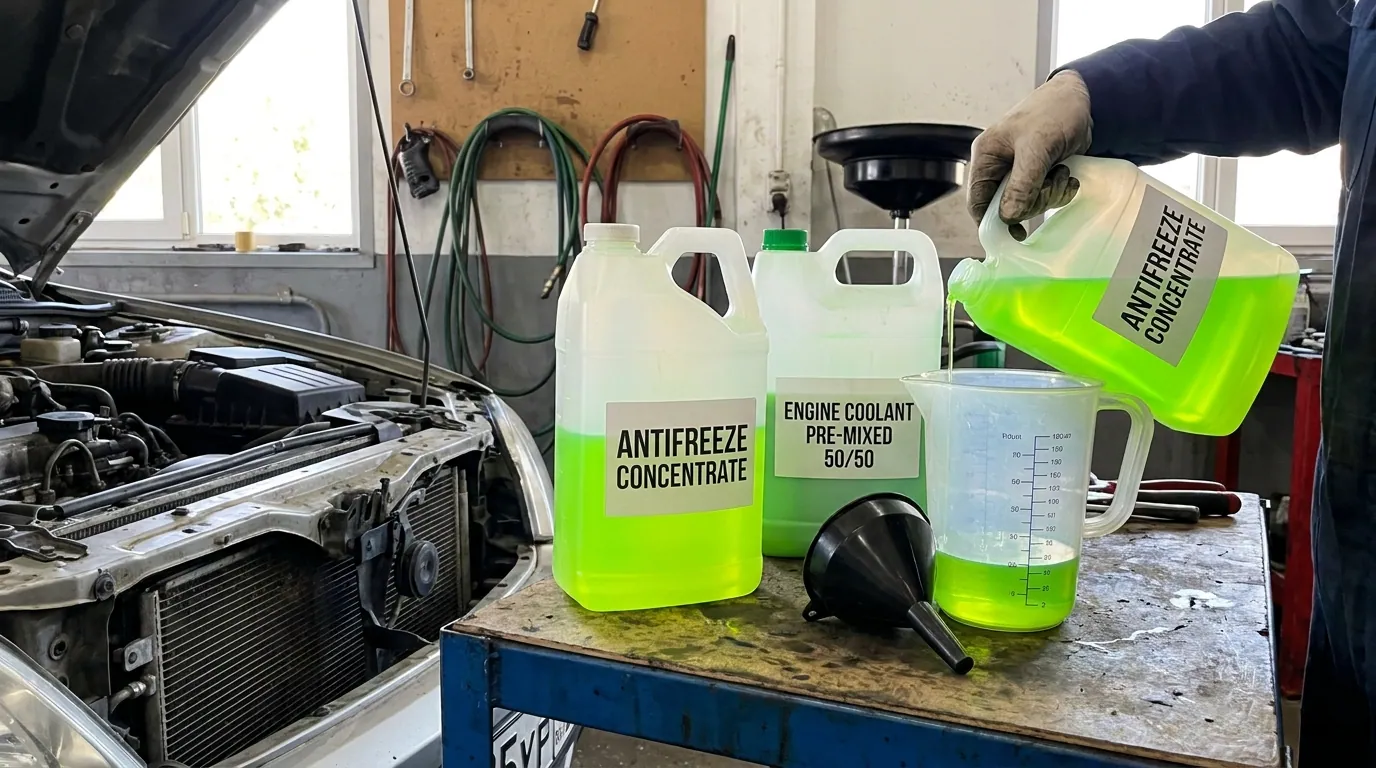
Is engine coolant and antifreeze the same thing is a common question because many drivers see both words on bottles, service invoices, and car maintenance guides. The simple answer is: engine coolant and antifreeze are closely related, but they are not always technically the same thing. Antifreeze is usually the concentrated chemical fluid, while engine coolant is usually antifreeze mixed with water, often in a 50/50 mix, and used inside the vehicle’s cooling system.
In everyday language, people often use coolant, antifreeze, and radiator fluid as if they mean the same thing. In many situations, that is understandable. But if you are buying a bottle, topping off your coolant reservoir, or trying to prevent engine overheating, the difference matters.
This guide explains antifreeze vs coolant in plain English so you know what each one does, when to use it, and how to avoid common mistakes.
The Short Answer: Coolant and Antifreeze Are Related, Not Always Identical
Coolant and antifreeze are often used interchangeably, but technically they are not always identical. Antifreeze is usually a concentrated glycol-based liquid made with chemicals such as ethylene glycol or propylene glycol. Its job is to help lower the freezing point and raise the boiling point of the fluid in your vehicle’s cooling system.
Engine coolant, on the other hand, is usually a ready-to-use mixture of antifreeze and water. Many coolant products are sold as a 50/50 ratio, meaning 50% antifreeze and 50% water. This mixture helps move heat away from the engine, prevents freezing in cold weather, reduces overheating in hot weather, and protects metal parts from rust, scale, and corrosion.
So, if a bottle says concentrate, it may need to be mixed with water before use. If it says 50/50 pre-mixed coolant, prediluted coolant, or ready-to-use coolant, it is usually already mixed and can often be poured directly into the proper place, as long as it matches your vehicle’s requirements.
The safest rule is simple: check the product label and your owner’s manual before adding anything to your car.
What Is Antifreeze?
Antifreeze is the chemical base used to protect your engine’s cooling system from freezing, boiling, and corrosion. Most antifreeze products are made with ethylene glycol or propylene glycol, along with corrosion inhibitors, rust inhibitors, and other additives.
The word “antifreeze” makes many people think it only matters in winter. That is not true. Antifreeze helps prevent the liquid in your cooling system from freezing during cold weather, but it also helps raise the boiling point, which is important during summer heat, traffic, towing, long drives, or hot climates.
Antifreeze is often sold in two main forms:
| Product Type | What It Means |
| Concentrated antifreeze | Usually needs to be mixed with water before use |
| Pre-mixed antifreeze/coolant | Already mixed, often as a 50/50 mix |
A common mistake is assuming all antifreeze bottles are ready to pour. Some are, but many are not. If the bottle says antifreeze concentrate or coolant concentrate, you usually need to dilute it with the right amount of water, often distilled water, before adding it to the vehicle.
What Is Engine Coolant?
Engine coolant is the fluid that circulates through your vehicle’s cooling system to regulate engine temperature. It moves through parts such as the radiator, engine block, coolant hoses, heater core, thermostat, and water pump.
Its main job is heat transfer. When your engine runs, it creates a lot of heat. Coolant absorbs that heat and carries it to the radiator, where the heat can be released. Without enough coolant, your engine can overheat, which may lead to expensive problems such as a blown head gasket, warped cylinder heads, or severe engine damage.
Engine coolant also helps protect internal metal parts from corrosion, rust, and scale buildup. That is one reason plain water is not a good long-term replacement. Water can help in an emergency, but it does not provide the same freeze protection, boil protection, or corrosion control as proper coolant.
In short, coolant is the working fluid inside the cooling system, while antifreeze is usually the chemical ingredient that makes coolant effective.
Coolant vs Antifreeze vs Radiator Fluid: What Each Term Means
Many drivers hear three different terms: coolant, antifreeze, and radiator fluid. They are connected, but they are not always exactly the same.
| Term | What It Usually Means | Is It Ready to Use? | Best Use |
| Antifreeze | Concentrated glycol-based fluid | Not always | Mixed with water to make coolant |
| Engine coolant | Antifreeze mixed with water and additives | Often yes | Used in the cooling system |
| Radiator fluid | Casual term for coolant in the radiator | Usually means coolant | General everyday language |
When someone asks, “Is radiator fluid the same as coolant?”, the answer is usually yes in everyday conversation. Radiator fluid commonly means the liquid in the radiator and cooling system. But when buying a product, do not rely only on casual terms. Look for details like concentrate, prediluted, 50/50, OEM coolant, or vehicle-specific coolant.
This is where many people get confused at the auto parts store. One bottle may say antifreeze/coolant, another may say engine coolant, and another may say radiator fluid. The label matters more than the front name.
Why the 50/50 Mix Matters
The 50/50 mix is one of the most important ideas in the antifreeze vs coolant discussion. A typical 50/50 coolant contains half antifreeze and half water. This balance helps provide strong freeze protection, overheating protection, and heat transfer.
Water is excellent at carrying heat, but by itself it can freeze, boil, and cause corrosion. Antifreeze improves the water’s performance by changing the freezing and boiling points while adding protective chemicals.
A 50/50 ratio is common because it works well for many normal driving conditions. It usually gives protection against freezing in cold temperatures and helps prevent boiling in hot conditions. However, the best coolant ratio can depend on your vehicle, climate, and manufacturer instructions.
For example, drivers in very cold climates may need stronger freeze protection, while drivers in hot climates may focus more on overheating protection. Still, you should not guess. Your owner’s manual and the coolant bottle label are the safest guides.
A helpful way to remember it is this:
Antifreeze is the protective ingredient. Coolant is the usable mixture that protects your engine.
Pre-Mixed Coolant vs Concentrated Antifreeze: Which Should You Use?
When choosing between pre-mixed coolant vs concentrated antifreeze, the right choice depends on what the bottle says and what your vehicle needs.
| Product Type | What It Means | Do You Add Water? | Best For | Common Mistake |
| Pre-mixed coolant | Already mixed, often 50/50 | Usually no | Quick top-offs and beginner use | Assuming it fits every car |
| Concentrated antifreeze | Strong chemical base | Usually yes | Custom mixing or full service | Pouring it in straight |
| Ready-to-use coolant | Prediluted and prepared | Usually no | Convenient maintenance | Ignoring coolant type |
| OEM coolant | Made to manufacturer specs | Follow label | Vehicle-specific needs | Choosing by color only |
If the label says 50/50 pre-mixed antifreeze, prediluted 50/50 coolant, or ready-to-use coolant, it is usually designed to be poured in without adding water. If the label says concentrate, it usually needs to be mixed with water first.
This is why learning how to read a coolant bottle label is important. Look for words like concentrate, prediluted, 50/50, universal, OEM, and manufacturer-approved coolant. Also check whether it matches your vehicle make and model.
If you are asking, “Should I buy coolant or antifreeze?”, the beginner-friendly answer is: buy the correct ready-to-use coolant if you only need a simple top-off and it matches your vehicle specification.
Can You Use Straight Antifreeze Without Water?
In most normal situations, using straight antifreeze without water is not recommended unless the product label or vehicle manufacturer specifically says to do so. Pure antifreeze does not always transfer heat as effectively as the proper water-and-antifreeze mixture.
This surprises many people. Since antifreeze sounds stronger, they assume 100% antifreeze must protect better. But your engine needs the right balance. Water helps with heat transfer, while antifreeze helps with freeze protection, boil protection, and corrosion control.
Using too much concentrated antifreeze can reduce cooling efficiency and may contribute to temperature problems. On the other hand, using too much water can reduce freeze protection and corrosion protection.
So, if you are wondering, “Can I use concentrated antifreeze without water?”, the safest answer is: do not pour concentrate directly into your coolant system unless the label and owner’s manual allow it. Most drivers should use the correct pre-mixed coolant or carefully mix concentrate according to instructions.
How Coolant Protects Your Engine in Winter and Summer
Coolant is not just for winter. It protects your engine in both cold weather and hot weather.
In winter, coolant helps prevent the liquid inside the cooling system from freezing. Frozen coolant can expand and damage parts such as the radiator, engine block, or hoses. This is why drivers in cold climates often think about antifreeze in winter.
In summer, coolant helps prevent engine overheating. Hot weather, heavy traffic, mountain driving, towing, or long road trips can put extra stress on the cooling system. Coolant helps carry heat away from the engine and release it through the radiator.
That means the same fluid helps with two opposite problems: freezing and overheating.
A good coolant mixture supports:
- Freeze protection in cold temperatures
- Boil protection in hot conditions
- Corrosion protection year-round
- Stable engine temperature during daily driving
- Longer cooling system life
Before extreme weather, it is smart to check your coolant level, inspect for leaks, and confirm that your coolant type matches your vehicle.
Coolant Colors and Types: Why Color Alone Is Not Enough
Coolant comes in many colors, including green coolant, orange coolant, pink coolant, blue coolant, and yellow coolant. Many drivers assume they can choose coolant by color alone, but that can be risky.
Color can give a clue, but it does not always prove compatibility. Different brands may use similar colors for different formulas. Instead of relying only on color, look at the coolant technology and vehicle specification.
Common coolant types include:
| Coolant Type | Full Name | Common Use |
| IAT | Inorganic Additive Technology | Often older vehicles |
| OAT | Organic Acid Technology | Many modern vehicles |
| HOAT | Hybrid Organic Acid Technology | Blends organic and inorganic additives |
| P-HOAT | Phosphated Hybrid Organic Acid Technology | Some Asian vehicle applications |
| Si-OAT | Silicated Hybrid Organic Acid Technology | Some European vehicle applications |
You may also see terms like Dexcool, extended-life coolant, universal antifreeze, and OEM coolant. These labels matter because incompatible coolant can reduce corrosion protection or create sludge-like contamination in some systems.
The safest approach is simple: choose coolant based on the owner’s manual, the coolant specification, and the product label — not just the color.
What Happens If You Use the Wrong Coolant?
Using the wrong coolant once may not instantly destroy an engine, but it can create problems over time. The risk depends on the vehicle, coolant type, amount added, and whether the fluids are compatible.
Possible problems include reduced corrosion protection, scale buildup, clogged passages, overheating, leaks, or contamination. In serious cases, cooling system problems can contribute to engine damage.
Using the wrong coolant may also make it harder for your cooling system to protect parts such as the radiator, water pump, thermostat, heater core, head gasket, and coolant hoses.
If you accidentally added the wrong coolant, do not panic. Avoid driving long distances if the engine is overheating, and ask a qualified mechanic or service center whether the system needs to be flushed. If the coolant looks murky, dirty, oily, or discolored, get it checked.
The best prevention is to use manufacturer-approved coolant and avoid mixing types unless the label clearly says they are compatible.
How to Check Coolant Level and Add Coolant Safely
Checking coolant is simple, but safety matters. Never open a hot radiator cap. A hot cooling system can be under pressure, and opening it can release hot steam or fluid.
Wait until the engine is cool. Then look for the coolant reservoir, usually a translucent plastic tank under the hood. It often has MIN and MAX markings on the side. The coolant level should usually sit between those marks when the engine is cool.
If the level is low, add the correct coolant slowly to the reservoir. Do not overfill it. If you are not sure what type to use, check your owner’s manual, coolant cap, under-hood label, or ask a trusted mechanic.
Basic safety tips:
- Check coolant only when the engine is cool
- Use the correct engine coolant for your vehicle
- Do not rely only on coolant color
- Do not open the radiator cap when hot
- Clean up spills because coolant can be toxic
- Watch for repeat coolant loss
If your coolant keeps dropping, topping it off is not a permanent fix. You may have a leak or another cooling system problem.
Can You Add Water Instead of Coolant in an Emergency?
In an emergency, adding water may help you get to a safe location, but it is not a long-term replacement for coolant. Water can help with temporary heat transfer, but it does not provide proper freeze protection, boil protection, or corrosion inhibitors.
If your engine is overheating and coolant is low, stop safely and let the engine cool. Do not open the hot radiator cap. Once safe, water may be used temporarily if no proper coolant is available. Distilled water is better than tap water if you have it, because it contains fewer minerals.
However, after using water, you should have the coolant mixture corrected as soon as possible. Too much water can lower protection against freezing and corrosion. It can also dilute the additives that protect your radiator, engine block, and water pump.
Think of water as an emergency coolant substitute, not a proper maintenance solution.
Signs Your Coolant Is Low, Leaking, or Needs Attention
Low coolant is not something to ignore. Your car may give several warning signs before a bigger problem appears.
Common signs include a low coolant warning light, rising temperature gauge, heater blowing cold air, coolant puddles under the car, a sweet smell near the engine bay, or steam from under the hood. You may also notice coolant disappearing even after you top it off.
Some symptoms suggest a more serious issue. Milky oil, white smoke from the exhaust, bubbling in the coolant reservoir, or oil in coolant can point to internal leaks or head gasket problems. These signs should be checked quickly.
Here is a simple guide:
| Symptom | Possible Meaning |
| Coolant puddle | External coolant leak |
| Sweet smell | Leaking coolant |
| Steam from engine bay | Overheating or coolant leak |
| Heater blows cold air | Low coolant or circulation issue |
| Milky oil | Possible internal coolant leak |
| Repeated low coolant | Leak or system problem |
If coolant loss keeps happening, do not just keep topping it off. Find the cause.
When Should Coolant Be Changed or Flushed?
Coolant does not last forever. Over time, the additives can wear out, and the fluid can become contaminated. Old coolant may turn dirty, murky, rusty, or discolored.
The correct coolant change interval depends on your vehicle, coolant type, mileage, age of fluid, and manufacturer recommendation. Some older coolant types may need service sooner, while some extended-life coolants can last much longer. This is why your owner’s manual is more reliable than a general rule.
You may need a coolant change or coolant flush if:
- The coolant looks rusty, oily, or dirty
- The engine overheats
- The heater does not work properly
- The coolant is past its service interval
- A mechanic finds contamination
- The wrong coolant was added
A coolant flush removes old fluid and contaminants from the cooling system. It can help restore proper protection, but it should be done correctly using coolant that matches the vehicle’s specification.
How to Choose the Right Coolant for Your Vehicle
Choosing the right coolant is not just about picking the right color. The best coolant is the one that matches your vehicle’s manufacturer recommendations.
Start with your owner’s manual. Look for the coolant specification, coolant type, or approved fluid. You can also check under the hood for a label or ask a service center. If you drive a Hyundai, Toyota, Ford, Chevrolet, Honda, BMW, or any other brand, the correct coolant may depend on the exact model and year.
When buying coolant, check the product label for:
- Pre-mixed or concentrate
- 50/50 or custom mix instructions
- Vehicle compatibility
- OEM approval
- Coolant technology, such as IAT, OAT, or HOAT
- Warnings about mixing with other coolants
If you are a beginner and just need to top off, a ready-to-use coolant that clearly matches your vehicle is usually the easiest option.
The golden rule is: match the coolant to the car, not the car to the bottle.
When to Call a Mechanic Instead of Just Topping Off Coolant
Sometimes adding coolant is enough. Other times, low coolant is a sign of a bigger problem.
Call a mechanic or service center if your vehicle overheats, the coolant level keeps dropping, you see a leak, or you notice white smoke, milky oil, bubbling coolant, or a strong coolant smell inside the car. These symptoms may point to a radiator leak, coolant hose leak, bad thermostat, water pump leak, pressure cap issue, or head gasket problem.
A mechanic may perform a cooling system pressure test to find leaks that are not easy to see. They can also test the coolant’s freeze protection, inspect the radiator cap, and check whether the thermostat and water pump are working correctly.
Topping off coolant again and again without finding the cause can lead to overheating and expensive repairs.
Quick Comparison Table: Antifreeze vs Coolant
| Feature | Antifreeze | Engine Coolant |
| Basic meaning | Concentrated protective fluid | Usable cooling system fluid |
| Common ingredients | Ethylene glycol or propylene glycol | Antifreeze, water, additives |
| Ready to use? | Not always | Often yes |
| Common mix | Needs dilution if concentrated | Often 50/50 mix |
| Main purpose | Freeze and boil protection | Temperature regulation and engine protection |
| Where it goes | Mixed before use if needed | Cooling system / coolant reservoir |
| Key warning | Do not assume concentrate is ready | Use the right type for your car |
FAQs About Engine Coolant and Antifreeze
Is coolant the same as antifreeze?
Coolant and antifreeze are closely related, but not always technically the same. Antifreeze is usually the concentrated chemical base, while coolant is usually antifreeze mixed with water and additives for use in the cooling system.
Can I put antifreeze directly into my coolant reservoir?
Only if the product label says it is ready to use or pre-mixed. If it is concentrated antifreeze, it usually needs to be mixed with water first. Always check the label and your owner’s manual.
Is 50/50 antifreeze already coolant?
Yes, in most cases, a bottle labeled 50/50 antifreeze/coolant or prediluted 50/50 coolant is already mixed and ready to use, assuming it matches your vehicle’s coolant specification.
Can I mix different coolant colors?
Do not mix coolant colors unless the label clearly says they are compatible. Coolant color does not always mean compatibility. Green, orange, pink, blue, and yellow coolants can represent different formulas depending on the brand.
Is antifreeze only needed in winter?
No. Antifreeze helps with winter freeze protection, but coolant also protects against summer overheating, corrosion, and boiling. Your car needs the right coolant mixture year-round.
What happens if I drive with low coolant?
Driving with low coolant can cause engine overheating, poor heater performance, warning lights, and serious engine damage. If the temperature gauge rises, stop safely and let the engine cool.
How often should coolant be changed?
It depends on the vehicle and coolant type. Some coolants need replacement sooner, while extended-life coolants may last much longer. Always follow your owner’s manual and check the condition of the fluid.
Conclusion: The Simple Rule for Coolant vs Antifreeze
So, is engine coolant and antifreeze the same thing? In everyday conversation, people often use the words together, but technically they are different. Antifreeze is usually the concentrated glycol-based fluid, while engine coolant is usually antifreeze mixed with water, often as a 50/50 mix, and used to protect the engine.
The smartest approach is to check the product label, use the correct manufacturer-approved coolant, and follow your owner’s manual. If the bottle says concentrate, do not assume it is ready to pour. If it says pre-mixed or ready-to-use coolant, it is usually already diluted.
The right coolant protects your engine from freezing, overheating, corrosion, and costly damage year-round.