

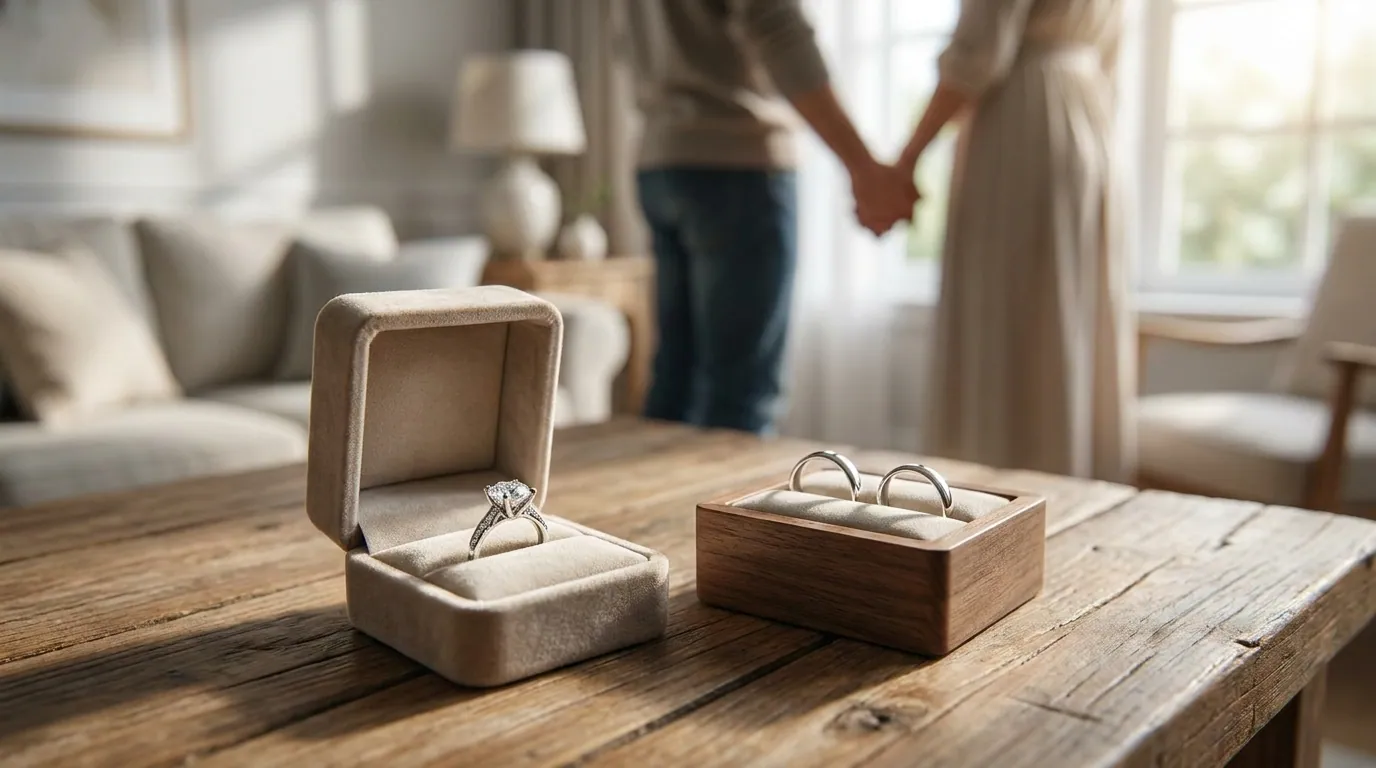
Is engagement and wedding ring the same is a common question, especially for people who are planning a proposal, shopping for rings, or trying to understand wedding traditions for the first time. The simple answer is no, an engagement ring and a wedding ring are usually not the same. An engagement ring is traditionally given during the proposal as a promise of marriage, while a wedding ring or wedding band is exchanged during the wedding ceremony as a symbol of lifelong commitment.
That said, modern couples do not always follow traditional rules. Some people wear both rings, some choose one ring, and some prefer zero rings, silicone rings, tattoo rings, or other personal symbols. The right choice depends on your budget, culture, lifestyle, comfort, and relationship.
In this guide, we’ll explain the full engagement ring vs wedding ring difference, including meaning, timing, design, cost, wearing order, and modern alternatives.
Engagement Ring vs Wedding Ring: Quick Comparison
The easiest way to understand the difference between engagement ring and wedding ring is to compare their purpose, timing, and design side by side.
| Feature | Engagement Ring | Wedding Ring / Wedding Band |
| When it is given | During the proposal | During the wedding ceremony |
| Main meaning | Promise of marriage | Lifelong marriage commitment |
| Common design | Center stone, diamond, gemstone, or detailed setting | Simple band, diamond band, eternity band, or plain metal band |
| When it is worn | During the engagement period and often after marriage | After the wedding ceremony |
| Typical cost | Often higher because of the center stone | Often lower, but varies by metal, diamonds, and design |
| Required? | No, it is a tradition | No, it is also a tradition |
| Can you skip it? | Yes | Yes |
| Can one ring serve both purposes? | Yes, if the couple prefers | Yes, if the couple prefers |
So, when people ask “are engagement rings and wedding rings the same?”, the traditional answer is no. They are connected, but they have different meanings. The engagement ring marks the promise to marry, while the wedding ring marks the marriage itself.
What Is an Engagement Ring?
An engagement ring is the ring usually given when one partner proposes marriage. It is often called a proposal ring because it represents the start of the engagement period. Traditionally, the engagement ring is worn after the proposal and before the wedding day.
The main purpose of an engagement ring is symbolic. It represents a promise of marriage, commitment, love, and the intention to build a future together. Many engagement rings feature a center stone, such as a diamond, sapphire, ruby, emerald, moissanite, or another precious gemstone.
Popular engagement ring styles include the solitaire ring, halo ring, three-stone ring, and vintage-inspired ring. A solitaire ring usually has one main stone, while a halo ring has smaller diamonds surrounding the center stone. A three-stone ring often represents the past, present, and future of the relationship.
Modern engagement rings are also more flexible than ever. Some couples choose a lab-grown diamond engagement ring, a natural diamond engagement ring, a moissanite engagement ring, or a colored gemstone ring. Others choose a minimalist band, a custom ring, or a non-traditional design that fits their personality better than classic bridal jewelry.
What Is a Wedding Ring or Wedding Band?
A wedding ring is the ring exchanged during the wedding ceremony. It is also commonly called a wedding band. In most cases, the terms wedding ring and wedding band mean the same thing, although some people use “wedding band” to describe a simpler ring and “wedding ring” to describe any ring worn after marriage.
The meaning of a wedding ring is different from an engagement ring. A wedding ring represents formal commitment, marriage, unity, and lifelong commitment. It is the ring connected directly to the marriage ceremony itself.
Wedding bands are often simpler than engagement rings, but they do not have to be plain. Some people choose plain metal bands in gold, white gold, yellow gold, rose gold, platinum, or silver. Others prefer diamond bands, eternity bands, curved wedding bands, stackable wedding rings, or custom engraved bands.
A wedding band is usually designed for comfortable everyday wear. Because many people wear it daily, comfort, durability, and lifestyle matter. A simple band may be best for someone who works with their hands, while a diamond eternity band may suit someone who wants extra sparkle.
The Main Difference Between Engagement Ring and Wedding Ring
The main difference between engagement and wedding ring comes down to four things: timing, meaning, design, and use.
An engagement ring is usually given before marriage, during the proposal. It marks the start of the engagement period and shows that the couple plans to marry. A wedding ring is usually exchanged later, during the wedding ceremony, and marks the official marriage commitment.
Design is another major difference. Engagement rings often have a large center stone or a more decorative design. Wedding rings are often simpler bands, although many include diamonds, gemstones, pavé details, or channel-set stones.
The purpose also differs. The engagement ring says, “We plan to get married.” The wedding ring says, “We are married.” One is tied to the promise, and the other is tied to the ceremony and marriage bond.
However, these are traditions, not strict rules. No law says every couple must have two rings. Some couples use an engagement ring as the wedding ring. Some choose only wedding bands. Some buy a bridal set, while others choose a one-ring approach. What matters most is that the ring setup feels meaningful to the couple.
Symbolism: What Each Ring Means
The engagement ring symbolism is usually connected to the promise of marriage. It represents the moment a couple agrees to move toward marriage. For many people, it is a visible sign of love, devotion, and future commitment.
The wedding ring symbolism is connected to the marriage itself. It represents formal commitment, unity, eternal love, and an unbroken bond. The circular shape of the ring is often linked to eternity because it has no beginning or end.
Many wedding traditions also say the wedding band is worn closest to the heart. This is why, in many Western traditions, the wedding band first rule is followed. The wedding ring goes on the finger first, and the engagement ring on top completes the stack.
Historically, rings have been connected to marriage for centuries. References to Ancient Egypt and Ancient Greece often appear in discussions of ring symbolism, especially around the circular shape, commitment, and protective meaning of rings. While traditions have changed over time, the emotional meaning remains strong: rings are small objects that carry deep personal value.
When Do You Give and Wear Each Ring?
The timing is one of the clearest ways to understand engagement ring vs wedding ring.
An engagement ring is usually given when someone proposes. This is the ring you give when you get engaged. It is worn during the engagement period and often continues to be worn after marriage.
A wedding ring is usually exchanged during the wedding ceremony. These are the rings you exchange on your wedding day. The wedding ring becomes the official marriage ring after the vows or ring exchange.
Many people wear the engagement ring alone before the wedding. After marriage, they wear both rings together, usually stacked on the same finger. But this is not required. Some people wear only their wedding band after marriage because it feels more comfortable. Others wear the engagement ring for special occasions and the wedding band every day.
If you are asking “when do you wear your engagement and wedding rings?”, the traditional answer is: engagement ring before marriage, wedding ring after the ceremony, and both together after marriage. But the modern answer is: wear them however they feel right for you.
Which Ring Goes on First? Engagement Ring or Wedding Ring?
A very common question is which ring do you wear first, engagement or wedding ring? In many Western traditions, the wedding ring goes on first. The idea is that the wedding band closer to the heart represents the direct marriage bond.
The traditional stacking order is:
| Order | Ring |
| First | Wedding band |
| Second | Engagement ring |
This means the wedding ring is placed on the left ring finger, also called the fourth finger of the left hand, first. Then the engagement ring is worn above it.
During the wedding ceremony, some people move their engagement ring to the right hand before walking down the aisle. This leaves the left ring finger open so the wedding band can be placed first. After the ceremony, they move the engagement ring back to the left hand and stack it above the wedding band.
However, this is only tradition. Some people wear the engagement ring first because they like the look. Others wear the rings on different hands. Some solder both rings together to create one permanent wedding set. The correct stacking order is the one that feels comfortable and meaningful to you.
Do You Need Both an Engagement Ring and a Wedding Ring?
No, you do not need both an engagement ring and a wedding ring. Many people choose both because it is traditional, but there is no rule saying you have to have both.
Some couples like the classic two-ring setup: an engagement ring for the proposal and a wedding band for the ceremony. This creates a beautiful layered set and gives each milestone its own symbol.
Other couples prefer one ring. This can be more affordable, more comfortable, and easier to wear every day. A one-ring setup is common for people who like minimalist jewelry or do not want a ring stack.
Some couples choose zero rings. They may prefer another symbol, such as matching necklaces, tattoos, a shared experience, or simply no physical object at all. This is especially common among people who dislike jewelry, work in environments where rings are unsafe, or want to avoid traditional expectations.
The best answer depends on your lifestyle, budget, culture, and values. A ring is meaningful because of the relationship behind it, not because it follows every traditional rule.
Can an Engagement Ring Be Used as a Wedding Ring?
Yes, an engagement ring can be used as a wedding ring if that is what the couple wants. This is one of the most practical answers to can an engagement ring be used as a wedding ring.
A one-ring approach works well for couples who want to save money, avoid extra jewelry, or keep things simple. It can also be a good choice if the engagement ring already feels meaningful enough to represent both the proposal and the marriage.
Some couples make the engagement ring feel more like a wedding ring by adding an engraving after the ceremony. Others wear the engagement ring during the wedding ceremony and simply continue wearing it afterward. Some add an anniversary band or eternity band later.
This option is especially helpful for couples who are budget-conscious. Instead of buying two separate rings, they can invest in one ring they truly love. The important thing is to discuss expectations early, especially if one partner assumes there will be both an engagement ring and wedding band.
Engagement Ring vs Wedding Ring Cost: Which Is More Expensive?
When comparing engagement ring price and wedding ring price, engagement rings are often more expensive. This is usually because they include a center stone, such as a diamond or gemstone, and may involve more detailed craftsmanship.
Wedding bands are often less expensive if they are plain metal bands. However, the price can increase quickly if the band includes diamonds, pavé details, rare metals, or an eternity design.
Cost depends on several factors:
| Cost Factor | How It Affects Price |
| Metal | Platinum usually costs more than gold or silver |
| Stone type | Diamonds often cost more than many alternative gemstones |
| Stone size | Larger stones usually increase price |
| Stone quality | Cut, clarity, color, and carat affect diamond cost |
| Design | Custom work, filigree, and pavé details add cost |
| Brand | Designer rings may cost more |
Some competitors mention figures like $5,000, $15,000, or 10% of the total cost, but there is no universal rule for what you should spend. A better approach is to set a realistic budget and choose a ring that fits your finances.
Budget-friendly options include lab-grown diamonds, moissanite, 14-karat gold, simple bands, recycled metals, and vintage rings. The best ring is not always the most expensive one. It is the one that fits your relationship and lifestyle.
Design Differences: Center Stone, Band Style, and Matching Sets
The design difference between an engagement ring and wedding ring is usually easy to see.
An engagement ring often has a center stone. This may be a diamond, sapphire, ruby, emerald, or another gemstone. Styles like solitaire rings, halo rings, three-stone rings, and vintage-inspired rings are common because they make the center stone stand out.
A wedding ring or wedding band is often simpler. It may be a plain metal band, diamond band, eternity band, curved band, or stackable band. Some bands have pavé diamonds, channel-set diamonds, or delicate engraving.
Many couples also choose a bridal set. A bridal set includes an engagement ring and matching wedding band designed to fit together. This is helpful if the engagement ring has a low-set stone, unusual shape, or detailed setting.
If the engagement ring does not sit flush with a straight band, a curved wedding band, contoured wedding band, or notched wedding band may be a better choice. These bands are shaped to fit around the engagement ring and create a cleaner stack.
Matching is beautiful, but it is not required. Some couples love mixed metals, such as a white gold engagement ring with a yellow gold wedding band. Others prefer a perfectly matched set. Both can look intentional when chosen thoughtfully.
Should Your Wedding Band Match Your Engagement Ring?
Your wedding band does not have to match your engagement ring, but it should feel balanced with it. Some people want the metal, width, stones, and style to match exactly. Others prefer contrast.
For example, a solitaire ring may look beautiful with a plain gold band, a pavé diamond band, or a curved wedding band. A halo ring may pair well with a delicate diamond band. An oval engagement ring may need a contoured band if the setting sits low.
You can match by:
| Matching Element | Example |
| Metal | White gold with white gold |
| Width | Thin band with thin engagement ring |
| Stone style | Pavé engagement ring with pavé band |
| Shape | Curved band with low-set ring |
| Finish | Polished ring with polished band |
Mixed metals are also popular. A rose gold wedding band with a white gold engagement ring can look modern and personal. A brushed finish can add contrast to a polished engagement ring.
The best method is to try bands with your engagement ring before buying. Comfort matters as much as appearance because these rings may be worn every day.
What Happens to the Engagement Ring During the Wedding Ceremony?
Many people wonder what to do with the engagement ring on the wedding day. There are a few common options.
The traditional choice is to move the engagement ring to the right hand during the ceremony. This leaves the left ring finger open for the wedding band. After the ceremony, the engagement ring can be moved back and placed above the wedding band.
Another option is to keep the engagement ring on the left hand and have the wedding band placed above it during the ceremony. Later, the rings can be rearranged.
Some people do not wear the engagement ring during the ceremony at all. They may give it to a trusted family member, keep it in a safe place, or wear only the wedding band for the day.
There is no strict rule. If you are asking “do you wear your engagement ring down the aisle?”, the answer is yes, you can. But you can also move it, remove it, or wear it however feels easiest.
Modern Alternatives: One Ring, Silicone Rings, Tattoo Rings, and No Rings
Modern couples are changing wedding ring traditions. While many people still love the classic engagement ring and wedding band stack, others prefer more flexible choices.
Some couples choose one ring for both engagement and marriage. This may be a statement ring, a simple band, or a custom design. It works well for people who want less jewelry, less cost, or less maintenance.
Some choose silicone rings or silicone bands. These are popular for active lifestyles, gym workouts, healthcare jobs, construction work, travel, and other situations where metal rings may be uncomfortable or unsafe.
Others choose tattoo rings. A tattoo ring is permanent and symbolic, although it requires careful thought because it cannot be removed like jewelry.
Some couples choose no rings at all. This may be because of budget, culture, comfort, personal belief, or simple preference. For LGBTQ couples, nonbinary couples, and couples who do not connect with traditional gender roles, gender-neutral wedding bands or custom ring traditions may feel more natural.
The most important thing is that your choice reflects your relationship. A ring tradition should support your love, not pressure you.
Cultural and Regional Differences in Ring Traditions
Ring customs are not the same everywhere. In many Western traditions, engagement and wedding rings are worn on the left ring finger. However, this is not universal.
In some European countries and other regions, wedding rings may be worn on the right hand. In some cultures, other forms of jewelry may carry marriage meaning. In South Asian weddings, for example, rings may be part of a larger set of wedding jewelry traditions. Religious and family customs can also influence how rings are chosen, exchanged, and worn.
That is why it is better to avoid saying there is only one “correct” way. A couple may follow Western tradition, family tradition, religious tradition, or their own modern version.
If you and your partner come from different cultural backgrounds, ring traditions can become a meaningful conversation. You may choose one custom, combine both, or create something new.
How to Choose the Right Ring Setup for You
Choosing between an engagement ring, wedding ring, or both should not be based only on tradition. It should be based on your real life.
If you love classic symbolism, an engagement ring and wedding band may feel right. If you prefer simplicity, one ring may be better. If you work with your hands, a low-profile engagement ring, plain wedding band, or silicone wedding band may be more practical.
Think about your budget, too. A large diamond engagement ring and diamond wedding band may not be the best choice if it creates financial stress. A meaningful ring within budget is always better than an expensive ring that causes pressure.
Also consider comfort. Some people love stacked rings, while others find them bulky. Some prefer a smooth band for everyday wear. If your engagement ring has a high setting, it may catch on clothing. If it has delicate stones, it may need more care.
Here is a simple decision guide:
| Your Situation | Best Ring Option |
| You love tradition | Engagement ring + wedding band |
| You want simplicity | One ring |
| You work with your hands | Low-profile ring or silicone band |
| You want a perfect match | Bridal set |
| You want flexibility | Separate engagement ring and wedding band |
| You dislike rings | No ring or alternative symbol |
| You want budget control | Plain band, moissanite, or lab-grown diamond |
The best ring setup is the one you will actually enjoy wearing.
Common Mistakes to Avoid When Buying Engagement and Wedding Rings
One common mistake is buying a wedding band without checking how it fits beside the engagement ring. Some engagement rings do not sit well with straight bands, especially if they have a low-set center stone. In that case, a curved or contoured wedding band may be better.
Another mistake is ignoring lifestyle. A delicate ring with fragile gemstones may not be ideal for someone who works with their hands every day. Gemstone durability matters. Diamonds, sapphires, and rubies are usually more durable than softer stones like opals and pearls.
Couples also sometimes forget about ring resizing, insurance, and maintenance. A valuable ring may need a ring appraisal, ring insurance, and regular prong inspection. If the ring has diamonds or gemstones, the setting should be checked to reduce the risk of stone loss.
Waiting too long to buy wedding bands can also create stress. Custom rings, resizing, engraving, and shipping can take time. It is better to shop early than to rush close to the wedding day.
Finally, do not assume traditions are rules. Your ring should fit your relationship, not someone else’s expectations.
How to Care for Engagement Rings and Wedding Rings
Engagement rings and wedding rings are often worn daily, so care matters. Regular cleaning helps keep diamonds, gemstones, and metal bands looking bright.
For many rings, gentle cleaning with warm water, mild soap, and a soft brush can help remove daily buildup. However, delicate gemstones like opals and pearls may need special care, so it is always wise to follow jeweler guidance.
Remove rings during harsh cleaning, heavy lifting, swimming, gardening, or gym workouts. Chemicals, pressure, and impact can damage stones, metal, or settings. If you have an expensive engagement ring, consider wearing a silicone band during work or travel.
Professional inspections are also helpful. A jeweler can check prongs, settings, loose stones, and signs of wear. This is especially important for rings with pavé diamonds, channel-set diamonds, or a large center stone.
For valuable rings, engagement ring insurance or wedding ring insurance may offer peace of mind. Store rings in a safe place when not wearing them, preferably in a soft pouch or ring box to prevent scratches.
FAQs About Engagement Rings and Wedding Rings
Is engagement and wedding ring the same?
No, an engagement ring and wedding ring are usually not the same. An engagement ring is typically given during the proposal, while a wedding ring or wedding band is exchanged during the wedding ceremony.
Is a wedding band the same as a wedding ring?
Yes, in most cases, a wedding band and wedding ring mean the same thing. Both refer to the ring exchanged during the wedding ceremony and worn after marriage.
Do you wear both an engagement ring and wedding ring?
Many people wear both rings after marriage, with the wedding band first and the engagement ring on top. However, wearing both is optional. Some people wear only one ring.
Which ring goes on first after marriage?
Traditionally, the wedding band goes on first because it is worn closest to the heart. The engagement ring is then stacked above it.
Can you have a wedding ring without an engagement ring?
Yes. Some couples skip the engagement ring and only exchange wedding bands during the ceremony. This is simple, meaningful, and often more budget-friendly.
Does the wedding ring replace the engagement ring?
Not usually. Many people continue wearing the engagement ring after marriage. However, some choose to wear only the wedding ring for comfort, simplicity, or personal preference.
Who buys the engagement ring and wedding rings?
Traditions vary. In the past, one partner often bought the engagement ring, while couples exchanged wedding bands. Today, many couples choose and pay for rings together based on their budget and preferences.
Do both rings need to have diamonds?
No. Engagement rings and wedding rings do not need diamonds. They can be plain metal, gemstone, moissanite, lab-grown diamond, birthstone, or custom-designed rings.
Can you wear a wedding band before marriage?
Yes, you can if you want to. Some people wait until the ceremony because of tradition, but there is no universal rule that prevents wearing a wedding band earlier.
Why do brides wear two rings?
Many brides wear two rings because each ring marks a different milestone. The engagement ring represents the promise to marry, while the wedding ring represents the marriage commitment.
Conclusion: Engagement Ring and Wedding Ring Are Different, But Your Choice Matters Most
So, is engagement and wedding ring the same? Traditionally, no. An engagement ring is usually given during the proposal as a promise of marriage, while a wedding ring or wedding band is exchanged during the wedding ceremony as a symbol of lifelong commitment.
The classic choice is to wear both rings, with the wedding band first and the engagement ring on top. But modern couples have many options. You can choose one ring, two rings, zero rings, a bridal set, a silicone band, a tattoo ring, or a custom design.
The best ring is not the one that follows every tradition perfectly. It is the one that feels meaningful, comfortable, and true to your relationship.
Disclaimer: This article is for general informational and educational purposes only. Engagement rings, wedding rings, wedding bands, and related traditions can vary widely based on culture, religion, personal preference, lifestyle, and budget. There are no universal rules for how couples should choose, wear, or exchange rings, and individual traditions may differ significantly.