

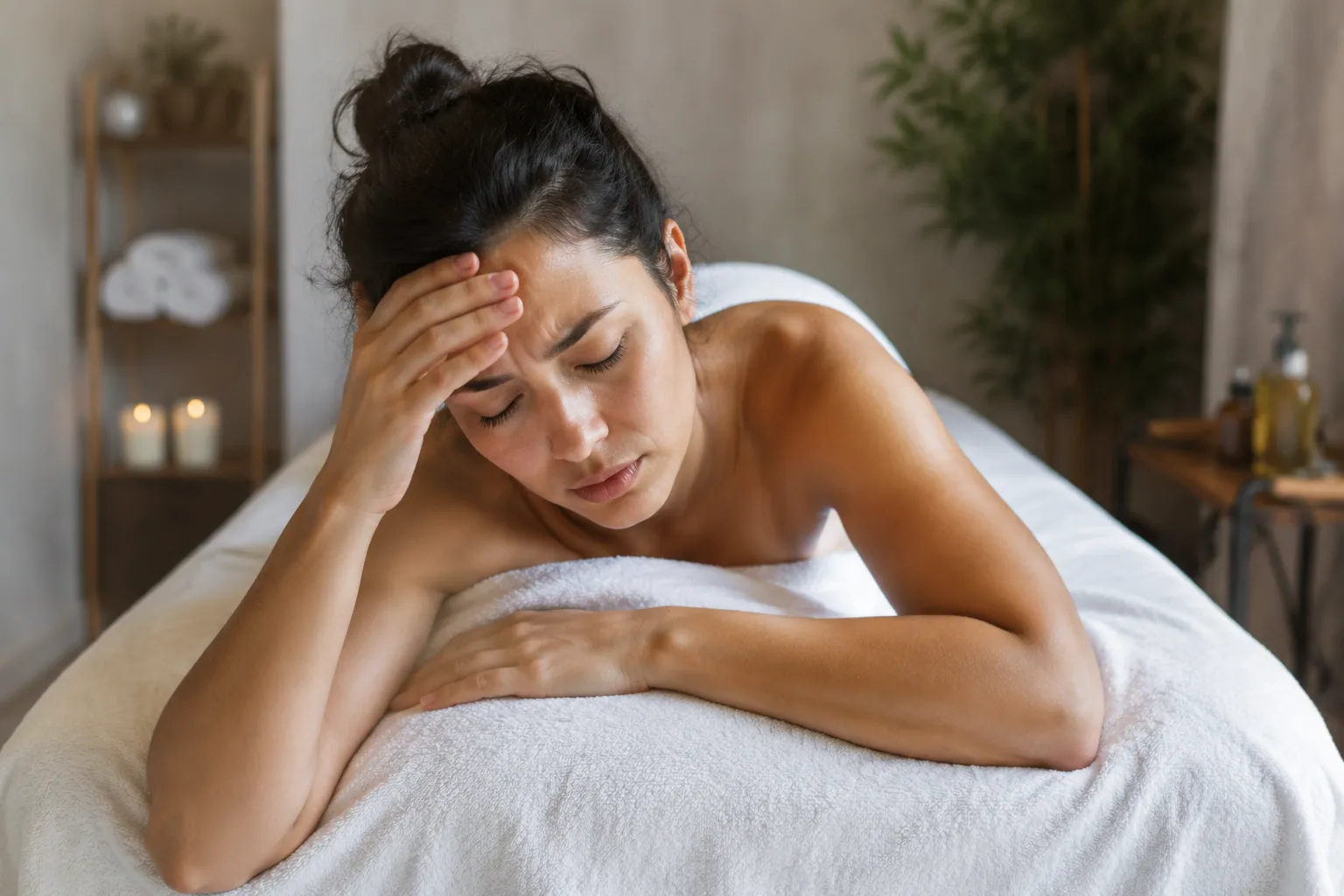
Introduction: Can a Massage Make You Sick?
For some people, yes — but usually only in a temporary and mild way. After a massage, you might feel a little nauseous, tired, dizzy, sore, chilled, or simply “off” for a few hours. Some people also notice a headache after massage, light body aches, or flu-like tiredness often called massage flu.
In most cases, these post-massage symptoms do not mean the massage caused an infection or made you truly ill. They are often connected to how your body responds to pressure, muscle work, circulation changes, nervous system relaxation, dehydration, or existing health conditions. A deep tissue massage, for example, may leave tight muscles feeling tender the same way a hard workout can make your body feel sore the next day.
Still, it is important to know the difference between normal massage side effects and symptoms that deserve attention. Mild soreness, sleepiness, or brief nausea after massage usually improves with rest, water, and gentle movement. But severe pain, fainting, chest pain, high fever, numbness, or symptoms that keep getting worse should not be ignored.
This guide explains why you may be feeling sick after massage, which reactions are usually normal, what warning signs to watch for, and what you can do to feel better safely.
Why You Might Feel Sick After a Massage?
If you are wondering, “Why do I feel sick after a massage?” the answer usually comes down to how your body reacts to physical pressure, relaxation, and soft tissue work. Massage does not only affect the skin. It can also influence your muscles, fascia, blood flow, lymph movement, and nervous system. For most people, this feels calming and helpful. For others, especially after a stronger session, it can create a short-term massage body reaction that feels uncomfortable.
One common reason is muscle soreness. Deep pressure can work tight or overused muscles in a way that feels similar to exercise. Just like you may feel sore after a workout, you may feel sore after massage, especially if the therapist used firm pressure, worked on knots, or focused on areas that were already tense. This type of soreness is usually part of the body’s normal massage recovery response, but it should feel manageable and gradually improve.
Some people also feel lightheaded, sleepy, or slightly nauseous because massage can encourage deep relaxation. When your nervous system shifts out of a stressed state, your body may respond with changes in circulation, hydration balance, and blood pressure. If you came into the session dehydrated, hungry, exhausted, or already feeling run down, these effects may feel stronger.
Feeling sick after massage is more common after deep tissue massage, sports massage, trigger point work, lymphatic drainage, or a first massage after a long break. These sessions often involve more focused pressure or movement through tight tissues, so the body may need more time to adjust. People may also notice stronger deep tissue massage side effects if they book a massage while stressed, sleep-deprived, dehydrated, or mildly unwell.
A helpful rule is that massage should feel therapeutic, not unbearable. Your body may react more strongly when the pressure is too intense or when you stay quiet even though something feels painful. A skilled therapist can adjust the pressure, technique, and pace, but they need your feedback. Speaking up during the session can reduce post-massage malaise and help you leave feeling better instead of drained.
Common Symptoms People Notice After a Massage
The symptoms people feel after a massage can vary from person to person. Some people leave the table feeling relaxed and refreshed, while others feel tired, sore, or a little unsettled for the rest of the day. These reactions are usually mild and should improve, especially with rest, water, and gentle movement.
Common post-massage symptoms may include muscle soreness, fatigue, sleepiness, headache, nausea, dizziness, lightheadedness, mild chills, brain fog, or tenderness in the areas that were worked on. Some people also experience a temporary emotional release, such as feeling unusually sensitive, calm, or tearful after the session. This can happen because massage may help the body relax after holding stress or tension for a long time.
Many of these symptoms appear within a few hours, while others may show up the next day. For example, body aches after massage can feel similar to soreness after exercise. This is more likely after firm pressure, deep tissue work, trigger point therapy, or when very tight muscles are worked for the first time in a while. If you feel sick after deep tissue massage, it may be your body responding to stronger pressure rather than a sign that something is seriously wrong.
A headache after massage may happen if you were dehydrated, tense through the neck and shoulders, lying in one position for a long time, or sensitive to pressure. Feeling dizzy after massage can also happen when you stand up too quickly, have low blood pressure, or came into the appointment tired or under-hydrated. That is why it is a good idea to sit up slowly after the session and take a few calm breaths before getting dressed.
Some people describe these reactions as massage flu symptoms, especially when they feel tired, achy, chilled, or foggy. This does not usually mean you have the flu. It is more often a short-term recovery response. Cleveland Clinic also explains that soreness or tight muscles can be normal after massage, especially if someone has not had a massage before or has not had one in a long time.
Still, symptoms should not keep getting worse. Mild soreness, tiredness, or nausea should gradually settle. If you have severe pain, fainting, chest pain, high fever, numbness, weakness, or symptoms that feel unusual for your body, it is safer to contact a healthcare professional.
Is “Massage Flu” Real or Just a Myth?
Massage flu is a common phrase, but it is not an official medical diagnosis. People usually use it to describe flu-like symptoms after massage, such as fatigue, achiness, nausea, headache, chills, brain fog, or a general feeling of being unwell. In simple terms, it means you feel run down after a massage, even though you are not actually sick with the flu.
This kind of post-massage malaise can happen when the body responds strongly to pressure, relaxation, muscle work, or changes in circulation. It may be more noticeable after deep tissue massage, trigger point therapy, sports massage, or a session that works on tight, painful areas. Some people also feel this way when they were already tired, dehydrated, stressed, or close to getting sick before the appointment.
The phrase massage flu can be misleading because it makes a normal short-term body reaction sound like a real illness. A massage does not give you influenza, a cold, or a virus by itself. If you are feeling ill after massage, it is usually more accurate to think of it as a temporary recovery response rather than true massage sickness.
However, symptoms should still be taken seriously if they do not feel normal for you. Mild tiredness, soreness, or nausea should improve with rest, fluids, and time. But if you develop a true fever, coughing, sore throat, worsening body aches, vomiting, breathing problems, or symptoms that continue to get worse, the cause may be unrelated to the massage. In that case, it is better to treat it as a possible illness and contact a healthcare professional if needed.
Does Massage Release Toxins? The Truth Readers Should Know
You may have heard that massage makes you feel sick because it “releases toxins” from your muscles. This idea is common online, but it is often oversimplified. Massage can support circulation, soft tissue movement, relaxation, and lymphatic flow, but it does not suddenly flush stored poisons out of your muscles in a dramatic way.
Your body already has built-in detox systems. The liver, kidneys, lungs, digestive system, and skin help process and remove waste every day. A massage does not replace these organs, and you do not need to panic that toxins are flooding your body after a session.
So, if the toxins after massage myth is not the best explanation, why do some people feel unwell? In most cases, post-massage nausea causes are more likely related to muscle soreness, hydration status, pressure intensity, nervous system changes, circulation shifts, or personal health factors. For example, if you had a deep tissue massage while dehydrated, stressed, or already tired, your body may respond with nausea, headache, fatigue, or soreness.
Massage may help your body feel looser and calmer, and gentle movement of tissue may support normal fluid movement. But it is more accurate to say that massage affects blood flow, muscle tension, relaxation, and lymph movement rather than saying it “detoxes” the body. This matters because misleading claims can make people worry unnecessarily when they feel tired or achy afterward.
A better way to understand this is simple: feeling sick after a massage is usually a normal physical response, not a sign that dangerous toxins are being released. Rest, steady hydration, gentle movement, and lighter pressure next time are usually more useful than trying to “detox” after the massage.
Why Deep Tissue Massage May Make You Feel Worse First
Can deep tissue massage make you sick? For some people, it can make them feel temporarily worse before they feel better. This is because deep tissue massage uses stronger, slower pressure to reach deeper muscle layers, fascia, and connective tissue. When tight or overworked areas are treated firmly, the body may respond with deep tissue soreness, tenderness, fatigue, headache, or mild nausea.
This does not always mean something went wrong. Deep pressure can feel similar to a hard workout for your muscles. If a therapist works on knots, trigger points, or areas that have been tight for a long time, those tissues may feel sensitive afterward. Some people also experience deep tissue massage nausea if the pressure was intense, they were dehydrated, they had not eaten enough, or their body was already stressed or tired before the session.
That said, deep tissue massage should not feel unbearable. The old idea of “no pain, no gain” is not a safe rule for massage. Strong pressure can feel intense, but it should not feel sharp, burning, electric, or like something you have to silently endure. If the pressure is too hard during massage, your body may tense up instead of relax, which can lead to more soreness and a stronger recovery reaction afterward.
WebMD notes that deep tissue massage may make some people feel sick, especially when they already have certain health issues. This is why it is important to tell your massage therapist about medical conditions, medications, recent injuries, surgeries, pregnancy, blood thinner use, or chronic pain concerns before the session starts. A good therapist can adjust the pressure, avoid sensitive areas, or recommend a gentler approach.
If you are new to deep tissue work, start slowly. Ask for lighter pressure, book a shorter session, and avoid scheduling an intense massage right before a demanding workday, long drive, workout, or major event. The same advice applies to sports massage side effects, since sports massage can also involve firm pressure and focused muscle work.
After deep tissue massage, soreness should gradually improve. Mild tenderness for a day or two can happen, but pain that keeps getting worse, severe bruising, numbness, weakness, dizziness, or symptoms that feel unusual should be checked by a healthcare professional. A helpful massage should support recovery, not leave your body feeling injured.
When Feeling Sick After a Massage Is More Likely
Some people are more likely to feel unwell after massage because of what is happening in their body before the session even starts. If you are asking who feels sick after massage, the answer often includes people who are dehydrated, exhausted, highly stressed, sensitive to pressure, or already dealing with pain or illness.
One common trigger is massage when dehydrated. If you have not had enough fluids, you may be more likely to feel lightheaded, tired, or develop a headache after the session. Not eating enough can also contribute to dizziness or nausea, especially if your appointment is long or deeply relaxing. On the other hand, eating a heavy meal right before a massage can make lying face down uncomfortable and may increase nausea after massage causes such as stomach pressure or sluggish digestion.
Alcohol can also make symptoms worse. Drinking before or after massage may increase dehydration, affect circulation, and leave you feeling more tired or foggy. Heat can have a similar effect for some people. A sauna, hot tub, or long heat therapy session after massage may feel relaxing at first, but it can also make you feel weak, dizzy, or overheated if your body is already drained.
Feeling sick after massage is also more likely if you are fighting a cold, infection, or inflammation. Massage while sick is usually not a good idea, especially if you have a fever, body aches, vomiting, or contagious symptoms. Your body is already working hard to recover, and massage may leave you feeling more exhausted instead of refreshed.
People with chronic pain, high stress, low blood pressure, or strong sensitivity to pressure may also notice a bigger reaction. Intense deep tissue work, trigger point therapy, or sports massage can be useful for some people, but if the pressure is too strong, the body may respond with soreness, nausea, headache, or a heavy tired feeling afterward.
A practical tip from real-life massage experience is this: people often blame the massage, but sometimes they were already getting sick and the timing made the connection feel obvious. If you were exposed to a virus, slept poorly, skipped meals, or felt run down before the appointment, the massage may not be the true cause. It may simply have made you more aware of how tired or unwell your body already felt.
For safer massage aftercare, listen to your body before booking. Postpone massage if you have a fever, contagious illness, unexplained swelling, a new injury, severe pain, or symptoms that have not been checked. These are important massage contraindications, and waiting until your body is stable can help you avoid a stronger negative reaction.
Can Massage Actually Make You Catch an Illness?
A massage does not create a virus or bacterial infection in your body. So, if you are wondering “can you get sick from massage?”, the answer is usually no in the direct sense. Most people who feel unwell afterward are experiencing a temporary body reaction, not catching an illness from the massage itself.
However, massage is still a close-contact service. Like any service where people share a room, breathe the same air, and touch common surfaces, there can be some infection risk massage clients should understand. The risk is higher if hygiene is poor, linens are reused without washing, tools are not cleaned properly, or someone comes to the appointment while contagious.
Good massage hygiene should include clean sheets and towels for every client, proper handwashing, sanitized tables and tools, and a clean treatment space. Proper ventilation also matters, especially during cold and flu season. Choosing a licensed or well-trained therapist can help you feel more confident that basic massage safety practices are being followed.
You should also avoid massage when you have a fever, vomiting, a contagious skin infection, or an active respiratory illness. In those cases, rescheduling protects both you and the therapist. Your body may also need rest more than physical treatment when it is fighting an illness.
Sometimes, what feels like “getting sick” after massage may actually be a skin reaction. An allergic reaction to massage oil, lotion, fragrance, or essential oil can cause itching, redness, rash, burning, or irritation. Skin irritation after massage may also happen from friction, heat, or sensitive skin. If you know you react to certain products, tell your therapist before the session and ask for a hypoallergenic or fragrance-free option.
The key difference is this: temporary tiredness, soreness, or nausea is usually a body response, while fever, cough, vomiting, contagious symptoms, or a spreading rash may point to something else. Paying attention to hygiene, product sensitivity, and your health before the appointment can help you enjoy massage more safely.
Red Flags: When to Call a Doctor After a Massage
Most mild post-massage symptoms should improve within 24–48 hours. Feeling a little sore, tired, foggy, or tender after deeper bodywork can happen. Cleveland Clinic notes that people should see a healthcare provider if they have intense soreness after massage lasting longer than a couple of days.
However, some symptoms are not normal massage side effects. You should seek medical help if you notice severe or worsening pain, chest pain, trouble breathing, fainting, high fever, severe dizziness, or vertigo. You should also get checked if you develop numbness, weakness, tingling, or a severe headache that feels different from your usual headaches. These may be signs that something more serious is happening, especially after aggressive pressure or work around the neck.
Other massage red flags include swelling, redness, warmth, spreading skin irritation, or signs of infection. A large, painful, or unexplained bruise should also be taken seriously, especially if you take blood thinners or bruise easily. Mild tenderness is one thing; pain that feels sharp, deep, or progressively worse is different.
Pay close attention to calf pain or swelling after a massage. It may not be caused by the massage, but unexplained leg swelling, calf pain, chest pain, or trouble breathing can be linked to a blood clot or heart/lung emergency and needs urgent medical care. Mayo Clinic advises getting immediate help for symptoms such as sudden shortness of breath, chest pain, rapid breathing, feeling faint, or coughing blood.
Be extra careful with symptoms after neck manipulation, intense neck pressure, or massage gun use near the head and upper neck. Reports have linked handheld percussive massage guns used around the upper neck or lower scalp with BPPV-like vertigo symptoms, which can cause spinning dizziness, nausea, and balance problems.
These massage injury symptoms are uncommon, so there is no need to panic after every ache or headache. But if you are wondering when to worry after massage, use this simple rule: mild symptoms should steadily improve, while severe, unusual, spreading, or worsening symptoms deserve medical advice.
What to Do If You Feel Sick After a Massage
If you feel unwell after a massage, the first step is to slow down and give your body time to settle. Most mild symptoms improve with simple post-massage recovery steps, especially if you are dealing with soreness, tiredness, nausea, or a headache.
Start by resting for the rest of the day if you can. Avoid intense exercise, heavy lifting, or a demanding workout right after a massage, especially if you had deep tissue work. Your muscles may already feel like they have been worked, so pushing too hard can make soreness or fatigue worse.
Drink water steadily, but do not force yourself to drink huge amounts. Normal hydration can help if you feel lightheaded, tired, or have a headache after massage. However, you do not need to overdo it. Small, regular sips are usually better than drinking too much too quickly.
If nausea may be related to low blood sugar, try eating a light, balanced meal. A simple option like toast, soup, fruit, rice, eggs, or yogurt may be easier on your stomach than a heavy or greasy meal. This can be a helpful nausea after massage remedy, especially if you skipped food before your appointment.
For mild soreness, gentle walking or light stretching may help your body loosen up. Keep it easy and comfortable. If a movement increases pain, stop. Warmth can also help tight muscles feel better, such as a warm shower or a heating pad on a low setting. But avoid heat if there is swelling, redness, strong inflammation, or sharp pain.
One of the most important massage aftercare tips is to avoid alcohol after your session. Alcohol can make dehydration, dizziness, headache, and fatigue worse. It may also make it harder to tell whether your body is recovering normally.
It also helps to take notes about what happened. Write down the type of massage, pressure level, areas worked, how you felt during the session, and what symptoms appeared afterward. This makes it easier to adjust next time. You may need lighter pressure, a shorter session, more water beforehand, or a gentler massage style.
If your symptoms are mild but confusing, you can contact your massage therapist and ask whether your reaction sounds typical for the type of work you received. But if symptoms are severe, unusual, or persistent, contact a healthcare professional instead. Recovery should feel gradual. You should not feel like your body is getting worse each hour.
How to Prevent Feeling Sick After Your Next Massage
The best way to prevent feeling sick after massage is to prepare your body before the appointment and communicate clearly during the session. A massage should help you feel supported, not leave you feeling drained, dizzy, or overly sore.
Start with basic massage preparation. Drink water earlier in the day so you are not going into the appointment dehydrated. You do not need to drink an excessive amount, but being normally hydrated can reduce the chance of headache, dizziness, or fatigue afterward. It also helps to eat lightly about 1–2 hours before the massage. A small balanced meal or snack can prevent nausea related to low blood sugar, while avoiding the discomfort of lying down with a heavy stomach.
Avoid alcohol before and after massage. Alcohol can increase dehydration, affect circulation, and make symptoms like headache, tiredness, and lightheadedness worse. If you are planning a deep tissue session, sports massage, or trigger point work, it is especially smart to keep the rest of your day simple and alcohol-free.
Good massage therapist communication is just as important as good preparation. Before the session starts, tell your therapist if you are new to massage, sensitive to pressure, pregnant, recovering from surgery, taking blood thinners, managing chronic pain, or dealing with a medical condition. These details help the therapist choose a safer technique and avoid pressure that may be too intense for your body.
If you are unsure how your body will respond, start with lighter pressure instead of deep tissue. This is one of the most useful first massage tips, especially for people who are nervous, very tense, or prone to soreness. You can always increase pressure later, but it is harder to undo a session that was too aggressive.
During the massage, speak up if something feels sharp, burning, electric, or too intense. Safe massage pressure should feel therapeutic, not unbearable. A good massage should feel like something your body can relax into, not like something you have to endure silently.
After the appointment, schedule a little downtime if possible. Avoid combining an intense massage with a sauna, hot tub, heavy workout, long drive, or stressful day of travel. Your body may need time to settle, especially after deeper muscle work.
Finally, choose a licensed, reputable massage therapist who listens carefully and respects your limits. The right therapist will not pressure you to “push through” pain. They will adjust the session to your body, your comfort level, and your health history, which is one of the best ways to avoid feeling sick after your next massage.
Who Should Be Extra Careful Before Getting a Massage?
Massage is safe and helpful for many people, but certain health conditions need extra caution. This does not mean everyone with a medical condition must avoid massage completely. It means the massage technique, pressure, timing, and body areas treated may need to be adjusted.
You should check with a healthcare provider before massage if you have a history of blood clots, recent surgery, cancer treatment, heart disease, uncontrolled high or low blood pressure, fever, active infection, severe osteoporosis, pregnancy complications, neuropathy, reduced sensation, a recent injury, a fracture, or unexplained swelling. Mayo Clinic’s massage safety guidance also lists conditions that need precautions, including blood-clotting disorders, blood-thinning medications, fractures, open wounds, cancer, congestive heart failure, uncontrolled high blood pressure, and infectious diseases.
People taking blood thinners should be especially careful because they may bruise or bleed more easily. Deep pressure may not be appropriate, especially over sensitive areas or places where bruising already occurs. This is why massage and blood thinners should always be discussed before the session begins.
Massage may also need to be modified for people with pregnancy-related concerns. Pregnancy massage safety depends on the person’s stage of pregnancy, symptoms, and medical history. If there are complications, unexplained pain, high-risk pregnancy concerns, or swelling that has not been evaluated, it is better to ask a clinician before booking.
The same cautious approach applies to skin problems. Massage should not be done directly over open wounds, burns, contagious rashes, skin infections, or fresh injuries. Pressure over these areas can cause pain, irritation, or delayed healing.
According to the National Center for Complementary and Integrative Health, harmful effects from massage appear to be uncommon when performed properly, but rare serious problems such as blood clots, nerve injury, or bone fractures have been reported, especially with vigorous massage or in people at higher risk.
The safest approach is simple: tell your therapist about your health history, medications, recent injuries, surgeries, and any unusual symptoms. Then ask your clinician when needed. With the right precautions, many people can still receive massage safely, but the pressure should match the person’s body, not the other way around.
Conclusion: Can a Massage Make You Sick?
Can a massage make you sick? The answer is yes, it can make some people feel temporarily unwell, but it usually does not mean the massage caused a true illness. For many people, feeling sick after massage is a short-term body response that improves with time, rest, and simple care.
The most common reasons include deep pressure, muscle soreness, dehydration, circulation changes, nervous system relaxation, and pre-existing health factors. If you were already tired, stressed, dehydrated, sensitive to pressure, or slightly unwell before the session, your body may react more strongly afterward.
Mild post-massage symptoms like tiredness, soreness, nausea, headache, or feeling “off” often improve with basic massage aftercare. Rest for the day, drink water normally, eat something light if needed, avoid alcohol, and give your muscles time to settle. Gentle walking or light stretching may also help if soreness is mild.
For safer results next time, choose a qualified therapist, explain your health history, and speak up if the pressure feels too intense. Avoid deep or intense massage when you are sick, feverish, injured, medically vulnerable, or unsure whether massage is safe for your condition. Safe massage therapy should be adjusted to your body, comfort level, and health needs.
A massage should support recovery, not leave you worried. Listen to your body, follow practical massage recovery tips, and seek medical advice if symptoms feel severe, unusual, persistent, or keep getting worse.
FAQs About Can a Massage Make You Sick
Can a massage make you nauseous?
Yes, a massage can make some people feel nauseous, especially after deep pressure, intense muscle work, dehydration, stress release, or lying face down for a long time. This feeling is usually temporary and often improves with rest, steady fluids, and a light meal. If nausea is severe, keeps returning, or comes with fainting, chest pain, fever, or severe dizziness, it is best to get medical advice.
Why do I feel like I have the flu after a massage?
Some people use the term massage flu to describe feeling tired, achy, chilled, foggy, or slightly unwell after bodywork. It is not the same as having the actual flu. In many cases, these flu-like symptoms after massage are a short-term reaction to pressure, muscle soreness, nervous system relaxation, circulation changes, or the body adjusting after deep tissue work.
How long does feeling sick after a massage last?
Mild symptoms usually improve within a few hours to 24–48 hours. Soreness, fatigue, or mild nausea should gradually ease, not get worse. Cleveland Clinic notes that post-massage soreness may last from a few hours to about a day and a half, especially after deeper work or a first massage in a long time. If symptoms last longer than a couple of days or feel severe, it is safer to contact a healthcare professional.
Is it normal to have a headache after massage?
A mild headache after massage can happen for several reasons, including dehydration, neck tension, pressure sensitivity, posture on the massage table, or standing up too quickly afterward. Drinking water normally, resting, and avoiding alcohol may help. However, a severe headache, a headache that keeps getting worse, or a headache with numbness, weakness, confusion, vision changes, or dizziness should be checked right away.
Should I drink water after a massage?
Yes, drinking water after a massage is helpful, especially if you feel lightheaded, tired, or dehydrated. You do not need to drink excessive amounts. Small, steady sips are enough for most people. Water is not dramatically “flushing toxins” from your body; it simply supports normal hydration and may help you feel better during recovery.
Can massage make an existing illness worse?
Yes, it can. If you are already sick, feverish, exhausted, fighting an infection, or recovering from a recent illness, massage may leave you feeling more drained. Your body may need rest more than physical treatment. It is usually better to reschedule massage if you have a fever, vomiting, contagious symptoms, active respiratory illness, or feel unusually weak.
Disclaimer
This article is for general informational purposes only. Individual results, health needs, and situations may vary. If symptoms feel severe, unusual, or persistent, speak with a qualified healthcare professional.