

Introduction
Tsunaihaiya is one of those search terms that can quickly confuse you because different websites explain it in very different ways. Some pages describe it like a mysterious coastal place, while stronger product and retailer references point to TSUNAI HAIYA as a Japanese handmade jewelry brand. That difference matters because you do not want to build your understanding on vague claims when there is a clearer, more useful explanation available.
This article will help you understand what tsunaihaiya means, why the name appears in different forms, and how the brand is connected with handmade silver jewelry, Japanese craftsmanship, and Native American-inspired design. You will also learn how to check product details, avoid misleading information, and make a smarter decision if you are researching or buying Tsunaihaiya jewelry.
The goal here is not to make the topic sound bigger than it is. The goal is to give you a practical, fact-aware guide. By the end, you should know whether tsunaihaiya is a real brand, what kind of jewelry it is known for, and why some online content makes the term harder to understand than it needs to be.
What Is Tsunaihaiya?
Tsunaihaiya, also written as TSUNAI HAIYA, Tsunai Haiya, TSUNAIHAIYA, and ツナイハイヤ, is best understood as a Japanese jewelry brand known for handmade accessories and silverwork. It is usually connected with rings, bracelets, bangles, beads, and small artisan pieces that carry a handcrafted look rather than a mass-produced fashion feel.
The reason many readers get confused is that the word does not behave like a common brand name in English search results. You may see it described as a hidden travel destination, a cultural idea, or a mysterious online term. When you look closer, the strongest and most useful trail leads toward jewelry listings, Japanese retailer descriptions, and product pages.
For a reader, the safest way to understand tsunaihaiya is to treat it as a brand term first. That does not mean every page using the word is accurate. It means the most grounded explanation is tied to jewelry, design identity, craft technique, and product availability. If your purpose is research, buying, or writing about the topic, this angle gives you the most reliable foundation.
You should also pay attention to spelling. Searching only one version may hide useful results. Try TSUNAI HAIYA, TSUNAIHAIYA, Tsunai Haiya, and the Japanese spelling ツナイハイヤ if you want a fuller picture of the brand and its products.
The Meaning and Origin Behind TSUNAI HAIYA
The name TSUNAI HAIYA is commonly described by Japanese retailers as having an Apache-language meaning connected with the “rising sun” or Japan as the land of the rising sun. This meaning gives the brand a symbolic identity rather than a simple fashion label. It suggests a bridge between Japanese expression and Native American craft influence.
The brand story is often linked with Japanese artist Yusuke Kuwano and San Carlos Apache sculptor Craig Dan Goseyun. Product descriptions and retailer pages describe the brand as being established around 2012, with its identity shaped by both Japanese techniques and Native American jewelry traditions. This gives the work a more specific background than ordinary accessory branding.
This origin matters because handmade jewelry is often judged by more than appearance. Buyers usually want to know who made it, what tradition influenced it, and whether the design has meaning. With Tsunaihaiya, the appeal comes from the mix of cultural influence, hand-finishing, metalwork, and a restrained Japanese design sense.
At the same time, you should use careful language when discussing the brand. It is better to say the name is “described by retailers” or “commonly associated with” a certain meaning instead of presenting every detail as absolute fact. That kind of wording protects the reader from overclaiming and keeps the article trustworthy.
Tsunaihaiya Jewelry Style, Materials, and Craftsmanship
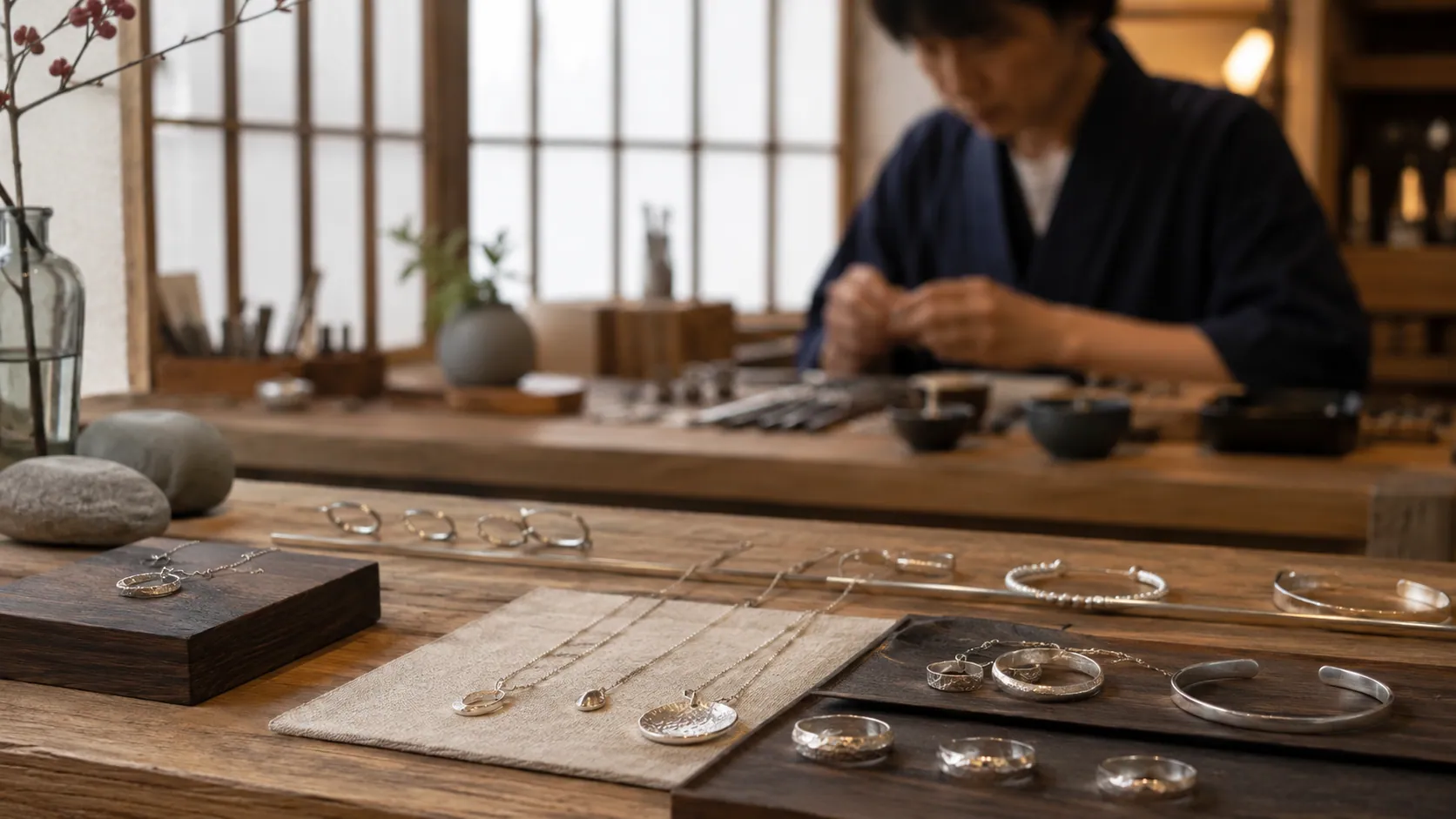
Tsunaihaiya jewelry has a quiet but distinct style. It does not usually rely on loud branding or oversized logos. Instead, the pieces tend to focus on shape, texture, surface treatment, and small handcrafted details. That is why people who like artisan jewelry, Japanese silver accessories, and Native American-inspired metalwork may find the brand interesting.
Common product types include rings, bracelets, bangles, anklets, beads, and other wearable accessories. Some listings mention sterling silver, brass, plating, natural stones, and textured finishes. A simple ring may still have hammered texture, slight twist, uneven surface character, or a finish that changes with wear. These small details are part of the appeal.
If you are comparing Tsunaihaiya jewelry with regular fashion accessories, focus on the product page details. Look for metal type, size, width, finish, plating information, condition notes, and close-up photos. Handmade pieces can vary slightly from one item to another, so tiny differences are not always flaws. They may be part of the hand-finished character.
Care is also important. Silver and plated jewelry can change color over time because of skin contact, sweat, moisture, polish cloths, and storage conditions. If a piece has plating, aggressive polishing can wear it down faster. A practical care routine is simple: keep it dry when possible, store it separately, wipe it gently after use, and avoid harsh chemicals unless the seller specifically says the material can handle them.
Is Tsunaihaiya a Coastal Place or a Jewelry Brand?
One of the biggest reasons people search for tsunaihaiya is because they see conflicting articles. Some websites describe it as a coastal hidden gem with beaches, culture, food, accommodation, and travel experiences. The problem is that many of those travel-style articles do not clearly provide a map location, official tourism source, local authority reference, transport route, or verifiable destination details.
That does not automatically mean every travel-style mention is written with bad intent. Sometimes rare terms get turned into lifestyle or travel content because they sound exotic, memorable, or brandable. But for helpful content, a claim needs evidence. If a page says Tsunaihaiya is a real destination, it should tell you where it is, how to reach it, what region it belongs to, and which official source confirms it.
The jewelry-brand explanation is stronger because it is supported by product listings and retailer descriptions. You can find actual items connected with Tsunai Haiya, including rings and accessories. You can also find repeated details about Yusuke Kuwano, Craig Dan Goseyun, the brand’s founding period, and the blend of Japanese and Native American craft influence.
So, if you are trying to understand the word for a serious article, buying guide, or research page, the safe answer is this: tsunaihaiya is best approached as a Japanese jewelry brand, while the coastal-place angle should be treated carefully unless stronger proof is provided.
My Three-Check Method for Understanding Tsunaihaiya
When I research a term like tsunaihaiya, I use what I call my Three-Check Method. It is simple, but it stops you from trusting the first result just because it sounds confident. Rare terms often attract vague content, so you need a way to separate useful information from recycled claims.
The first check is spelling. I do not search only “tsunaihaiya.” I also search TSUNAI HAIYA, Tsunai Haiya, TSUNAIHAIYA, and ツナイハイヤ. This matters because Japanese brands often appear in English and Japanese forms. A single spelling can miss retailer pages, product pages, and older listings.
The second check is evidence. A useful page should show signs of real-world detail. For jewelry, that means product names, prices, materials, sizing, brand description, designer background, photos, condition notes, and seller information. For a travel destination, that would mean maps, transport information, local references, and official tourism proof. If those details are missing, I slow down and treat the page as uncertain.
The third check is purpose. I ask myself what the page is trying to do. Is it helping the reader understand the brand, or is it stretching the topic with generic phrases? A strong article answers direct questions, avoids exaggerated claims, and gives you practical next steps. That is the standard you should use when reading about Tsunaihaiya.
Common Mistakes to Avoid When Researching or Buying Tsunaihaiya
The first common mistake is believing every ranking article. Search results can include pages that sound polished but do not provide strong proof. If an article describes tsunaihaiya as a magical destination, a lifestyle trend, or a cultural mystery without evidence, you should read it with caution.
The second mistake is ignoring spelling variations. Many useful references may use TSUNAI HAIYA with a space, TSUNAIHAIYA without a space, or the Japanese spelling ツナイハイヤ. If you only use one version, you may miss the most relevant pages and end up relying on weaker sources.
The third mistake is buying too quickly. Before purchasing any Tsunaihaiya jewelry, check the seller’s reputation, product photos, material description, item condition, return policy, and size details. Rings and bracelets can be difficult to adjust if the size is wrong, and handmade or plated pieces may have care limits that you should understand before paying.
The fourth mistake is treating cultural influence carelessly. Tsunaihaiya is often described through a connection between Japanese craftsmanship and Native American jewelry traditions. That should be discussed with respect. Inspiration, collaboration, technique, and cultural background are not the same thing, so careful wording helps you avoid oversimplifying the brand’s identity.
FAQ
What is tsunaihaiya?
Tsunaihaiya is best understood as a Japanese handmade jewelry brand. It is associated with silver jewelry, rings, bracelets, bangles, beads, and artisan accessories influenced by Japanese craftsmanship and Native American jewelry traditions.
Is Tsunaihaiya a real place?
Some online articles describe Tsunaihaiya as a coastal destination, but those claims often lack strong location proof. Based on stronger available references, the jewelry-brand meaning is more reliable and useful for readers.
What does TSUNAI HAIYA mean?
TSUNAI HAIYA is commonly described as an Apache-language phrase connected with the rising sun or Japan. Because meanings can vary by source, it is better to present this as a commonly reported brand explanation rather than an independently verified dictionary definition.
What kind of jewelry does Tsunaihaiya make?
Tsunaihaiya is known for handmade-style accessories such as rings, bracelets, bangles, beads, and silver pieces. Many designs focus on texture, simple shapes, metal finish, and a mix of Japanese restraint with Native American-inspired craft influence.
How can you check if Tsunaihaiya jewelry is authentic?
Check the spelling, seller reputation, product photos, material details, sizing, price, condition notes, and return policy. If possible, compare the item with trusted Japanese retailer listings or established stores that clearly describe the brand and product.
Conclusion and Disclaimer
Tsunaihaiya is a useful example of why careful research matters. At first, the word may look like a travel destination, a cultural phrase, or an online mystery, but the strongest evidence points toward TSUNAI HAIYA as a Japanese handmade jewelry brand with a distinct craft identity.
If you are researching tsunaihaiya, focus on verified product details, spelling variations, brand background, materials, and seller credibility. This approach helps you avoid vague claims and gives you a clearer understanding of what the name actually represents.
Disclaimer: This article is for general informational purposes only. Brand details, product availability, prices, materials, and retailer listings may change over time, so you should verify important information with trusted sellers or official product sources before buying.
Loved Reading This? Discover More Exclusive Stories And Updates At [stylenuv.com]!