

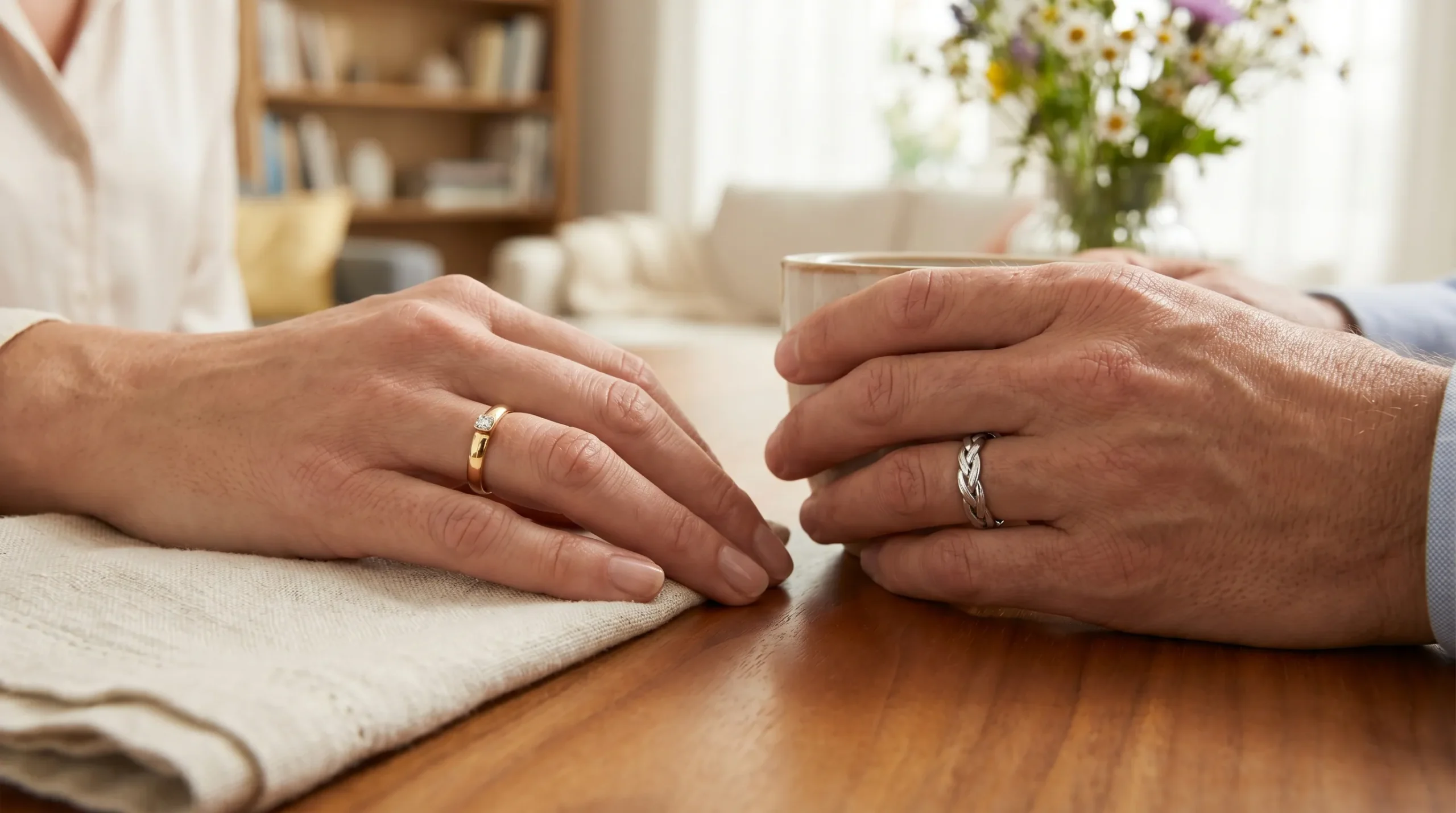
What hand is the wedding ring worn on is one of the most common questions people ask when they are planning a wedding, getting engaged, or simply trying to understand ring etiquette. The short answer is that in many countries, the wedding ring is traditionally worn on the fourth finger of the left hand, also called the ring finger. But that is not the only correct answer. In many parts of the world, a wedding ring on the right hand is just as normal, meaningful, and traditional.
That is why this topic creates so much confusion. One person learns that the left hand ring finger is the standard. Another sees family members wear a wedding band on the right hand. Someone else wonders how an engagement ring and wedding band should be worn together. The truth is simple: tradition matters, but culture, religion, comfort, and personal choice matter too.
This guide explains what finger does a wedding ring go on, why the fourth finger of the left hand became so important, when the right hand wedding ring meaning makes sense, and how to wear both an engagement ring and a wedding ring in a way that feels right for your life.
The Short Answer: Which Hand and Finger Is Traditional?
In most Western traditions, the wedding ring is worn on the fourth finger left hand. That is why many people refer to it as the wedding ring finger or simply the ring finger. If someone asks, which finger should you wear your wedding ring on, that is the classic answer they expect.
Still, wedding ring etiquette is not universal. In some countries, the ring goes on the right hand instead. So if you are asking wedding ring right or left, the honest answer is that both can be correct depending on culture, family custom, and religious tradition.
A simple way to think about it is this: in places like the United States and the UK, the left hand is more common. In other regions, including parts of Eastern Europe, Germany, Greece, and India, the right hand may be the stronger tradition. That means the answer to what hand does the wedding ring go on is not just about jewelry. It is also about identity, heritage, and what feels meaningful to the couple.
Why Is the Wedding Ring Usually Worn on the Left Hand?
The tradition of wearing a wedding ring on the left hand is often connected to the idea of the vena amoris, sometimes called the vein of love. According to this old belief, a vein ran directly from the fourth finger to the heart. That made the ring finger feel like the perfect place for a symbol of love, unity, and commitment.
Today, people often mention the vena amoris as a romantic tradition rather than a medical fact. Still, the symbolism remains powerful. Over thousands of years, rings have represented eternity, wholeness, and an unbroken bond. Their circular shape has long stood for a love that has no end. That symbolism helps explain why is the fourth finger the ring finger in so many traditions.
References to ring traditions are often linked to ancient Egypt, ancient Greece, and ancient Rome. Even though customs have changed over time, the emotional meaning has stayed surprisingly consistent. A ring is more than metal. It is a visible sign of vows, marriage, and lifelong partnership.
So when people ask why is the wedding ring on the left hand, the answer is partly historical and partly symbolic. The left hand became traditional because it felt closely tied to the heart, and that image proved memorable enough to survive for millennia.
Why Do Some People Wear a Wedding Ring on the Right Hand?
A wedding ring on right hand does not mean something is wrong. In fact, for many couples, it is the correct and traditional choice. If you have wondered what does a wedding ring on the right hand mean, the answer usually comes down to cultural context, religion, or personal choice.
In some traditions, the right hand is associated with honor, strength, good faith, or the righteous path. In others, the ring is worn on the right hand simply because that is how marriage customs developed in that region. This is why the right hand wedding ring meaning can vary from one place to another.
For some people, a ring on the right hand also reflects relationship status in a modern, individual way. A couple may decide to wear rings on the right hand because it matches their family custom. Another person may prefer it because the left hand feels uncomfortable, especially if they are left-handed or work with their hands all day. In that case, personal style, comfort, and maintenance become more important than strict tradition.
So if you are asking can you wear your wedding ring on your right hand, the answer is yes. And if you are asking is there a wrong hand for a wedding ring, the better answer is usually no. What matters most is whether the ring placement reflects your tradition, your lifestyle, and your meaning.
Wedding Ring Traditions by Country and Culture
One of the biggest reasons this topic feels confusing is that wedding ring traditions by culture are not the same everywhere. A guide that only says “left hand” leaves out a big part of the story.
In countries like the United States, the UK, and often Italy, the left hand ring finger is the best-known tradition. Many people grow up seeing parents, grandparents, and married couples wear rings that way, so it feels natural and familiar. In those places, the phrase what hand is the wedding ring worn on usually leads to the expectation of a left-hand answer.
But in countries such as Germany, Austria, Poland, Russia, Ukraine, Greece, and some parts of India, the right hand may be more traditional. That is why wedding ring customs around the world deserve a clear explanation in any strong article on this topic.
Here is a simple overview:
| Region or Country | More Common Tradition |
| United States | Left hand, fourth finger |
| UK | Left hand, fourth finger |
| Germany | Right hand |
| Austria | Right hand |
| Poland | Right hand |
| Russia | Right hand |
| Ukraine | Right hand |
| Greece | Right hand |
| India | Varies by community and custom |
This is why married ring hand by country is such a useful topic for readers. It shows that the meaning of a ring depends on where you are and what tradition you follow. A person wearing a ring on the right hand in Eastern Europe may be honoring a long-standing custom, not breaking etiquette.
The best takeaway is that wedding ring symbolism by country is real. The same ring placement can carry different meanings depending on the culture around it. That is exactly why this subject deserves more than a one-sentence answer.
Wedding Ring Traditions by Religion
Religion can influence ring-wearing just as much as geography. When people search wedding ring by religion or wedding ring traditions by religion, they usually want to know whether a faith community has specific expectations.
For example, some Orthodox Christian traditions favor the right hand. In certain communities, the right side carries special spiritual meaning and is tied to the seriousness of vows and the marital bond. In other Christian communities, including many shaped by Catholicism or Protestants, the left hand is more familiar.
There are also Jewish traditions where ring placement during the ceremony can differ from what happens later in everyday life. That distinction is important because a wedding ceremony may use one symbolic practice, while long-term daily wear may follow another. This is one more reason readers often feel unsure about the “correct” answer.
The safest and most useful way to explain this section is to say that religion, region, and family habit often overlap. A couple may think they are following religion when they are really following local custom. Or they may think they are following local custom when their family’s practice was shaped by faith generations ago.
What About Engagement Rings and Wedding Bands?
This is where the topic becomes even more practical. Many readers do not just want to know what hand does the wedding ring go on. They also want to know how to wear your engagement ring and wedding band.
Traditionally, both the engagement ring and wedding band are worn on the ring finger of the left hand in many Western customs. The usual order is wedding ring first, then the engagement ring. The reason is symbolic: the wedding band sits closer to the heart.
That is why people often ask questions like wedding ring and engagement ring order or engagement ring on top or bottom. The classic answer is simple. The wedding band goes on first, closest to the hand, and the engagement ring sits above it. But that is only one method.
Some people prefer to wear the engagement ring on one hand and the wedding ring on the other. Others wear only the wedding band day to day and save the engagement ring for special events. This is especially common when someone values comfort, works in a job where a larger stone is not practical, or prefers a simpler look.
On the wedding day, some brides move the engagement ring temporarily so the exchange of rings feels smoother. Later, the engagement ring is placed back on top. This is a small detail, but it matters because it answers a very common anxiety around ceremony etiquette.
A useful rule here is that there is a traditional ring placement, but there is also room for flexibility. If both rings on one finger feel right, do that. If wearing them on different hands works better, that can also be meaningful. The goal is not perfection. The goal is a ring setup that fits your relationship and your daily life.
Can Men and Women Wear Wedding Rings Differently?
A lot of people quietly wonder whether the answer changes by gender. Searches like what hand is the wedding ring worn on for men or what hand is the wedding ring worn on for women reflect that uncertainty.
In many modern settings, both men and women follow the same basic custom. If the family tradition is the left hand, both spouses may wear the ring there. If the tradition is the right hand, both may do that instead. In that sense, the answer is often the same for the bride and the groom.
Where the difference appears is usually in style rather than symbolism. A man may wear only a wedding band, while a woman may wear both an engagement ring and a band. Some couples want matching placement. Others do not mind a slightly different approach if one person wants more comfort or a simpler everyday setup.
So yes, rings can be worn differently, but that difference does not usually change the core meaning. The ring still represents love, commitment, and marriage.
Can You Wear a Wedding Ring on Any Finger or Hand?
This is one of the most helpful modern questions. Some people cannot wear a ring on the usual finger because of work, swelling, hand injuries, or daily comfort. Others simply want a nontraditional wedding ring placement.
If you are asking can you wear your wedding ring on any finger, the answer is yes. Tradition points to the ring finger, but real life sometimes asks for flexibility. A person may choose another finger, a different hand, or even wear the ring on a necklace for safety.
Here are a few real-world reasons:
- A person is left-handed and wants less wear and tear.
- Their job makes ring damage more likely.
- The ring stack feels uncomfortable.
- They prefer a wedding ring on dominant hand for personal reasons.
- They travel often and use a simpler substitute.
That last point matters because many people now use a silicone wedding band, a temporary ring, or a travel-safe option. These choices do not reduce the emotional value of the ring. They simply reflect modern life.
Modern Wedding Ring Etiquette: What Matters Most Today
Modern wedding ring etiquette is much more flexible than older guides suggest. The old rules still matter, especially if tradition is important to you, but today the more useful question is not “What is the one correct way?” It is “What way makes the most sense for us?”
For many couples, the answer combines timeless customs with practical choices. They may follow the traditional left hand placement at the ceremony, then adjust later for comfort, work, or personal style. Some couples choose the right hand to honor cultural heritage. Others prefer a minimalist look with only one ring most of the time.
This is where meaningful choices matter more than rigid rules. A wedding ring is a public symbol, but it is also personal. A ring worn on the “wrong” hand for one person may be exactly right for another.
You can think of modern etiquette in three parts:
- Honor your tradition if it matters to you.
- Choose comfort and safety for daily wear.
- Stay consistent with what feels meaningful as a couple.
That approach is far more helpful than pretending there is only one universal answer.
Practical Reasons People Change How They Wear Their Wedding Ring
Competitors often mention tradition, but not enough explain the practical side. In real life, people change how they wear rings for all kinds of sensible reasons.
Someone in healthcare, construction, fitness, or manual work may choose a work-safe wedding ring or a wedding band for active lifestyle needs. Another person may switch to a travel wedding ring while on vacation. Others use stand-in rings, a placeholder ring, or a simpler band during pregnancy, sports, or physically demanding routines.
Here is a quick comparison:
| Situation | Common Solution |
| Manual labor or gym use | Silicone wedding band |
| Travel | Travel wedding ring or plain band |
| Formal events | Full ring stack |
| Daily comfort concerns | Only the wedding band |
| Temporary sizing changes | Stand-in rings or resizing later |
These choices are practical, not less romantic. They show that marriage exists in everyday life, not just in photos or ceremonies.
Frequently Asked Questions
Is the wedding ring worn on the right or left hand?
Both are correct depending on country, culture, and religion. In many Western traditions, it is worn on the left hand. In other traditions, the right hand is standard.
Which finger is the wedding ring finger?
The traditional wedding ring finger is the fourth finger of the hand, usually called the ring finger.
Can you wear your wedding ring on your right hand?
Yes. A wedding ring on the right hand can reflect cultural custom, religious tradition, or personal preference.
What does a wedding ring on the right hand mean?
The meaning of a wedding ring on the right hand varies. It may symbolize marriage in a certain culture, honor family practice, or simply be the most comfortable choice.
Do both spouses wear wedding rings?
In many marriages, yes. But not every couple makes the same choice. Some wear matching bands, while others choose different styles or different daily routines.
Can you wear your wedding ring and engagement ring on different hands?
Yes. While tradition often places both on the same finger, many people wear them on different hands for comfort, style, or convenience.
Is there a wrong hand for a wedding ring?
Usually, no. There may be a traditional hand in your culture, but the “wrong” hand is often just the hand that does not match that custom. It does not make the marriage any less real.
Final Answer: Tradition Matters, but So Does Personal Meaning
So, what hand is the wedding ring worn on? In many places, it is worn on the fourth finger of the left hand. But in many others, the right hand is equally traditional and meaningful. That means the best answer is not just left or right. It is the hand that fits your tradition, your culture, your religion, and your daily life.
If you want the classic answer, choose the left ring finger. If your family or community uses the right hand, that is just as valid. If comfort, work, or lifestyle lead you to a different choice, that can still be completely appropriate. In the end, a wedding ring is a symbol of love, unity, and commitment. The hand matters, but the meaning matters more.
Disclaimer:
This article is for informational purposes only. Traditions, customs, and personal choices regarding wedding rings vary worldwide. Readers should consider cultural, religious, and individual factors and make decisions that best suit their situation and preference.