

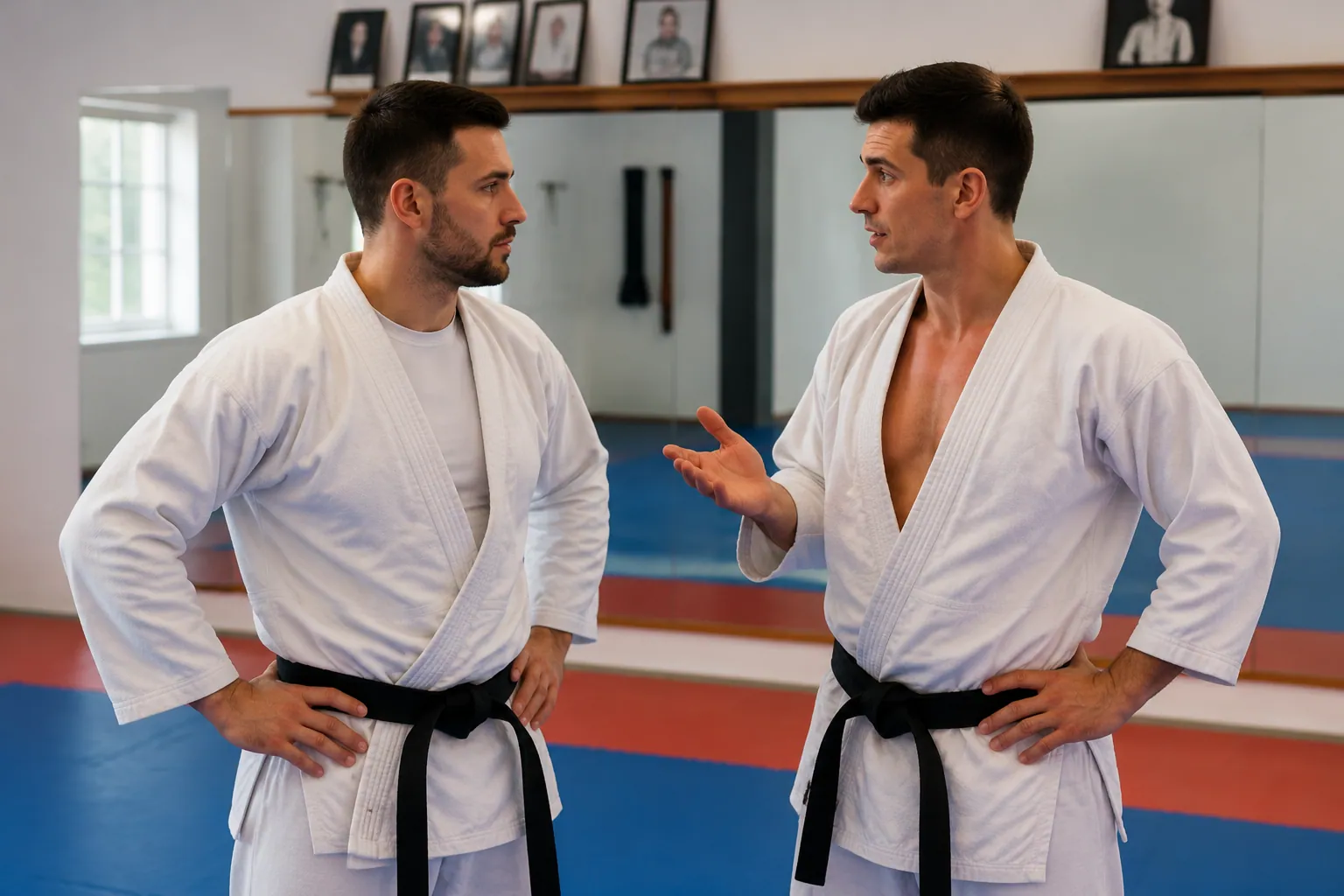
Introduction: Can a Man Wear a Shirt Under His Karate Gi?
The short answer is: sometimes, but it depends on the dojo, the instructor, the karate style, and the rules of the event. In many traditional karate schools, adult men usually train with no shirt under the gi jacket because that is part of the standard men’s karate uniform and long-standing karate uniform etiquette.
However, not every dojo follows the same approach. Some schools allow a plain white T-shirt, a fitted karate gi undershirt, a compression shirt, or even a rash guard under the gi for practical reasons. A student may want an extra layer for comfort, modesty, cold weather, sweat control, or skin irritation, especially if the gi fabric feels stiff during the first few classes.
If you are new to karate, do not feel embarrassed about asking. A simple question like, “Sensei, is it okay if I wear a plain shirt under my karate gi?” is completely normal. Most instructors would rather you ask before class than guess and accidentally break the karate dojo rules.
This guide explains what to wear under a karate gi, when a shirt is acceptable, what type and color works best, how tournament rules may differ from regular training, and the common beginner mistakes men should avoid.
Is It Okay for Men to Wear a Shirt Under a Karate Gi?
Yes, men can sometimes wear a shirt under a karate gi, but only if the dojo allows it. For regular training, the final answer usually depends on the school’s karate gi dress code, the instructor’s preference, and how traditional the class is.
In many traditional karate classes, adult men are expected to wear nothing under the gi top. This is often seen as the standard karate beginner uniform and part of the clean, simple look of the gi. However, some modern dojos are more flexible, especially for beginners, children, teens, or students who need an extra layer for comfort.
If shirts are allowed, the safest choice is usually a plain white shirt under the gi. It should be fitted, lightweight, and moisture-wicking so it does not bunch up, show through too much, or interfere with movement. A simple athletic undershirt is usually better than a loose cotton T-shirt.
For tournaments, never assume the same rule applies. Official karate uniform rules for men can be stricter during competitions, belt tests, and formal events. A shirt that is fine in regular class may not be allowed if it is visible under the gi jacket.
As a general rule, avoid bright colors, graphics, logos, loose cotton shirts, hoodies, collars, zippers, or anything distracting. When in doubt, ask your instructor before class. That is the most respectful and reliable way to know whether men can wear a T-shirt under a gi at your specific dojo.
Why Many Traditional Karate Dojos Prefer No Shirt Under the Gi
Many traditional karate schools prefer men to wear no shirt under the gi because the uniform is not treated as ordinary workout clothing. A traditional karate gi represents discipline, respect, focus, and readiness to train. When students line up in the dojo, the goal is often for everyone to look clean, simple, and uniform.
In many schools, the gi jacket is expected to sit directly over the body. This gives the uniform a neat shape and keeps the appearance consistent across the class. A visible T-shirt can sometimes look too casual, especially if it has a bright color, logo, graphic, or loose neckline. For instructors who follow older karate uniform tradition, that extra layer may take away from the formal look of the gi.
Some dojo dress code policies are very specific and may state that male students should not wear anything under the gi jacket. This is usually not meant to make beginners uncomfortable. It is simply part of the school’s karate etiquette and training culture.
Still, this does not mean wearing a shirt is wrong in every karate school. Karate gi rules can vary depending on the style, country, instructor, student age, class type, and level of formality. A strict traditional dojo may say no, while a family-focused or beginner-friendly school may allow a plain white undershirt for comfort or modesty.
The best approach is to respect the school you train in. If you are unsure, ask your sensei before class. A polite question shows that you care about doing things correctly, which is exactly the kind of attitude most karate instructors appreciate.
When Wearing a Shirt Under a Karate Gi Makes Sense
Although many traditional schools prefer men to train without a shirt under the gi jacket, there are times when wearing a shirt under a karate gi can make practical sense. Karate training should still feel respectful and disciplined, but students also need to be comfortable enough to move, focus, and learn properly.
One common reason is modesty. Some men, especially beginners, may feel uncomfortable training with only the gi jacket over their upper body. Since the jacket can shift during punches, blocks, sparring, or partner drills, a simple underlayer can help a new student feel more confident during class.
Weather can also matter. In colder months, a thin compression shirt under the gi may help keep the body warm during warmups or while standing in line for instruction. The shirt should still be lightweight and fitted so it does not restrict movement or make the uniform look bulky.
A shirt may also help with karate gi comfort. New gi fabric can feel stiff, rough, or scratchy at first, especially around the chest, shoulders, and collar area. For students with sensitive skin, a soft undershirt can reduce rubbing until the gi softens after several washes.
Sweat control is another practical reason. During long classes, hard conditioning, or summer training, moisture-wicking fabric can feel better than bare skin against a heavy gi. It may also help reduce chafing, although the shirt and gi still need to be washed after every class.
Some students may need extra coverage for medical, personal, or religious reasons. In those cases, a respectful conversation with the instructor is usually the best step. Most reasonable dojos want students to train safely while still following the school’s standards.
For teen students and younger boys, parents may also prefer a plain shirt as part of their karate training clothes, especially during beginner classes. This is common in family-focused schools where comfort and confidence help children stay engaged.
The most important rule is simple: ask your sensei before making it a habit. A plain shirt may be completely fine in one dojo and discouraged in another, so the instructor’s guidance should always come first.
What Type of Shirt Should a Man Wear Under a Karate Gi?
If your dojo allows an undershirt, the safest choice is usually a plain white fitted T-shirt. A white T-shirt under a karate gi looks cleaner, shows less through the uniform, and is less likely to distract from the traditional appearance of the gi. It should fit close to the body without feeling tight, so it does not bunch up when you punch, block, bow, or move through kata.
For better comfort during harder training, a moisture-wicking compression shirt can be a good option. This type of karate undershirt for men helps manage sweat better than regular cotton and usually stays in place during movement. A compression top under a karate gi should be thin, plain, and simple, not heavily branded or brightly colored.
If you have sensitive skin, choose a soft athletic shirt with flat seams. This can reduce rubbing around the shoulders, chest, and sides, especially if your gi is new or made from heavier cotton canvas. For cold-weather classes, a thin thermal compression top may help, but avoid bulky layers because they can restrict arm movement and make the gi jacket sit awkwardly.
For children and teen boys, a simple plain undershirt is usually best if the instructor allows it. It should stay tucked in, feel comfortable, and not show distracting colors or designs through the gi.
Try to avoid regular cotton shirts during intense training because they can become heavy, damp, and uncomfortable once they absorb sweat. Also avoid logos, slogans, bright colors, zippers, buttons, collars, hoodies, and baggy shirts. The best shirt under a karate gi is one that is clean, fitted, breathable, and respectful of the dojo’s uniform standards.
Shirt Under Karate Gi for Training vs. Tournaments
The rules for wearing a shirt under a karate gi can change depending on whether you are in a regular class, a belt test, or an official competition. For normal training, the decision is usually made by the dojo owner, sensei, or school policy. Some instructors allow a plain undershirt for comfort, while others prefer students to follow a more traditional look.
Tournaments are different. Karate tournament uniform rules are usually stricter because competitors need to meet official appearance and safety standards. In WKF-style events, the focus is on wearing an approved white karategi, the correct belt color, permitted labels, and a clean uniform that follows the event’s rules. Because of this, a visible shirt under the gi jacket may not be allowed, even if your dojo permits it during regular practice.
This is why students should never assume that class rules and karate competition gi rules are the same. A shirt that feels perfectly acceptable during weekly training could create a problem on the competition floor if the referee, judge, or event organizer considers it outside the uniform standard.
If you are competing, ask your coach before the event. It is also smart to bring a backup option, such as training without the undershirt or bringing a plain white fitted shirt only if it is approved. This prevents last-minute stress and helps you stay focused on your match or kata performance.
The same idea applies to belt testing. A karate grading uniform is often expected to look cleaner and more formal than a regular class uniform. For a promotion test, follow the same appearance standards your dojo expects for demonstrations, photos, ceremonies, or formal events.
In short, regular training may be flexible, but tournaments and grading days usually follow a stricter karate belt test dress code. When in doubt, ask early, dress simply, and keep your uniform neat, respectful, and competition-ready.
Do Karate Rules Differ for Men, Women, and Children?
Yes, karate rules can differ for men, women, and children, especially when it comes to what is worn under the gi jacket. Many traditional schools have different underlayer expectations based on age, comfort, modesty, and dojo etiquette.
In some dojos, adult men are expected to wear nothing under the gi top, while women and girls may be required or encouraged to wear a plain shirt, sports bra, or suitable underlayer beneath the gi. This is often part of the school’s men women karate gi rules and is usually meant to keep the uniform respectful, practical, and comfortable for everyone.
Children’s classes are often more flexible. A kids karate uniform may include a simple undershirt, especially for younger students who are still getting used to the feel of the gi. Some parents also prefer their child to wear a shirt underneath for modesty, warmth, or comfort during beginner lessons.
Teen boys may also feel more comfortable wearing an undershirt while they adjust to training. A plain boys karate gi undershirt can help them feel less self-conscious, especially if the gi jacket shifts during warmups, partner drills, or sparring practice. In beginner-friendly schools, instructors may allow this as long as the shirt is clean, plain, and not distracting.
For parents, the best step is to ask before buying extra gear. A parent guide karate uniform should always start with the local dojo’s policy, because one school may allow undershirts while another may expect a more traditional appearance.
The most reliable rule is simple: follow your local dojo policy, not random internet advice. Every school has its own standards for a karate gi for beginners, and respecting those standards is part of learning karate etiquette from the beginning.
Hygiene and Comfort: Does a Shirt Under the Gi Help?
A shirt under the gi can help with hygiene and comfort, but only if it is the right kind of shirt and it is washed properly after every class. During training, the gi fabric can rub against the skin, especially around the chest, shoulders, sides, and collar area. For some students, a thin undershirt creates a softer layer between the body and the uniform.
A shirt can also absorb sweat and reduce direct contact between skin and gi fabric. This may feel more comfortable during long classes, warm weather training, sparring drills, or hard conditioning. If you often deal with a sweaty karate gi, a fitted undershirt can make training feel a little cleaner and less distracting.
However, fabric choice matters. A moisture-wicking shirt usually feels lighter than regular cotton because it is designed to move sweat away from the skin. Cotton may feel comfortable at first, but once it gets wet, it can become heavy, damp, and clingy. A damp cotton shirt may also increase chafing under the gi, especially during repeated punches, blocks, stances, and partner work.
It is important to remember that wearing a shirt does not replace washing the gi. Good karate gi hygiene means washing your uniform regularly, keeping it dry between classes, and never wearing a dirty or sour-smelling gi back into the dojo. Any shirt worn under the gi should also be washed after every class, even if it does not look dirty.
If a student sweats heavily, packing an extra shirt for after class can help. This is especially useful for teens, adults training after work, or anyone who has a long ride home after practice. Changing out of a wet undershirt can reduce discomfort and help keep the gi bag from smelling bad.
Clean, dry, well-fitted uniforms are a simple but important part of karate training hygiene. They show respect for your instructor, your training partners, and the dojo space. Whether you wear a shirt under your gi or not, the goal is the same: stay clean, comfortable, and ready to train with focus.
Common Mistakes Men Make When Wearing a Shirt Under a Karate Gi
One of the most common karate beginner mistakes is treating the gi like regular gym clothing. A karate uniform has its own etiquette, and even a small detail like the shirt underneath can affect how neat, respectful, and practical the uniform looks.
A big mistake is wearing a colorful or graphic T-shirt under a white gi. Since many karate gis are white and slightly see-through, a bright shirt, large logo, or printed design can show through the fabric. This can look distracting and may not match the dojo’s dress code. If shirts are allowed, a plain white fitted shirt is usually the safest choice.
Another issue is wearing a loose shirt that bunches under the gi jacket. This can make the uniform feel uncomfortable and may affect your karate gi fit. A shirt that twists, rides up, or gathers around the waist can distract you during kata, basics, sparring drills, or partner work.
Thick layers are also a problem. A heavy hoodie, bulky thermal shirt, or oversized cotton top can restrict punches, blocks, stances, and shoulder movement. Karate requires clean technique, so anything under the gi should be thin, flexible, and easy to move in.
Some men also assume karate rules are the same as BJJ or judo. They are not always the same. Rash guards may be common in Brazilian jiu-jitsu, and judo may have its own uniform expectations, but karate dojos often follow different traditions. This is why it is important to understand what not to wear under a karate gi before copying advice from another martial art.
Wearing a shirt to a tournament without checking the rules is another common mistake. A shirt that is fine in regular class may not be allowed in competition. Before a belt test, grading, or tournament, ask your instructor what is acceptable.
Also avoid letting the undershirt hang below the gi jacket. Even if the shirt itself is plain, a visible hem can make the uniform look untidy. The shirt should stay tucked, fitted, and hidden as much as possible.
Fabric choice matters too. A shirt that traps sweat and odor can quickly become uncomfortable, especially during hard training. Cotton may feel soft at first, but it can become heavy and damp. A lightweight moisture-wicking shirt is usually better if your dojo allows it.
The biggest mistake, however, is ignoring the sensei’s preference. Most karate uniform mistakes can be avoided by asking one simple question before class: “Is this okay to wear under my gi?” That shows respect and helps you follow the standards of your dojo from the beginning.
Karate Gi vs. BJJ Gi: Why Undershirt Advice Can Be Confusing
Undershirt advice can get confusing because many online answers are written for Brazilian jiu-jitsu, not karate. Both arts use a gi, but the uniforms, training methods, and etiquette are not always the same. This is why beginners should be careful when comparing a karate gi vs BJJ gi.
In BJJ, students spend a lot of time grappling, rolling, and training on the mat. Because of that, wearing a rash guard under a gi is common. A rash guard may help with sweat control, skin protection, and comfort during close-contact training. Many BJJ schools either allow or encourage rash guards because they fit the demands of grappling.
Karate is different. While some karate classes include partner drills, self-defense practice, or light grappling, traditional karate is usually more focused on striking, stances, kata, kihon, and controlled sparring. Because of this, karate uniform vs BJJ uniform expectations can be very different. A shirt or rash guard that seems normal in BJJ may look out of place in a traditional karate dojo.
This is also why general “gi” advice is not always reliable. A martial arts gi undershirt recommendation may be useful for jiu-jitsu, judo, or mixed martial arts training, but it may not match your dojo’s karate gi rules. A BJJ rash guard rule does not automatically apply to karate.
If you are searching online, be specific. Instead of looking up only “what to wear under a gi,” search for what to wear under a karate gi or ask your instructor directly. The safest answer will always come from the dojo where you actually train, because karate etiquette depends on the school, style, and instructor.
How to Ask Your Sensei About Wearing a Shirt Under Your Gi
If you are unsure about the rule, the best thing to do is ask your sensei about gi rules before class. This is especially important for beginners because every dojo has its own standards. Asking first shows respect and helps you avoid feeling awkward once training begins.
Try to ask privately before or after class, not during bow-in, warmups, or formal instruction. A simple, respectful question is enough: “Sensei, is it okay if I wear a plain white undershirt under my gi?” You do not need to overexplain, but it can help to briefly mention your reason if it matters.
For example, you might say it is for comfort, skin irritation, modesty, religious reasons, or cold weather. Most instructors understand that students have different needs, especially during their first few classes. Good karate instructor advice should help you follow the dojo standard while still training comfortably.
If the instructor says no, be willing to follow the rule. In karate, respect is not only shown through bowing or saying “oss.” It is also shown by accepting the dojo’s expectations, even when they are different from what you first expected.
For children, parents can ask the front desk, program coordinator, or instructor before the first lesson. This is a smart step when preparing a first karate class outfit, especially if the child feels shy, cold, or uncomfortable without an undershirt.
If the dojo allows a shirt, ask what color and style is preferred. Many schools that permit undershirts prefer something plain, fitted, and white. A quick karate uniform question before class can prevent confusion and help you follow proper karate dojo etiquette for beginners from the start.
Quick Decision Guide: Should a Man Wear a Shirt Under His Karate Gi?
If you are still wondering, should I wear a shirt under karate gi training clothes? the safest answer is to follow your dojo’s rule first. Karate uniforms are not only about comfort; they also show respect for the school, the instructor, and the training environment.
If your dojo follows strict traditional etiquette, adult men may be expected to wear no shirt under the gi jacket. If your instructor allows an undershirt, choose a plain white fitted shirt that looks clean and does not distract from the uniform. For comfort, sweat control, or cold weather, a thin compression top may work better than a loose cotton T-shirt.
For formal grading, belt testing, demonstrations, and tournaments, be more careful. These events often have stricter uniform standards, so avoid wearing a shirt unless your instructor or event rules clearly approve it. When in doubt, ask first and bring a backup option so you are prepared either way.
| Situation | Best Choice |
| Traditional dojo | Usually no shirt |
| Beginner trial class | Ask first; plain white shirt may be okay |
| Cold weather | Thin compression top if allowed |
| Heavy sweating | Moisture-wicking undershirt if allowed |
| Tournament | Follow official event rules |
| Child or teen student | Ask instructor or parent coordinator |
This simple karate gi decision guide can help beginners avoid confusion. The best karate class clothing tips are usually the simplest: keep the uniform clean, choose plain colors, avoid anything distracting, and respect your sensei’s instructions. For any beginner karate uniform guide, the most important rule is to dress in a way that supports training, comfort, and dojo etiquette.
Conclusion: Can a Man Wear a Shirt Under His Karate Gi?
Can a man wear a shirt under his karate gi? Yes, sometimes, but the final answer depends on the dojo rules, the instructor’s preference, the karate style, and whether the student is training, testing, or competing. For regular classes, some schools are flexible. For traditional training or formal events, the expectations may be stricter.
In many traditional karate schools, men are expected to wear no shirt under the gi jacket. This is part of long-standing karate gi etiquette and helps keep the uniform simple, clean, and consistent across the class. However, practical exceptions do exist. A student may need an undershirt for comfort, modesty, cold weather, heavy sweating, skin irritation, medical needs, or personal reasons.
When shirts are allowed, the safest option is usually a plain white, fitted, moisture-wicking shirt. It should stay tucked, avoid logos or bright colors, and not interfere with movement. A good men’s karate gi should still look neat, respectful, and ready for training.
The best karate uniform advice is simple: ask your sensei before deciding what to wear under a karate gi. Karate uniform etiquette is not about embarrassment or perfection. It is about respect, safety, cleanliness, and learning the standards of your dojo.
FAQs About Wearing a Shirt Under a Karate Gi
Can a man wear a T-shirt under his karate gi?
Yes, a man can wear a T-shirt under his karate gi if the dojo allows it. Some schools are flexible, especially for beginners, teens, or students who want extra comfort. However, in many traditional karate schools, men may be expected to wear no shirt under the gi jacket as part of the standard uniform etiquette. The best answer is always to ask your instructor before class.
What color shirt should I wear under a karate gi?
A plain white shirt is usually the safest choice because it matches the clean look of the gi and is less distracting. Avoid bright colors, dark shirts, graphics, large logos, slogans, or patterns that may show through the uniform. If your dojo has specific karate T-shirt rules, follow those first.
Can I wear a compression shirt under my karate gi?
Yes, a compression shirt is often acceptable for regular training if your instructor approves it. A good compression shirt should be fitted, plain, lightweight, and comfortable. It should not restrict your punches, blocks, stances, or kata movement. For sweat control, a moisture-wicking compression shirt may feel better than a regular cotton T-shirt.
Do men wear rash guards under karate gis?
Men can wear rash guards under karate gis in some schools, but it is less common in traditional karate than in Brazilian jiu-jitsu. Rash guards are more popular in grappling arts because they help with mat contact, sweat, and skin protection. In karate, a rash guard may be useful if the class includes groundwork, self-defense drills, or heavy sparring, but you should ask your sensei first.
Can boys wear shirts under karate gis?
Yes, many children’s karate programs are more flexible about undershirts. A boys karate uniform may include a plain white undershirt for modesty, comfort, warmth, or confidence during beginner classes. Parents should ask the instructor or program coordinator before class so the child arrives dressed correctly.
Can I wear a shirt under my gi for a karate tournament?
Do not assume you can wear a shirt under your gi for a tournament. Karate tournament undershirt rules may be stricter than regular class rules. Some events may not allow visible shirts under the gi jacket, especially if they follow formal competition standards. Always check the official tournament rules or ask your coach before the event.
Disclaimer: This article is for general informational purposes only. Karate uniform rules, dojo expectations, personal comfort, and tournament requirements may vary by school, instructor, organization, and individual situation. Always follow your dojo’s official guidance or ask your instructor for the most accurate advice.