

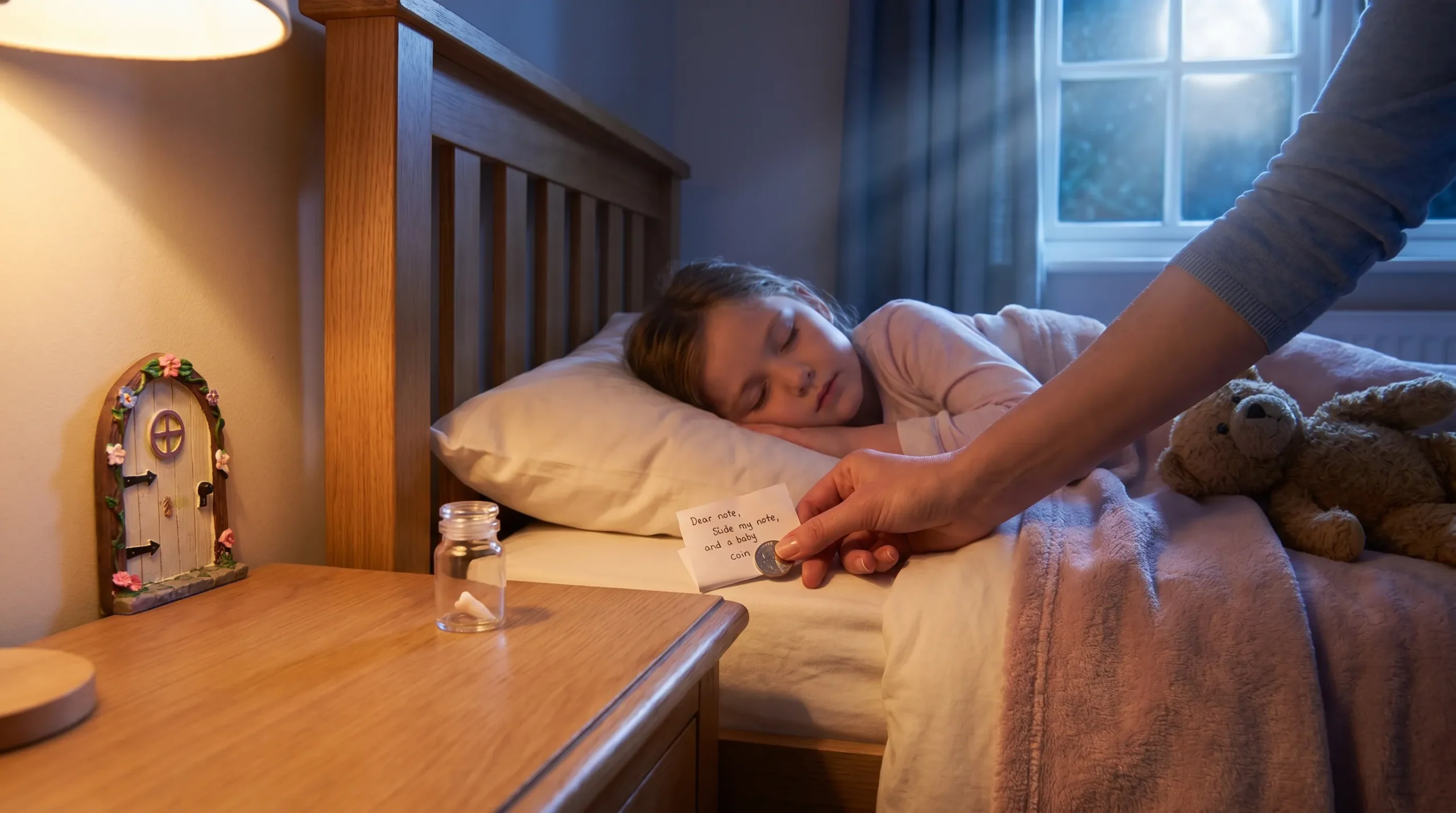
Is the tooth fairy real? Not in the literal sense. But for many families, the Tooth Fairy is still very real as a tradition, a moment of comfort, and a fun way to make losing baby teeth feel exciting instead of scary. Many current parent and dental resources frame the answer this way: the character is fictional, but the joy, bonding, and healthy habits connected to the tradition can absolutely be real.
For parents, that is why this question can feel tricky. A child is rarely asking for a lecture on folklore. They are usually asking something more personal: “Can I still believe?”, “Can I trust you?”, or “What does this mean now that I’m growing up?” That is why the best answer is usually not cold or overly serious. It is honest, age-aware, and gentle. Colgate’s guidance focuses on exactly that approach: follow your child’s lead, consider their age, and respond with care.
The Short Answer: Is the Tooth Fairy Real?
The short answer is simple: the Tooth Fairy is a folklore character, not a real being who physically flies into bedrooms at night. Wikipedia describes the Tooth Fairy as a folkloric figure of early childhood in Western and Western-influenced cultures, connected to the custom of placing a lost tooth under a pillow or on a bedside table in exchange for a small payment.
That said, many parents do not want to answer the question with a flat “No” and stop there. That is understandable. For a child, the magic of the Tooth Fairy is often tied to bigger things: feeling brave about a loose tooth, enjoying a family ritual, and feeling celebrated during a milestone. Palisades Dental Care makes this point directly, saying the Tooth Fairy may not be real in the literal sense, but the happiness and family bonding around the tradition are real.
So, if you are looking for the most balanced tooth fairy truth, it is this: the character is make-believe, but the experience can still have real emotional value. That framing works especially well for parents who want to preserve warmth without avoiding the truth.
How to Answer Your Child Without Ruining the Magic
This is the section most parents really need, because “how to answer is the tooth fairy real” is often the real intent behind the search. Colgate recommends starting by asking your child what they think and judging whether they want reassurance or whether they are truly ready for the truth.
A gentle way to respond is to match your answer to your child’s tone. If they are smiling and clearly still enjoying the story, you can say something like: “The Tooth Fairy is part of the magic families create when kids lose teeth.” If they are asking more seriously, a better answer might be: “The Tooth Fairy is a fun tradition parents do because they love making this milestone special.” Both responses are more helpful than either a harsh dismissal or an overly complicated explanation.
Colgate’s best advice is still strong here: follow your child’s lead, consider your child’s age, and be gentle with your response. That matters because children are not all asking the same question. One child may want comfort. Another may want proof. Another may already know and just want you to confirm it kindly.
A useful parent script can look like this:
| Situation | What you can say |
| Child sounds curious but hopeful | “What do you think?” |
| Child seems anxious or uncertain | “It’s a fun family tradition that helps make losing teeth feel special.” |
| Child asks very directly | “The Tooth Fairy isn’t a real person, but parents keep the tradition going because it’s joyful and memorable.” |
| Child has younger siblings | “Now you get to help keep a little magic alive for them too.” |
That last point matters more than many parents expect. In the Reddit discussion from parents, a common view was that once children start asking directly, especially around age 10, it is usually better to be truthful. Several parents also said older children often enjoy becoming part of the “secret” for younger siblings or cousins rather than feeling betrayed.
So if you want to know how to answer without lying, the best approach is not to argue that the Tooth Fairy is factual. It is to explain that it is a family tradition built around love, imagination, and growing up.
What Age Do Kids Stop Believing in the Tooth Fairy?
There is no single perfect age, but many children begin to question the Tooth Fairy between six and nine, and some hold on longer depending on personality, siblings, classmates, and how the tradition is handled at home. Palisades says children typically start questioning the Tooth Fairy between ages six and nine, while Colgate notes that age and peer reactions can shape how parents respond.
Real-world parent discussions suggest the questioning period often stretches a bit further. In the Reddit thread, parents commonly described the turning point as happening around 9, 10, or 10–11, especially once a child starts asking more directly or hearing schoolmates talk. One comment put it very plainly: once they start asking, especially at age 10, better to be truthful.
That does not mean a child is “behind” if they still believe at 9 or 10. It usually just means they enjoy wonder, trust family traditions, or have not cared enough to investigate. The better question is not “What age is correct?” but “Is my child ready for a more direct answer?” That is a healthier and more respectful guide than choosing a number alone.
Why Kids Believe in the Tooth Fairy
Children believe in the Tooth Fairy for the same reason they believe in many magical stories: childhood imagination is powerful, and rituals help ordinary events feel meaningful. Palisades explains that magical stories offer children comfort and excitement, turning the loss of a tooth into something positive and rewarding.
That matters because losing a tooth can feel strange. It can be messy, uncomfortable, and a little scary, especially the first time. A tradition like the Tooth Fairy gives children a structure for that experience. Instead of focusing only on blood, discomfort, or change, the child focuses on a note, a coin, a tiny surprise, or the excitement of waking up the next morning. Palisades explicitly describes the Tooth Fairy as a way to transform the moment into a positive family memory.
There is also a social side. Many children hear about the Tooth Fairy from siblings, classmates, books, and the wider culture. Brett Blacher’s article notes that belief in the Tooth Fairy is widespread and cites a range of about 40–65% of children believing in it, depending on age.
So when parents ask about magical thinking in children, the answer is that belief is usually not a problem to fix. It is often a normal part of how children make sense of growing up. The more important task is helping them transition out of that belief kindly when the time comes.
Where Did the Tooth Fairy Come From?
The modern Tooth Fairy is relatively recent compared with figures like Santa Claus or the Easter Bunny, but the customs around children’s lost teeth are much older. Wikipedia says the earliest written evidence for the modern American Tooth Fairy dates to the early 20th century, while the broader folklore around disposing of baby teeth goes back much further.
Palisades explains that even before the modern Tooth Fairy appeared, people in different cultures had rituals around lost teeth. Some believed a child’s teeth needed to be buried, burned, or otherwise carefully handled for luck or protection. The article also notes that the first known mention of the Tooth Fairy in American literature appeared in the early 1900s.
Brett Blacher connects the tradition to older Northern European and Norse-style ideas around children’s teeth and notes how the custom gradually became the more familiar tradition many families know today. His article also emphasizes how strongly the tradition still lives in modern family culture.
In short, the answer to “where did the Tooth Fairy come from?” is not one neat origin story. It is more like a blend of old tooth customs, European folklore, and modern family storytelling. That mix is part of why the tradition feels both old-fashioned and surprisingly current.
Tooth Fairy Traditions Around the World
One of the most interesting things about this topic is that the exact Tooth Fairy tradition is not universal. Wikipedia describes the Tooth Fairy mainly as a figure in Western and Western-influenced cultures, which already tells us the custom changes depending on where a family lives and what traditions shaped them.
Palisades highlights one of the best-known alternatives: El Ratoncito Pérez, the little mouse from Spanish-speaking traditions who collects lost teeth. That version shows that the deeper idea is often the same even when the character changes. A child loses a tooth, a special visitor comes, and the event becomes a meaningful family ritual instead of just another childhood inconvenience.
That is helpful for parents because it removes pressure to do the tradition in only one way. Some families leave coins. Some leave a note. Some make a certificate or use a keepsake box. Some do almost nothing beyond a quiet exchange under the pillow. The tradition works because it feels personal, not because there is a single official rulebook.
How the Tooth Fairy Can Make Losing Teeth Less Scary
This is a major content gap many competing pages do not explore deeply enough. Losing a first tooth can feel exciting, but it can also feel unsettling. A child may worry about pain, blood, or whether more teeth will fall out unexpectedly. Turning that milestone into a celebration can reduce fear and give the child a sense of control. Palisades directly says the tradition can make losing a tooth feel positive, memorable, and reassuring.
That means the Tooth Fairy can serve a real emotional function. A small routine, a note, or a happy morning surprise tells the child: “This is normal. You are growing up. You are safe.” That may sound small, but for a young child, that reassurance matters.
A few simple ideas work especially well:
- A short note praising bravery
- A small coin or keepsake instead of an elaborate gift
- A family photo or journal entry for the first lost tooth
- A calm explanation that losing teeth is part of healthy growth
These ideas also help if you are trying to answer related searches like “first lost tooth milestone” or “how to make losing teeth less scary.” They are practical, comforting, and easy to personalize.
Can the Tooth Fairy Hurt Trust?
This is one of the most honest concerns parents have. The worry is not really about folklore. It is about parent-child trust. If a child later learns the Tooth Fairy is not real, will they feel lied to?
The sources here suggest that the answer depends less on the tradition itself and more on how parents handle the transition. Colgate warns that a direct confirmation can feel rattling for a child, which is why a gentle response matters. The Reddit thread shows that many parents do not view the tradition as harmful as long as they do not drag the story out once the child clearly wants a truthful answer.
A thoughtful approach is to frame the Tooth Fairy as a family ritual of imagination, not as a serious deception. When parents say some version of “we did this because it made growing up feel magical”, many children accept that easily. Some even feel proud to be included in the secret for younger siblings.
So yes, the tradition can become awkward if parents double down aggressively when a child is clearly done believing. But handled gently, it is usually remembered less as a betrayal and more as a sweet part of childhood.
What Does the Tooth Fairy Leave, and How Much Is Normal?
Parents also want practical guidance. What does the Tooth Fairy usually leave? Traditionally, the answer is a small payment, sometimes paired with a note or tiny gift. Wikipedia describes the folklore as a lost tooth being exchanged for a small payment. Palisades also mentions small gifts or coins as part of how families celebrate.
If you want a current benchmark, Delta Dental’s 2025 Original Tooth Fairy Poll reported that the average value of a lost tooth during the prior year declined from $5.84 to $5.01, and the value of a first tooth dropped from $7.29 to $7.09. That is useful as context, but it should not be treated like a rule. What matters most is choosing an amount or gesture that fits your family and keeps expectations realistic.
Here is a simple way to think about it:
| Option | Best for |
| A coin or small bill | Families who want a simple classic tradition |
| A note from the Tooth Fairy | Younger children who love imaginative details |
| A tiny keepsake | First tooth milestones |
| A toothbrush or floss | Parents tying the tradition to oral health |
The best tooth fairy money amount is not the national average. It is the amount that feels warm, sustainable, and not overly inflated for your household.
Can the Tooth Fairy Encourage Good Dental Habits?
Yes, and this is one of the strongest reasons some dentists and parents still like the tradition. Colgate says the Tooth Fairy can be an incentive that encourages children to care for their teeth and pay attention to oral health. Palisades makes the same point by recommending that parents use the occasion to talk about brushing, flossing, nutritious snacks, and protecting enamel.
Palisades specifically suggests reinforcing habits such as brushing teeth twice a day with fluoride toothpaste, flossing, choosing tooth-friendly snacks, and limiting sugary drinks. That makes the tradition more than a cute story. It becomes a doorway into healthy habits that a child can actually use.
A simple line in a note works well here: “The Tooth Fairy loves clean, healthy teeth.” It is playful, memorable, and aligned with the deeper purpose of helping children care for their smiles.
What to Say If Your Child Already Knows
Sometimes the hardest moment is not the first question. It is the moment your child clearly already knows. In that case, honesty is usually the best path. The Reddit thread repeatedly suggests that once a child is openly suspicious or asking direct questions, continuing the story too strongly can feel unfair.
A kind response might sound like this: “You figured it out. The Tooth Fairy is a tradition parents do to make losing teeth special. We loved doing it for you.” That kind of reply respects the child’s growing maturity without making them feel silly for having believed.
If they have younger siblings, this can also become a lovely transition point. Instead of ending the magic harshly, you invite them into a new role: someone who helps protect the wonder for someone else. That reframes the moment from loss into growth.
Final Answer
So, is the tooth fairy real? No, not literally. But the meaning behind the Tooth Fairy can be very real: comfort, joy, family tradition, and even motivation for better dental habits. That is why the tradition has lasted. It is not only about a coin under a pillow. It is about helping children move through a small but meaningful stage of growing up.
The best parent response is usually the one that balances honesty with warmth. You do not need to pretend forever, and you do not need to make the answer harsh. A gentle truth works well: the Tooth Fairy is a story families use to make childhood milestones feel magical. For most children, that answer is enough. And for most parents, it is the kind of answer that protects both wonder and trust.