

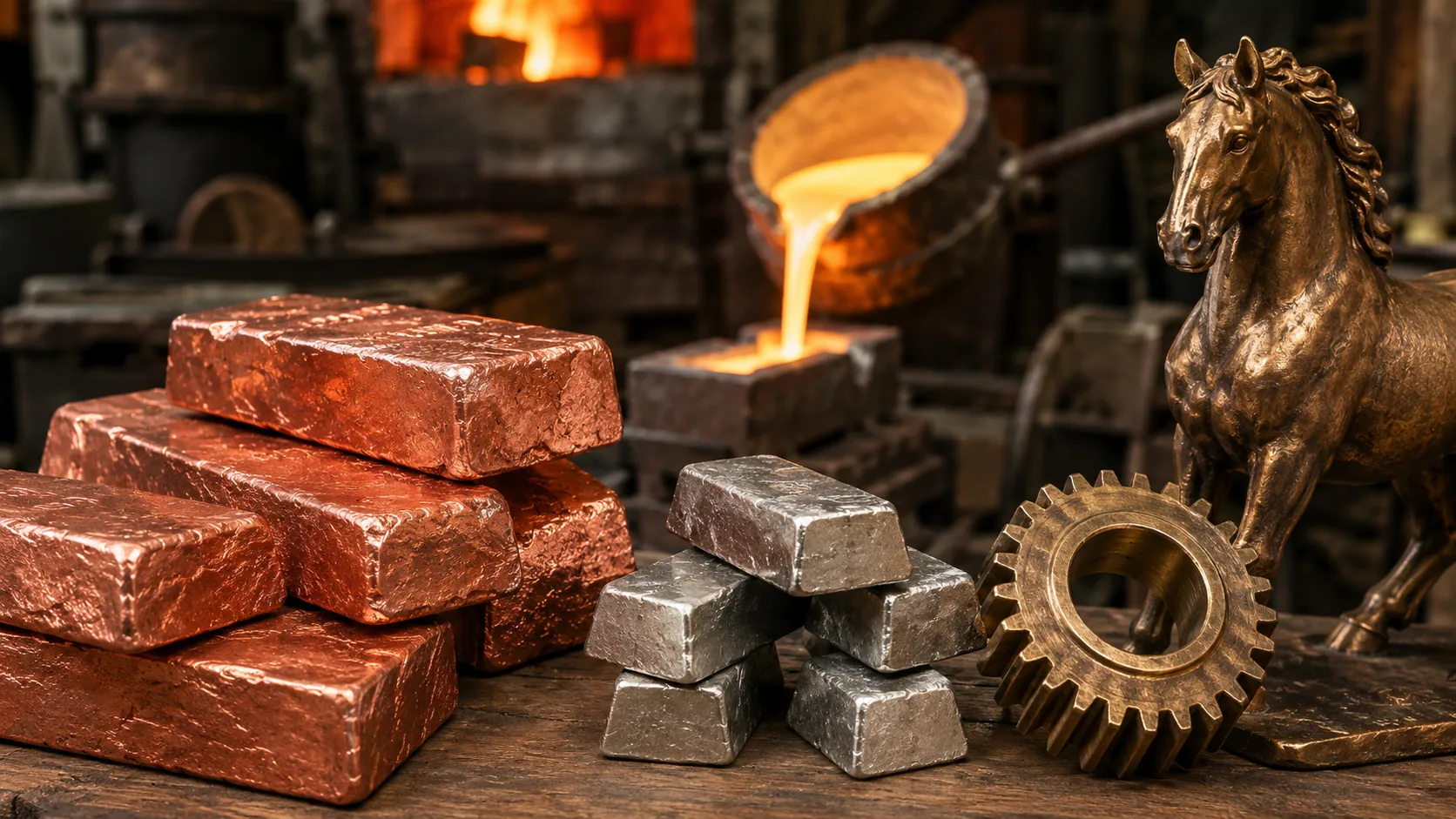
Bronze is mainly made from copper and tin, with copper acting as the main base metal and tin added to make the alloy harder, stronger, and more durable. In simple terms, bronze is a copper-based alloy, not a single pure metal. Traditional bronze is usually described as a copper and tin alloy, but modern bronze can also include other alloying elements such as aluminum, phosphorus, silicon, manganese, nickel, zinc, lead, bismuth, or arsenic, depending on the type and use.
That is why the answer to what is bronze made of can be simple or detailed. The simple answer is copper and tin. The deeper answer is that bronze composition changes depending on whether it is tin bronze, aluminum bronze, phosphor bronze, silicon bronze, manganese bronze, or bearing bronze. Each type is designed for different levels of strength, hardness, corrosion resistance, wear resistance, and castability.
Quick Answer: What Two Metals Make Bronze?
The two main metals in bronze are copper and tin. Copper is the main metal, while tin is the secondary metal added to improve the properties of copper. This copper-tin mixture creates a stronger and more useful material than pure copper alone.
A common modern bronze composition is often described as around 88% copper and 12% tin, although the exact percentage can vary. Some bronze alloys may contain up to 12% tin, while others include smaller or larger amounts of different metals to improve performance.
So, if you are asking what two metals make bronze, the best short answer is:
Bronze is traditionally made by mixing copper and tin.
However, not every bronze object contains only copper and tin. Modern bronze alloys may include extra metals such as aluminum, phosphorus, silicon, manganese, nickel, lead, or zinc. These added metals help bronze work better for specific uses, such as bearings, bushings, gears, marine parts, sculptures, bells, and musical instruments.
What Is Bronze?
Bronze is an alloy, which means it is made by combining metals. It is not a pure metal like copper, iron, gold, or silver. Instead, bronze is usually a copper-based alloy, meaning copper makes up the largest part of the material.
In traditional bronze, the main added metal is tin. When tin is mixed with copper, the result is a material that is harder and more durable than pure copper. This is why bronze became so important in human history. It was strong enough for tools, weapons, statues, and practical objects, which is why an entire period of history is known as the Bronze Age.
Bronze is also considered a non-ferrous alloy because it is not based on iron. This matters because many bronze alloys do not rust like iron or steel. Instead, bronze often forms a surface layer called patina, which can protect the metal and give it a greenish or brown aged appearance.
In everyday language, people may use “bronze” to describe both a material and a color. But in metallurgy, bronze metal composition refers to a family of copper-based alloys, not just one exact formula.
What Is Bronze Made Of?
Bronze is made mostly of copper, with tin as the traditional second metal. This is the basic answer to what metals are mixed to make bronze. Copper gives bronze its base, while tin changes its structure and improves its performance.
The exact bronze composition depends on the type of bronze. Traditional tin bronze may contain mostly copper with a smaller amount of tin. A common example is about 88% copper and 12% tin, but many bronze alloys have different ratios.
Modern bronze may include several other metals. These are not random additions. Each one changes the alloy’s behavior in a useful way.
| Metal in Bronze | Common Role in Bronze |
| Copper | Main base metal |
| Tin | Adds hardness, strength, and durability |
| Aluminum | Improves strength and corrosion resistance |
| Phosphorus | Improves wear resistance and stiffness |
| Silicon | Helps casting, welding, and corrosion resistance |
| Manganese | Adds strength for heavy-load applications |
| Nickel | Improves toughness and seawater resistance |
| Lead | Improves machinability and bearing performance |
| Zinc | May appear in some bronzes, but is mainly linked with brass |
| Bismuth | Sometimes used as a lead-free alternative |
This is why bronze is best understood as a metal mixture rather than one fixed material. A bronze statue, a bronze bearing, a bronze bell, and a bronze marine fitting may all contain different percentages of metals.
How Much Copper and Tin Are Usually in Bronze?
Most bronze contains more copper than any other metal. Tin is usually present in a smaller amount, but it has a big effect on the final alloy.
A common educational way to describe bronze is:
| Component | Role | Common Amount |
| Copper | Main base metal | Around 88% |
| Tin | Main added metal | Around 12% |
| Other elements | Performance modifiers | Small amounts depending on alloy |
This ratio is not a strict rule. Some types of tin bronze may contain up to 11% tin or up to 12% tin, while some industrial alloys use different percentages. For example, aluminum bronze may contain around 6% to 11% aluminum, and some industrial versions may include 9% to 14% aluminum depending on the grade.
The important point is that bronze is mostly copper. Tin or other metals are added to adjust the alloy’s hardness, strength, wear resistance, machinability, or corrosion resistance.
If you are writing a school answer, you can say: Bronze is an alloy made mainly of copper and tin. If you need a more detailed answer, you can add that some bronze alloys contain aluminum, phosphorus, silicon, manganese, nickel, lead, zinc, or bismuth.
Why Is Tin Added to Copper?
Tin is added to copper because it makes the final alloy more useful. Pure copper is soft, easy to shape, and highly conductive, but it is not always hard enough for tools, machinery, or long-lasting parts. When tin is added, the metal becomes stronger and more durable.
This is one reason bronze was such a major discovery. Bronze could be used for tools, weapons, bells, sculptures, and early mechanical parts because it performed better than copper alone. It also had better castability, meaning it could be melted and poured into molds to create detailed shapes.
Tin can improve several important bronze properties:
- Hardness, so the metal resists dents and deformation
- Strength, so it can handle more stress
- Wear resistance, so it lasts longer in moving parts
- Corrosion resistance, especially compared with some iron-based metals
- Castability, making it useful for artistic and industrial objects
This is why the question why is tin added to copper to make bronze is so important. Tin does not just change the color of copper. It changes how the metal behaves.
Other Metals That Can Be Found in Bronze
Although traditional bronze is made from copper and tin, many modern bronze alloys include other metals. These metals are added to create special properties for different jobs.
Aluminum bronze contains aluminum and is known for high strength and strong corrosion resistance, especially in marine environments. It is often used in propellers, pump shafts, valves, and hardware exposed to saltwater.
Phosphor bronze contains phosphorus, usually along with copper and tin. It is valued for wear resistance, stiffness, and good fatigue resistance. It is often used for springs, fasteners, and electrical contacts.
Silicon bronze contains silicon and is often used where good weldability, casting performance, and corrosion resistance are needed. It can appear in architectural applications, marine hardware, and decorative metalwork.
Manganese bronze contains manganese and is used for high-load applications. Some industrial manganese bronze alloys are known for high tensile strength, with figures such as 110,000 PSI appearing in technical discussions.
Bearing bronze often contains lead and tin. It is designed for bearings, bushings, and rotating components where low friction, lubricity, and load-carrying performance matter. Some bearing bronze materials are associated with operating temperatures around 450°F or 230°C and load ratings such as 4,000 psi, depending on the grade.
These examples show why bronze alloy metals can vary widely. Bronze is not just one recipe; it is a family of useful alloys.
Is Bronze an Element, Compound, or Mixture?
Bronze is not an element because it does not appear on the periodic table. Copper and tin are elements, but bronze is not. Bronze is also not a chemical compound because it does not have one fixed chemical formula.
The best answer is that bronze is an alloy, and an alloy is a type of mixture. More specifically, bronze is usually a fairly uniform or homogeneous metal mixture when properly made. The metals are melted, mixed, and cooled into a solid material.
This is useful for students asking is bronze an element, compound, or mixture. The answer is:
Bronze is a mixture of metals called an alloy. It is mainly made of copper and tin.
Because bronze composition can vary, there is no single bronze formula. You may see bronze described as “Cu + Sn” in simple educational explanations, because Cu is copper and Sn is tin. But that is not a true fixed chemical formula like water, which is always H₂O. Bronze can contain different percentages of copper, tin, and other alloying elements.
Main Types of Bronze Alloys
There are many types of bronze alloys, but the most important ones for this topic are the alloys that show how bronze composition can change.
Tin Bronze
Tin bronze is closest to the traditional idea of bronze. It is mainly made from copper and tin. Tin bronze is valued for strength, wear resistance, and good casting behavior. It is commonly linked with parts such as gears, bearings, bushings, and historical bronze objects.
Some tin bronze grades may contain up to 12% tin, while others use different ratios. One example often mentioned in industrial contexts is C90700 tin bronze.
Aluminum Bronze
Aluminum bronze replaces or supplements tin with aluminum as a major alloying element. This type of bronze is known for high strength and excellent resistance to corrosion, especially in seawater. Aluminum bronze may contain around 6% to 11% aluminum, depending on the alloy.
Common uses include marine parts, propellers, pump shafts, valves, fasteners, and heavy-duty components. Grades such as C95400 aluminum bronze, C95500 nickel aluminum bronze, and C95800 nickel aluminum bronze are examples of industrial bronze alloys.
Phosphor Bronze
Phosphor bronze usually contains copper, tin, and a small amount of phosphorus. It is known for fatigue resistance, wear resistance, and good performance in parts that bend or flex. That makes it useful for springs, fasteners, washers, and electrical contacts.
Silicon Bronze
Silicon bronze contains silicon and is valued for weldability, corrosion resistance, and attractive appearance. It is often used in casting, welding, marine hardware, architectural work, and decorative metal objects.
Manganese Bronze
Manganese bronze is designed for strength and heavy-duty performance. It may be used in high-load applications, industrial machinery, and parts exposed to demanding mechanical stress. Some manganese bronze materials are associated with very high tensile strength, including figures around 110,000 PSI.
Bearing Bronze
Bearing bronze is made for low-friction movement. It often contains copper, tin, and lead. The lead improves machinability and helps the metal perform in bearings, bushings, and rotating components. C93200 bearing bronze, also known as Alloy 932 or Bronze 932, is a common example.
Bronze vs Brass vs Copper
Bronze, brass, and copper are closely related, but they are not the same.
| Material | Main Metals | Simple Explanation |
| Copper | Copper only | A pure element and base metal |
| Bronze | Copper + tin | A copper-based alloy, usually harder than copper |
| Brass | Copper + zinc | A copper-zinc alloy, often more yellow-gold in color |
The biggest difference in bronze vs brass is the second metal. Bronze is mainly copper and tin, while brass is mainly copper and zinc. This is why the question does bronze contain zinc can be confusing. Some bronze alloys may include small amounts of zinc, but if zinc is the main added metal, the alloy is usually considered brass.
Bronze is often more reddish-brown or muted brown, while brass is usually more yellow or gold. Bronze is commonly chosen for corrosion resistance, wear resistance, and low-friction applications. Brass is often chosen for decorative hardware, fittings, and parts that need good workability.
Compared with pure copper, bronze is usually harder and more durable. Copper is softer, more electrically conductive, and easier to shape, but bronze is better for many tools, castings, and mechanical parts.
Key Properties and Common Uses of Bronze
The metals in bronze matter because they control how the alloy performs. When copper is mixed with tin and other alloying elements, bronze can gain useful properties such as hardness, strength, durability, corrosion resistance, wear resistance, castability, machinability, and low friction.
These properties explain why bronze is used in so many industries and everyday objects.
Bronze is commonly used for sculptures because it casts well and lasts a long time outdoors. It is used for bells and cymbals because certain bronze alloys produce a clear, ringing sound. It is used for bearings, bushings, and gears because it handles friction and wear well.
In marine settings, bronze is valued because many bronze alloys resist corrosion from saltwater better than many other metals. This is why bronze can be found in propellers, pumps, valves, pump shafts, and ship components.
Bronze is also used in musical instruments, coins, medals, fasteners, springs, electrical contacts, architectural details, and antique restoration. In short, bronze is useful because it combines beauty, strength, corrosion resistance, and workability.
Does Bronze Rust, Tarnish, or Turn Green?
Bronze does not rust in the same way iron or steel rusts because bronze is not mainly made of iron. Rust is usually associated with iron oxide. Since bronze is mainly a copper alloy, it reacts differently.
However, bronze can tarnish, oxidize, and develop a patina. Over time, exposure to air, moisture, salts, and pollutants can cause bronze to turn darker, brown, or green. This green layer is often related to copper compounds such as copper oxide and copper carbonate.
This is why old bronze statues and outdoor bronze objects often develop a green surface. In many cases, this patina can help protect the metal underneath. But in some conditions, bronze can suffer from a harmful form of corrosion sometimes called bronze disease, especially when chlorides are present.
For jewelry, bronze may sometimes turn skin green because of its copper content reacting with moisture, sweat, or skin chemistry. This does not always mean the bronze is fake. It simply shows that copper-rich alloys can react with the environment.
How to Tell If Something Is Bronze
Identifying bronze by sight alone can be tricky because bronze, brass, and copper can look similar. Still, there are a few clues that can help.
Bronze usually has a reddish-brown, warm brown, or muted golden-brown color. Brass is often brighter and more yellow-gold because of its zinc content. Copper is usually more orange-red when clean.
Bronze may also develop a darker brown or green patina over time. This aged surface is common on statues, antique objects, and outdoor metalwork. Bronze is also usually not strongly magnetic, although unusual alloying elements or attached parts can affect a simple magnet test.
A simple visual inspection can help, but it cannot always prove the metal composition. If you need certainty, especially for antiques, machinery parts, or valuable objects, professional metal testing is the best option. Testing can identify whether the object is bronze, brass, copper, or another copper alloy.
Why Bronze Was Important in History
Bronze became important because it was stronger and more practical than pure copper. Early civilizations discovered that mixing copper with tin created a harder metal that could be shaped into better tools, weapons, ornaments, and ceremonial objects.
This discovery helped create the Bronze Age, a major period in human history. Bronze tools and weapons were more durable than many earlier materials, and bronze objects could be cast into detailed shapes. This made bronze valuable for farming tools, blades, sculptures, vessels, and decorative items.
Bronze also remained important after iron became common. Even today, bronze is still used because it offers a special mix of corrosion resistance, wear resistance, low friction, and attractive appearance. Its long history shows that bronze is not just an ancient material. It is still a practical engineering and artistic metal.
Common Mistakes About the Metals in Bronze
One common mistake is thinking bronze is a pure metal. It is not. Bronze is an alloy, mainly made from copper and tin.
Another mistake is thinking bronze and brass are the same. They are both copper alloys, but bronze is traditionally copper plus tin, while brass is copper plus zinc.
A third mistake is thinking all bronze has the same formula. Bronze does not have one fixed chemical formula because different bronze alloys are made for different uses. A bronze statue, a bearing bronze part, and an aluminum bronze marine fitting may all have different compositions.
People also sometimes assume bronze cannot contain metals other than tin. In reality, modern bronze can include aluminum, phosphorus, silicon, manganese, nickel, lead, zinc, or bismuth.
The simplest way to remember it is this: traditional bronze is copper and tin, but modern bronze alloys can include other metals for specific properties.
FAQs About What Metals Are in Bronze
What are the main metals in bronze?
The main metals in bronze are copper and tin. Copper is the base metal, while tin is added to improve hardness, strength, and durability.
Is bronze always copper and tin?
Traditional bronze is mainly copper and tin, but modern bronze may also include aluminum, phosphorus, silicon, manganese, nickel, lead, zinc, bismuth, or arsenic.
Does bronze contain zinc?
Some bronze alloys may contain small amounts of zinc, but zinc is mainly associated with brass. Brass is usually made from copper and zinc, while bronze is traditionally made from copper and tin.
Is bronze stronger than copper?
Yes, bronze is generally harder and stronger than pure copper because tin and other alloying elements improve its mechanical properties.
Is bronze magnetic?
Bronze is usually not strongly magnetic because it is mainly made from copper and tin, which are not magnetic in the way iron is. However, testing can vary if other materials are present.
Does bronze rust?
Bronze does not rust like iron or steel because it is not mainly made from iron. However, bronze can tarnish, oxidize, corrode, or develop a green patina.
What color is bronze metal?
Bronze is usually reddish-brown, brownish-gold, or muted metallic brown. Over time, it may develop a darker or green patina.
Is bronze good for jewelry?
Bronze can be used for jewelry, but because it contains copper, it may sometimes darken or turn skin green. This depends on moisture, sweat, skin chemistry, and the alloy composition.
Conclusion: The Metals in Bronze Explained Simply
Bronze is mainly made from copper and tin. Copper is the main base metal, and tin is added to make the alloy harder, stronger, and more durable. That is the simplest answer to what are the metals in bronze.
However, modern bronze alloys can also include aluminum, phosphorus, silicon, manganese, nickel, lead, zinc, bismuth, or arsenic. These extra metals help improve properties such as corrosion resistance, wear resistance, machinability, castability, and strength.
So, bronze is not one single pure metal. It is a family of copper-based alloys. Traditional bronze is copper and tin, while modern bronze can be carefully designed for everything from statues and bells to bearings, bushings, gears, marine hardware, and musical instruments.
Disclaimer: This article is for general informational and educational purposes only and does not constitute professional engineering, metallurgical, manufacturing, or materials-selection advice. Bronze alloy compositions, properties, and performance characteristics can vary by grade, industry standards, and intended application. Always consult qualified professionals and relevant specifications when selecting materials for technical, structural, or commercial use.
 admre88mb