

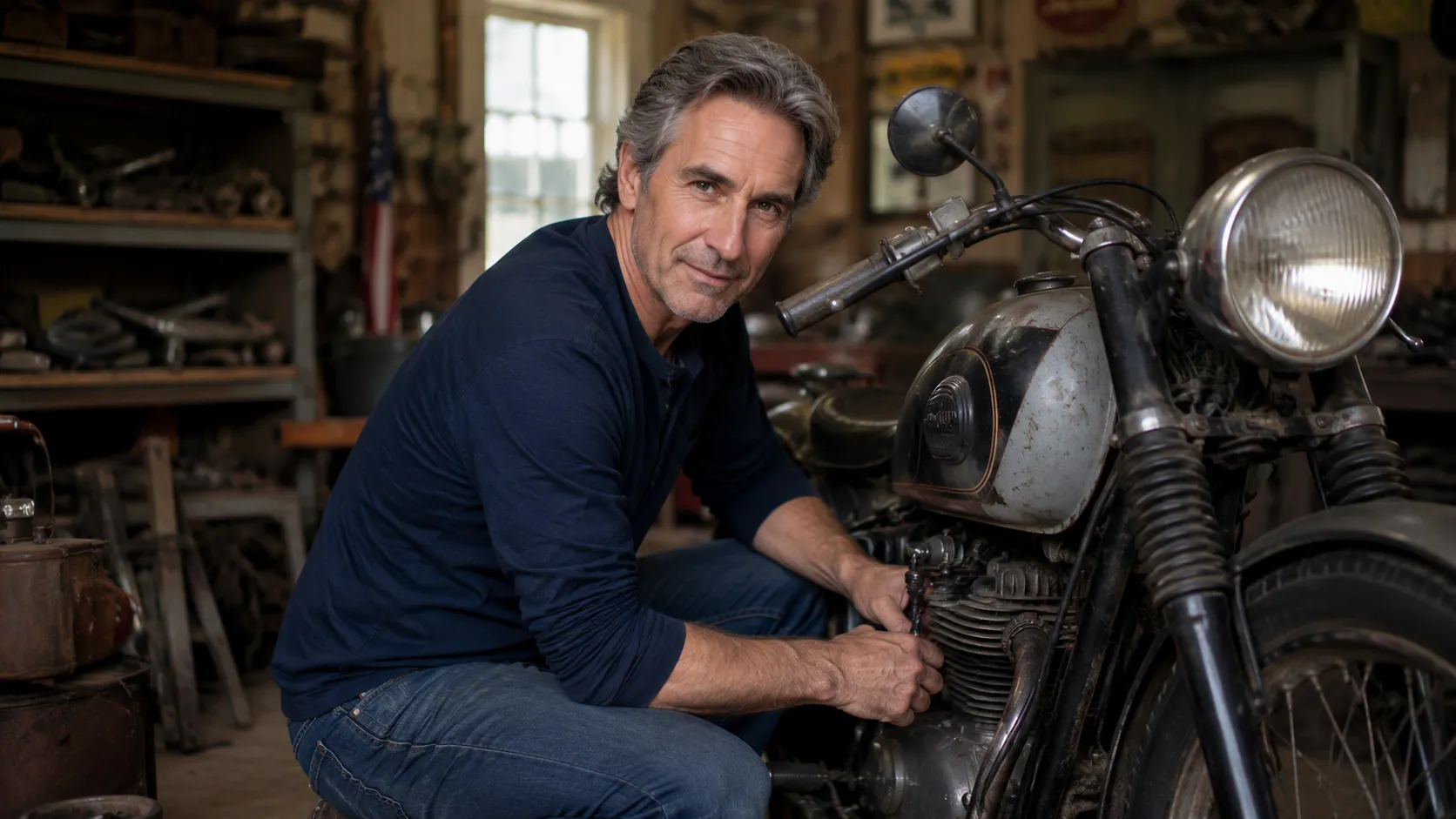
Mike Wolfe passion than a catchy search term — it describes the long-running mission behind Mike Wolfe’s work as a picker, collector, storyteller, preservationist, and small-town advocate. Most people know Wolfe from American Pickers, where he built a career searching for forgotten antiques, rusty relics, vintage motorcycles, and hidden pieces of American heritage. But behind the TV fame is a deeper purpose: saving the stories, places, and objects that help explain who we are.
At its core, the Mike Wolfe Passion Project is about historic preservation, small-town revival, adaptive reuse, and storytelling through objects. It connects old buildings, gas stations, car dealerships, Main Streets, handmade goods, and personal memories into one larger vision. Projects like Columbia Motor Alley, Two Lanes, Antique Archaeology, and Two Lanes Guesthouse show how Wolfe turns nostalgia into something useful, visitable, and alive.
This article explains what Mike Wolfe’s passion project really means, how it connects to American Pickers, why Columbia, Tennessee matters, and what makes this work more than a celebrity side project.
What Is Mike Wolfe’s Passion Project?
Mike Wolfe’s passion project is best understood as his broader effort to preserve American history through old objects, historic buildings, vintage transportation culture, and small-town places. It is not just one antique shop or one TV show. It is a preservation mission built around the idea that forgotten things still have value when someone takes the time to understand their story.
For Wolfe, an old sign is not just a sign. A gas pump is not just garage décor. A motorcycle, storefront, barn find, or abandoned dealership can carry memory, identity, craftsmanship, and a sense of place. That is why his work often blends antique collecting, historic-building restoration, heritage tourism, and community revitalization.
The strongest official example is Columbia Motor Alley, a project connected to Wolfe’s love of transportation history and historic preservation. But the passion project also reaches into Two Lanes, his lifestyle and storytelling brand, and Antique Archaeology, the retail and collecting world that made his picking philosophy visible to millions.
In simple terms, the Mike Wolfe Passion Project is about saving the past before it disappears — not by freezing it in a museum, but by giving it a new life.
Who Is Mike Wolfe Beyond American Pickers?
Mike Wolfe is widely known as the creator and star of American Pickers, the History Channel series that introduced mainstream audiences to the world of picking, antique hunting, and backroad discovery. The show first made Wolfe famous as a man who could walk into a dusty barn, spot an overlooked object, and explain why it mattered.
But beyond American Pickers, Wolfe has built a public identity as a collector, small-business owner, storyteller, and citizen preservationist. His work is not limited to buying and selling antiques. He is interested in the emotional and historical meaning behind old objects, vintage signs, discarded items, and forgotten places.
That difference matters. A regular collector may focus on price, rarity, or resale value. Wolfe often focuses on story, patina, and cultural connection. His passion project grows from that same mindset: the belief that old things are worth saving because they help communities remember where they came from.
How American Pickers Shaped the Passion Project
American Pickers gave Mike Wolfe a national platform, but it did not create his love for old America. It simply helped millions of viewers understand it. Through the show, audiences saw Wolfe and his picking partners travel across rural America, visit collectors, explore abandoned barns, and uncover hidden treasures that might otherwise have been forgotten.
The show’s appeal was never only about the object. It was about the person behind the object. A rusty bike, an old oil can, a neon sign, or a vintage motorcycle became interesting because it opened the door to a human story. Viewers learned that everyday objects can become meaningful artifacts when they are connected to real lives.
That is also the foundation of the Mike Wolfe preservation mission. The same curiosity that drives a pick also drives a restoration project. The question is not only, “What is this worth?” The better question is, “What story does this tell, and how can it be saved?”
In that way, American Pickers is part of the passion project, but it is not the whole project. It is the public doorway into a much larger world of American heritage storytelling.
The Core Philosophy: Preserve the Story, Not Just the Object
The heart of Mike Wolfe’s Passion Project is simple: preserve the story, not just the object.
That philosophy explains why Wolfe’s work connects with people who may not even collect antiques. Most of us understand the feeling of seeing an old building from childhood, a sign from a vanished business, or a family object that carries more emotional value than financial value. These things remind us of memory, belonging, identity, and legacy.
Wolfe’s approach treats objects and places as historical records. A faded storefront can reveal how a town once worked. A gas station can tell the story of road trips, service garages, car culture, and local business. A handmade sign can point to the skill of a sign-writer, woodworker, blacksmith, or neon bender.
That is why terms like vintage Americana, cultural preservation, and storytelling through objects fit naturally with his work. His projects are not about making old things look new. They are about keeping enough architectural character, original details, and authentic patina so the past remains visible.
In a culture that often replaces old places with generic buildings, Wolfe’s philosophy feels personal. It says that history is not only found in famous monuments. Sometimes it is found in a garage, a Main Street shop, a motorcycle tank, or a forgotten sign leaning against a barn wall.
Historic Preservation and Small-Town Revival
A major part of the Mike Wolfe historic preservation story is his interest in small-town America. Many of the places that shaped American life were not big cities. They were Main Streets, family businesses, service stations, local diners, auto garages, and downtown storefronts where people worked, gathered, and built community.
When those places disappear, towns lose more than old brick and wood. They lose community identity, local pride, and a visible connection to the past. That is why small-town revival and community revitalization are central to Wolfe’s passion project.
Historic preservation can also be practical. Through adaptive reuse, an old building can become a shop, studio, guesthouse, gallery, restaurant, or gathering space. This approach reduces waste, protects embodied energy, and keeps the visual character of a place intact. Instead of demolition, the goal is renewal.
For towns hoping to attract visitors, remote workers, entrepreneurs, and heritage travelers, restored buildings can become powerful assets. They create a sense of authenticity that new construction often cannot copy. A restored storefront or service station gives people a reason to stop, take photos, shop locally, and learn the story of the place.
That is where Wolfe’s work stands out. His preservation-based entrepreneurship connects history with modern use. He does not simply admire old places; he looks for ways to make them active again.
Columbia, Tennessee: The Heart of Mike Wolfe’s Restoration Vision
Columbia, Tennessee has become one of the most important locations connected to Mike Wolfe’s restoration work. For searchers asking where Mike Wolfe is doing most of his preservation work, Columbia is one of the clearest answers.
Located in Maury County, Tennessee, Columbia offers the kind of historic downtown environment that fits Wolfe’s vision: old architecture, local businesses, walkable streets, and a strong sense of place. It is the kind of town where heritage tourism can support restaurants, shops, galleries, and restored properties.
Wolfe’s interest in Columbia is tied closely to transportation history, small-town values, and the charm of historic downtown life. The city gives his passion project a real-world setting, not just an abstract message. Instead of only talking about saving old places, Columbia shows what that idea can look like when applied to buildings, guest spaces, and community streets.
For readers searching Mike Wolfe Columbia Tennessee project, this section is important because it connects the keyword to an actual place. Columbia is not just a background detail. It is one of the strongest living examples of Wolfe’s belief that old buildings can serve modern communities.
Columbia Motor Alley and the 1947 Chevrolet Dealership
Columbia Motor Alley is one of the most important pieces of the Mike Wolfe Passion Project because it is directly tied to his love of vintage transportation history and historic preservation. The project centers on a 1947 Chevrolet dealership, giving the story a specific, verifiable location and purpose.
This matters because many online articles describe the passion project in broad terms, but Columbia Motor Alley gives the concept a clear shape. It connects several Wolfe themes at once: old car dealerships, gas stations, service garages, vintage signs, gas pumps, road culture, and automotive heritage.
A short quote associated with the project captures the idea well: “These abandoned places are what kept America going.” That line explains why Columbia Motor Alley is more than a restored building. It is a tribute to the spaces that supported everyday American movement — the places where people bought cars, fixed engines, filled tanks, and started road trips.
For SEO and reader clarity, this section should be treated as a major content gap opportunity. Searchers want to know whether there is an “official” passion project. The safest answer is that Columbia Motor Alley is the strongest official example connected to that phrase, while the broader passion project includes Wolfe’s larger preservation and storytelling mission.
Antique Archaeology: From Picking to Physical Storytelling Spaces
Antique Archaeology is another key part of the Mike Wolfe story. It connects the world of American Pickers to a physical retail experience where fans can see antiques, collectibles, garage gear, apparel, and pieces of vintage Americana.
For many fans, Antique Archaeology is the most recognizable brand attached to Wolfe. It represents the business side of picking, but it also functions as a physical storytelling space. The items are not only products; they are conversation starters. They reflect the same love of forgotten objects, personal stories, and historic character that appears in Wolfe’s restoration work.
The LeClaire, Iowa location is especially important because LeClaire is closely associated with Wolfe’s roots and public identity. When readers search for Antique Archaeology LeClaire, they are often looking for a place connected to American Pickers, Mike Wolfe, and the culture of collecting.
This is where the article can naturally satisfy navigational intent. People may not only want to know what the passion project is; they may want to know where Wolfe’s world can be experienced in person.
Two Lanes: The Storytelling Brand Behind the Lifestyle
Two Lanes is Mike Wolfe’s storytelling and lifestyle brand, inspired by decades of exploring American backroads. It expands the passion project beyond antiques and buildings into a broader way of seeing the world.
The phrase Two Lanes suggests slower travel, smaller roads, local discovery, and a more mindful connection to place. It fits naturally with Wolfe’s long-running interest in back-road exploration, roadside culture, American-made goods, and curated American goods. It also gives the passion project a commercial and cultural layer: stories, apparel, accessories, and items connected to living with purpose.
This matters because many people searching what is Two Lanes by Mike Wolfe are trying to understand how it relates to American Pickers and historic preservation. The answer is that Two Lanes carries the same spirit as picking: go off the interstate, look closer, listen to stories, and value the overlooked.
In SEO terms, Two Lanes also helps the article cover commercial intent without becoming salesy. It connects Wolfe’s audience to a lifestyle built around authenticity, travel, heritage, and intentional living.
Can Fans Visit Mike Wolfe’s Passion Project?
Many readers are not only asking what is Mike Wolfe’s passion project. They also want to know whether they can visit it.
The answer depends on which part of the passion project they mean. Fans may look for Antique Archaeology, Columbia Motor Alley, Two Lanes Guesthouse, or downtown Columbia, Tennessee. They may also search for places to visit for American Pickers fans, especially if they are planning a road trip through Tennessee or Iowa.
Two Lanes Guesthouse is especially important because it turns Wolfe’s style into a visitor experience. It connects Columbia Tennessee vacation rental intent with American Pickers fan travel. Details like a 1951 Vespa, historic downtown views, and walkable attractions make the guesthouse feel like part of the larger storytelling universe.
Here is a simple visitor-intent breakdown:
| Place / Brand | Why It Matters | Search Intent |
| Columbia Motor Alley | Strong official passion project example tied to a 1947 Chevrolet dealership | Informational / Navigational |
| Two Lanes Guesthouse | Fan experience and Columbia travel angle | Transactional / Navigational |
| Antique Archaeology | Retail and American Pickers connection | Navigational / Commercial |
| Columbia, Tennessee | Small-town revival and heritage tourism setting | Informational / Local |
| LeClaire, Iowa | Wolfe roots and Antique Archaeology connection | Navigational |
This section gives the article a competitive edge because most competitor pages explain the idea but do not fully answer the practical travel question.
How the Passion Project Supports Artisans, Local Businesses, and Heritage Tourism
The Mike Wolfe Passion Project is also about people who still make, restore, repair, and preserve things by hand. That includes local craftsmen, artisans, heritage craftsmen, sign makers, leatherworkers, woodworkers, mechanics, builders, and small-business owners.
Historic preservation is not only about saving a building. It often creates work for skilled trades and brings attention to local talent. When an old storefront becomes a shop or a guesthouse, it can support nearby cafés, record stores, galleries, restaurants, and attractions. This is where heritage tourism becomes part of the story.
Wolfe’s work also fits into the larger idea of creative placemaking. Instead of treating small towns as places people leave behind, restoration projects help turn them into destinations. Visitors come for the architecture, the stories, the food, the shops, and the feeling that the place is real.
That is why keywords like community revitalization, tourism engagement, local business growth, and small-town revival belong naturally in this article. They are not just SEO terms. They describe the economic and emotional effect of saving places that people still care about.
When done well, preservation gives old buildings a second chance and gives communities a stronger reason to believe in their own future.
Verified Facts vs Online Claims About Mike Wolfe’s Passion Project
One problem with the keyword mike wolfe passion project is that many articles online repeat vague or unverified claims. Some mention ideas such as 100 Buildings & 100 Stories, micro-grants, or specific restoration goals without clearly proving whether those details come from official sources.
A stronger article should separate verified facts from online claims.
| Claim / Topic | How to Treat It |
| Columbia Motor Alley is tied to Wolfe’s passion project | Strongly supported by official wording and project details |
| 1947 Chevrolet dealership | Use confidently when discussing Columbia Motor Alley |
| Two Lanes is Wolfe’s storytelling/lifestyle brand | Use confidently as a supporting brand |
| Two Lanes Guesthouse is connected to Columbia travel | Use confidently as a visitor-experience angle |
| 100 Buildings & 100 Stories | Mention only if verified by a stronger source |
| $2k–$10k micro-grants | Avoid presenting as fact unless independently confirmed |
| At least one historic building per U.S. state | Treat cautiously unless official confirmation exists |
This section builds trust. It tells readers that the article is not just repeating every phrase competitors use. It is explaining what is known, what is likely interpretation, and what still needs verification.
That kind of clarity is valuable for E-E-A-T, especially when writing about a public figure, current projects, and preservation claims.
Challenges and Criticism: Preservation Is Not Always Simple
Historic preservation sounds romantic, but the reality is often complicated. Saving an old building can involve financial risk, hidden damage, structural evaluation, code compliance, permits, accessibility upgrades, energy efficiency concerns, and long timelines.
There is also a larger debate around gentrification. When historic districts become attractive, property values may rise. That can help local investment, but it can also create pressure for longtime residents and small businesses. A balanced article should acknowledge this reality instead of presenting every restoration project as automatically positive.
This is why adaptive reuse must be handled carefully. The best projects respect the original character of a building while giving it a practical modern purpose. They preserve original facades, tin ceilings, old signs, brickwork, and architectural details without turning the space into a lifeless replica.
For Wolfe’s work, the challenge is keeping the balance between heritage and commerce. A restored space may sell products, host visitors, or support tourism, but it should still honor the story that made it worth saving in the first place.
That tension makes the passion project more interesting. It is not just nostalgia. It is the hard work of turning memory into something sustainable.
Why Mike Wolfe’s Passion Project Connects With People
The reason Mike Wolfe’s Passion Project connects so strongly with people is that it touches something emotional. Many readers are not antique experts, but they understand the feeling of losing places that mattered.
An old garage, school, theater, diner, or storefront can hold memories for an entire town. A vintage motorcycle or handmade sign can remind someone of a parent, a road trip, a first job, or a family business. These objects and places become emotional anchors.
That is why Wolfe’s work often feels bigger than collecting. It speaks to nostalgia, belonging, legacy, and the desire to protect stories from disappearing. In a fast-changing world, old objects offer continuity. They prove that someone was here before us, building, repairing, traveling, working, and dreaming.
This emotional appeal is also why American Pickers worked so well. The show was not only about finding valuable antiques. It was about meeting people who had saved pieces of their lives, sometimes for decades, because those things meant something.
The passion project continues that same idea on a larger scale. It says: if a story is worth telling, maybe the place that holds it is worth saving too.
What Makes This More Than a Celebrity Side Project?
It would be easy to describe the Mike Wolfe Passion Project as a celebrity hobby, but that misses the point. The work has lasted too long and touches too many connected areas: American Pickers, Antique Archaeology, Two Lanes, Columbia Motor Alley, historic buildings, transportation history, and small-town tourism.
A typical celebrity side project often feels separate from the person’s main career. Wolfe’s preservation work feels like an extension of the same values that made him famous. He has always been interested in overlooked objects, forgotten places, and the people who keep history alive.
That consistency is what makes the project feel authentic. The same worldview runs through the barn pick, the antique shop, the restored dealership, the guesthouse, and the backroad brand.
It is also a form of brand storytelling through places. Instead of only telling people to value old America, Wolfe creates spaces where they can see it, touch it, stay in it, shop from it, and imagine what other forgotten places could become.
Mike Wolfe Passion Project 2025–2026 Updates
Search interest around Mike Wolfe passion project updates has grown because Wolfe’s public work continues to evolve. Fans are curious about American Pickers, new media projects, Columbia-related preservation work, and how Wolfe’s role as a storyteller is changing.
In 2026, History’s Greatest Picks with Mike Wolfe added a fresh layer to his public identity. The series focuses on extraordinary finds, historic artifacts, and the stories of ordinary people connected to remarkable objects. That format fits naturally with Wolfe’s long-standing interest in hands-on history and American heritage storytelling.
Recent interest also connects to Frank Fritz, Wolfe’s longtime American Pickers co-star. For many fans, Fritz remains part of the emotional history of the show. Any new Wolfe project is viewed through that larger story of friendship, picking, change, and legacy.
The key update for readers is this: Wolfe’s work appears to be moving even more clearly toward storytelling, preservation, and curated history. Whether through TV, restored spaces, or Two Lanes, the mission remains the same — uncover the story behind the object and help people care about it.
Lessons from Mike Wolfe’s Passion Project
There are practical lessons in the Mike Wolfe Passion Project for entrepreneurs, creators, preservationists, and small-town business owners.
The first lesson is that story creates value. A product, building, or town becomes more meaningful when people understand its history. Wolfe’s career shows how storytelling can turn overlooked objects into cultural assets.
The second lesson is that authenticity cannot be faked. People respond to patina, memory, and original character because those things feel real. This is why nostalgia marketing works best when it is rooted in genuine respect for the past.
The third lesson is that adaptive reuse can be a business strategy. Restored buildings can become shops, guesthouses, galleries, studios, event spaces, or tourism anchors. They protect history while creating modern economic activity.
The fourth lesson is that small towns need more than promotion. They need people willing to invest in places, craft skills, local businesses, and community experiences.
Wolfe’s passion project shows that preservation is not only about looking backward. When done well, it can help build a more distinctive future.
FAQs
What is Mike Wolfe’s passion project?
Mike Wolfe’s passion project is his broader mission to preserve American stories through antiques, historic buildings, vintage transportation history, small-town revival, and community revitalization.
Is Columbia Motor Alley Mike Wolfe’s passion project?
Columbia Motor Alley is one of the strongest official examples of Wolfe’s passion project. It centers on a 1947 Chevrolet dealership and reflects his love of transportation history and historic preservation.
How is the project connected to American Pickers?
American Pickers introduced viewers to Wolfe’s love of forgotten objects, hidden treasures, and personal stories. The passion project expands that same idea into buildings, towns, brands, and visitor experiences.
What is Two Lanes by Mike Wolfe?
Two Lanes is Wolfe’s backroads-inspired storytelling and lifestyle brand. It focuses on authenticity, American-made goods, travel, purpose, and the forgotten wonders found away from the interstate.
Can fans visit Mike Wolfe’s restored properties?
Fans can explore related places such as Antique Archaeology, Columbia, Tennessee, and Two Lanes Guesthouse. Availability and access can change, so visitors should always check official sources before planning a trip.
Why does Mike Wolfe restore old buildings?
Wolfe restores old buildings because they hold history, memory, architectural character, and community meaning. Restoration gives these spaces a second life instead of letting them disappear.
Is the passion project only about antiques?
No. Antiques are part of the story, but the larger project includes historic preservation, adaptive reuse, heritage tourism, small-town economic development, and American heritage storytelling.
Where is Mike Wolfe’s passion project located?
There is no single location for the entire passion project. However, Columbia, Tennessee, Columbia Motor Alley, LeClaire, Iowa, Antique Archaeology, and Two Lanes are important places and brands connected to Wolfe’s preservation work.
Conclusion:
The Mike Wolfe Passion Project is not just about antiques, television, or nostalgia. It is about saving stories before they disappear. Through American Pickers, Antique Archaeology, Two Lanes, Columbia Motor Alley, and his broader preservation work, Wolfe has built a mission around forgotten objects, old buildings, and small-town places that still have something to say.
His work reminds us that history does not only live in textbooks. It lives in gas stations, garages, storefronts, motorcycles, signs, and the memories of people who kept them. That is why Mike Wolfe’s passion project continues to resonate: it gives the past a second chance to serve the present.
Disclaimer:
This article is for general informational purposes only. Details, interpretations, preferences, and individual situations may vary, so readers should use their own judgment when applying the information.