

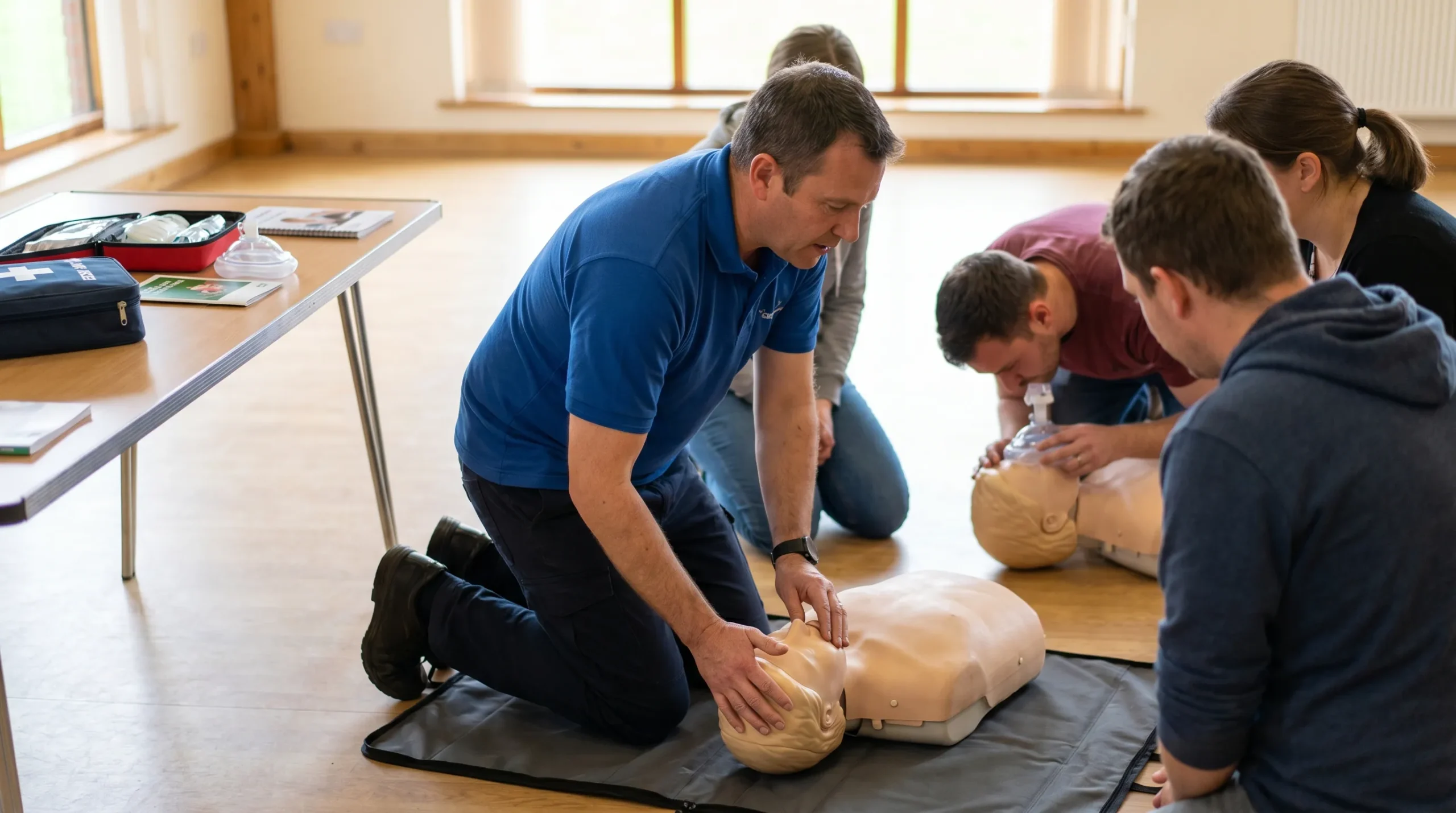
The main indication for mouth-to-mouth rescue breaths is when a person is not breathing normally, is not breathing effectively, or has stopped breathing, especially if they still have a pulse but cannot breathe on their own. In simple terms, mouth-to-mouth rescue breathing is used to move air into a person’s lungs when their body is not doing it well enough to keep oxygen flowing to the brain, heart, and vital organs.
This topic matters because breathing problems can become life-threatening within minutes. Rescue breathing, CPR, and AED use are all part of emergency care, but they are not always used in the same way. A trained rescuer may give rescue breaths alone when a person has a pulse but is not breathing. If the person has no pulse or no signs of circulation, the response changes to cardiopulmonary resuscitation, usually with chest compressions, rescue breaths, and an automated external defibrillator when available.
In any real emergency, call 911, 999, 112, or your local emergency number immediately and follow dispatcher instructions. This article is educational and does not replace CPR certification, BLS training, or professional medical advice.
Quick Answer: When Are Mouth-to-Mouth Rescue Breaths Indicated?
Mouth-to-mouth rescue breaths are indicated when a person cannot breathe normally or effectively enough to oxygenate the body. This may happen during respiratory arrest, drowning, suffocation, opioid overdose, smoke inhalation, carbon monoxide poisoning, severe asthma attacks, anaphylaxis, or after a choking incident where the person becomes unresponsive.
The clearest example is this: a person is unresponsive, has a heartbeat or pulse, but is not breathing normally. In that situation, rescue breathing with a pulse may be needed because the heart is still circulating blood, but the lungs are not bringing in enough oxygen. Current American Heart Association adult BLS guidance says that for adults who are not breathing normally but have a pulse, rescuers may provide 1 breath every 6 seconds, or about 10 breaths per minute.
Mouth-to-mouth rescue breaths may also be part of traditional CPR or conventional CPR, where a trained rescuer gives 30 compressions to 2 breaths. Mayo Clinic describes CPR for a person with no pulse or breathing as starting compressions and then giving two rescue breaths after 30 compressions.
The main thing to remember is that rescue breaths support oxygenation, while chest compressions support circulation. When breathing has stopped, oxygen delivery becomes urgent.
Rescue Breathing vs CPR: What’s the Difference?
Many people use the terms rescue breathing, mouth-to-mouth resuscitation, and CPR as if they mean the same thing, but they are different.
Rescue breathing means giving breaths to someone who is not breathing adequately. The goal is to move air into the lungs so oxygen can reach the bloodstream. Mouth-to-mouth rescue breaths are one form of rescue breathing. Other forms include using a pocket mask, face shield, bag-valve mask, or advanced airway equipment by healthcare professionals.
CPR, or cardiopulmonary resuscitation, is broader. CPR is used when a person is in cardiac arrest, meaning the heart is not pumping blood effectively. CPR usually includes chest compressions to circulate blood and may include rescue breaths to provide oxygen. In many CPR courses, the standard pattern for a trained single rescuer is 30 chest compressions followed by 2 rescue breaths, often written as 30:2.
Hands-only CPR is different again. It uses continuous chest compressions without mouth-to-mouth breaths. It is often recommended for untrained bystanders who see an adult suddenly collapse and are unwilling or unable to give breaths. This is important because doing compressions is usually better than doing nothing.
| Situation | What It Usually Means | Typical Response |
| Pulse present, not breathing normally | Respiratory arrest | Give rescue breaths if trained |
| No pulse and not breathing normally | Cardiac arrest | Start CPR, use an AED |
| Untrained bystander, adult collapse | Possible cardiac arrest | Call emergency services and do hands-only CPR if appropriate |
| Drowning, overdose, child emergency | Often breathing-related | Rescue breaths may be especially important |
The best response depends on the person’s condition, your training level, and dispatcher instructions.
How to Tell If Someone Is Not Breathing Normally
Before giving mouth-to-mouth rescue breaths, you need to recognize whether the person is breathing normally. This is where many bystanders hesitate. They may see a person gasp once or make a strange snorting sound and think breathing is present. But gasping is not normal breathing.
Signs that someone may not be breathing normally include no chest movement, very weak breaths, irregular gasps, noisy struggling breaths, or long pauses between breaths. Agonal breathing or agonal gasps can happen during cardiac arrest. These gasps may look like breathing, but they do not provide enough oxygen to the body. Treat them as an emergency.
A simple emergency decision process looks like this:
- Check responsiveness by tapping the person and shouting, “Are you okay?”
- Call emergency services or tell someone else to call.
- Check breathing quickly. Do not waste time.
- If the person is not breathing normally, follow your training or dispatcher instructions.
- If trained, check a pulse. If there is a pulse but no normal breathing, begin rescue breathing. If there is no pulse, begin CPR.
In many first-aid systems, breathing and pulse checks should be brief. Do not delay emergency care by overchecking.
Pulse but Not Breathing: The Clearest Indication for Rescue Breaths
The phrase pulse but not breathing is one of the most important concepts in rescue breathing. It describes a person whose heart is still beating but whose breathing has stopped or become ineffective. This is often called respiratory arrest with a pulse.
In this situation, mouth-to-mouth rescue breaths may be indicated because the person needs ventilation more than chest compressions at that exact moment. The heart is still moving blood, but the blood needs oxygen. Without oxygen, the brain and vital organs can quickly suffer harm.
For trained rescuers, the typical adult approach is to give a breath about every 6 seconds, or about 10 breaths per minute, while continuing to monitor the pulse and breathing. The American Heart Association’s adult BLS guidance also notes checking the pulse every 2 minutes and starting CPR if no pulse is found.
This is also why rescue breathing matters in emergencies caused by breathing failure. For example, in opioid overdose, the person’s breathing may slow or stop before the heart stops. In drowning or suffocation, the body may be deprived of oxygen before cardiac arrest occurs.
If the person begins breathing normally, place them in a recovery position if appropriate and continue monitoring until EMS arrives. If the person loses their pulse or stops showing signs of circulation, start CPR and use an AED as soon as it is available.
Emergency Situations Where Rescue Breaths May Be Needed
Mouth-to-mouth rescue breathing is most important in emergencies where breathing stops first. These are sometimes called asphyxial or breathing-related emergencies.
Drowning or Near-Drowning
A drowning victim may have too little oxygen because water blocked normal breathing. In this case, rescue breaths can be especially important because the emergency begins with oxygen deprivation. A drowning response should include calling emergency services, removing the person from danger if safe, checking responsiveness and breathing, and giving rescue breaths or CPR according to training.
Opioid Overdose or Drug Overdose
In an opioid overdose, drugs such as heroin, fentanyl, or prescription opioids can slow or stop breathing. The CDC says to call 911 if an overdose is suspected, even if the person improves after naloxone. Naloxone can rapidly reverse an opioid overdose by blocking opioid effects, according to the National Institute on Drug Abuse.
In a suspected overdose, the priority is to call emergency services, give naloxone if available and permitted, and support breathing according to your training.
Choking After the Person Becomes Unresponsive
A choking victim may become unresponsive if the airway is blocked. If the chest does not rise during rescue breaths, there may be a foreign body airway obstruction. In that case, trained rescuers follow choking and CPR protocols, checking for visible obstructions and avoiding blind finger sweeps.
Smoke Inhalation or Carbon Monoxide Poisoning
Smoke inhalation and carbon monoxide poisoning can interfere with oxygen delivery. These situations are dangerous because the person may appear weak, confused, or unconscious. The first step is always scene safety. Do not enter a dangerous area with smoke, fire, gas, or toxic exposure unless you are trained and equipped.
Anaphylaxis or Severe Allergic Reaction
A severe allergic reaction, or anaphylaxis, can cause airway swelling and breathing difficulty. Epinephrine is the key emergency medication for anaphylaxis, but if the person becomes unresponsive and is not breathing normally, rescue breathing or CPR may be needed while waiting for professional help.
How to Perform Mouth-to-Mouth Rescue Breaths Safely
Knowing how to perform mouth-to-mouth rescue breaths helps reduce panic in an emergency. The goal is not to blow as hard as possible. The goal is to give enough air to make the chest rise.
First, check that the scene is safe. Then call emergency services or tell another person to call. Place the person on their back on a firm, flat surface if it is safe to move them. Open the airway using the head-tilt chin-lift technique: gently tilt the head back and lift the chin. This helps move the tongue away from the airway.
Pinch the nose shut, take a normal breath, and create a tight seal with your mouth over the person’s mouth. Give one breath over about 1 second and watch for the chest to rise. The Red Cross describes rescue breaths as lasting about 1 second and making the chest rise. Let the chest fall before giving another breath.
A good rescue breath should be gentle and controlled. If you blow too hard or too fast, air may enter the stomach. This can cause gastric inflation, vomiting, and possible aspiration. The most reliable sign of an effective rescue breath is visible chest rise and fall.
If you have a barrier device, CPR face shield, or pocket mask with a one-way valve, use it. These tools reduce direct mouth contact and help lower infection concerns.
Adult vs Child vs Infant Rescue Breaths
The basic goal is the same for adults, children, and infants: provide oxygen when breathing is absent or ineffective. But the technique changes because body size and airway anatomy are different.
| Age Group | Rescue Breath Technique | Important Note |
| Adult | Mouth-to-mouth, normal breath, chest rise | Avoid blowing too hard |
| Child | Smaller breath, enough for chest rise | Breathing problems are often important in children |
| Infant | Cover the baby’s mouth and nose, give gentle puffs | Infant lungs are small, so use less air |
For an adult, a normal breath is usually enough to create chest rise. For a child, the breath should be smaller and gentler. For an infant, many first-aid instructions teach rescuers to cover both the mouth and nose with their mouth and give small, gentle puffs just enough to make the chest rise. Pediatric CPR references commonly emphasize about 1 second for each breath and watching the chest rise.
This is why CPR training is so important. It gives hands-on practice for adult, child, and infant rescue breathing. Reading about the steps is useful, but practice helps you understand how gentle a breath should feel.
What If the Chest Does Not Rise During Rescue Breathing?
If the chest does not rise during rescue breathing, the air is probably not reaching the lungs. This may happen because the airway is not open, the mouth seal is weak, or something is blocking the airway.
Start by reopening the airway. Retilt the head and lift the chin again. Then try another breath while watching the chest. If the chest still does not rise, check for a visible obstruction in the mouth. Remove only an object you can clearly see and easily remove. Do not blindly sweep the mouth because you might push the object deeper.
Also check your seal. Air can leak out if the mouth is not sealed well or if the nose is not pinched shut. Give a gentle breath again and watch for chest rise. Pediatric Red Cross-style guidance also says to retilt the head and give another breath if the chest does not rise.
Do not keep forcing air. Repeated forceful breaths can push air into the stomach and increase the risk of vomiting. If the person has no pulse or no signs of circulation, start CPR according to your training and follow emergency dispatcher instructions.
When Mouth-to-Mouth Rescue Breaths Are Not Recommended
There are situations where mouth-to-mouth rescue breaths may not be recommended or may not be possible. If the scene is unsafe because of fire, traffic, violence, smoke, chemicals, or unstable structures, do not put yourself in danger. Call emergency services and wait for trained responders.
Mouth-to-mouth may also be unsafe if the person’s mouth is contaminated with toxic substances, blood, vomit, or unknown chemicals. A severe facial injury may make it impossible to create a proper seal. In those situations, a trained responder may use alternatives such as a pocket mask, bag-valve mask, or mouth-to-nose rescue breathing if appropriate.
If you are an untrained bystander and do not know how to give breaths, follow dispatcher instructions. For many adult sudden-collapse situations, hands-only CPR may be recommended. The key is not to freeze. Calling emergency services, starting compressions when appropriate, and using an AED can save a life.
Some people worry about disease transmission. This is understandable. A face shield, barrier device, or pocket mask with a one-way valve can reduce direct contact. However, in an emergency, the decision depends on your training, comfort level, local guidance, and the situation in front of you.
Common Mistakes to Avoid When Giving Rescue Breaths
One common mistake is blowing too hard. Rescue breathing is not about forcing air into the lungs. It is about giving enough air to make the chest rise. Another mistake is blowing too fast, which can reduce effectiveness and increase the chance that air enters the stomach.
A poor airway position is another major problem. If the head is not tilted and the chin is not lifted, the tongue can block the airway. A weak seal can also make rescue breaths ineffective because air escapes instead of entering the lungs.
A more serious mistake is delaying CPR when CPR is needed. If there is no pulse, no signs of circulation, or the person is not breathing normally, chest compressions may be needed right away. In cardiac arrest, high-quality CPR and early AED use are critical.
Another mistake is ignoring agonal breathing. Gasping does not mean the person is breathing normally. If someone is unresponsive and only gasping, treat it as an emergency.
As one CPR teaching principle puts it: “Look for chest rise, not force.” A gentle breath that creates chest rise is better than a hard breath that inflates the stomach.
Rescue Breaths, AEDs, and Waiting for EMS
Once emergency services have been called, the next step is to keep care going until EMS arrives. If other people are nearby, send someone to get an AED. An AED can analyze the heart rhythm and tell you whether a shock is advised.
If the person has a pulse but is not breathing, continue rescue breathing according to your training and keep checking the pulse and breathing. If the person has no pulse, start CPR. The American Heart Association adult BLS algorithm says to use the AED when it arrives, follow rhythm checks, and continue care until advanced life support professionals take over or the person shows signs of recovery.
Do not stop care too early. Continue until the person begins breathing normally, trained responders take over, the scene becomes unsafe, or you are physically unable to continue. If the person starts breathing but remains unresponsive, place them in the recovery position if there is no concern for spinal injury and continue monitoring.
Emergency care is a chain: early recognition, calling for help, CPR or rescue breathing, AED use, and advanced medical care. Each link matters.
Why CPR Training Matters
Reading about mouth-to-mouth rescue breaths can help you understand the concept, but it cannot fully replace hands-on practice. A good CPR certification course teaches how to recognize cardiac arrest, how to give chest compressions, how to provide rescue breaths, how to use an AED, and how to respond to adult, child, and infant emergencies.
Courses such as First Aid, BLS, ACLS, and PALS are designed for different audiences. A workplace employee may only need basic first aid and CPR, while a healthcare professional may need BLS or advanced training. Parents, teachers, coaches, lifeguards, childcare workers, and caregivers can all benefit from CPR practice.
Training also builds confidence. Many people freeze during emergencies because they are afraid of doing something wrong. Practice helps you remember the basics: call for help, check breathing, start the right care, and keep going until help arrives.
FAQs About Mouth-to-Mouth Rescue Breaths
What is the main indication for mouth-to-mouth rescue breaths?
The main indication for mouth-to-mouth rescue breaths is when a person is not breathing normally or cannot breathe effectively. The clearest example is someone who has a pulse but is not breathing. Rescue breaths may also be used during conventional CPR by a trained rescuer.
Do you give rescue breaths if someone has a pulse?
Yes, if you are trained and the person has a pulse but no normal breathing, rescue breaths may be indicated. For adults, current AHA guidance supports 1 breath every 6 seconds, or 10 breaths per minute, while monitoring the pulse.
Are mouth-to-mouth rescue breaths still recommended?
Yes, but it depends on the situation and rescuer training. Mouth-to-mouth rescue breaths are still part of conventional CPR and are especially important in breathing-related emergencies such as drowning, overdose, and pediatric respiratory arrest. However, hands-only CPR may be recommended for untrained bystanders in many adult sudden-collapse cases.
How long should each rescue breath last?
Each rescue breath should usually last about 1 second and should be just enough to make the chest rise. Avoid blowing too hard or too fast.
What if I cannot or do not want to give mouth-to-mouth?
Call emergency services immediately. If appropriate, follow dispatcher instructions for hands-only CPR. Use a barrier device, face shield, or pocket mask if one is available and you are trained to use it.
Should you give rescue breaths to a drowning victim?
Rescue breaths may be especially important for a drowning victim because the emergency is often caused by lack of oxygen. Call emergency services, begin care according to your training, and use an AED if needed.
What percentage of oxygen is in mouth-to-mouth breathing?
Exhaled air contains less oxygen than fresh air, but it still contains enough oxygen to help support rescue breathing in an emergency. Competitor CPR resources commonly mention that exhaled rescue breaths contain about 16–17% oxygen, compared with about 21% oxygen in ambient air. The key is not the exact percentage but whether the breath creates visible chest rise.
Conclusion: The Main Indication to Remember
The answer to what is the indication for mouth-to-mouth rescue breaths is simple: they are indicated when a person is not breathing normally, not breathing effectively, or has stopped breathing, especially if they still have a pulse. They may also be used as part of traditional CPR when a trained rescuer gives 30 compressions to 2 breaths.
Mouth-to-mouth rescue breathing is especially important in respiratory arrest, drowning, opioid overdose, choking-related unconsciousness, smoke inhalation, anaphylaxis, and some child or infant emergencies. The key signs are unresponsiveness, absent or abnormal breathing, poor oxygenation, and lack of effective chest movement.
In a real emergency, call your local emergency number, follow dispatcher instructions, use an AED if available, and continue care until EMS arrives. For long-term preparedness, take a recognized CPR certification or BLS course so you can act quickly and confidently when seconds matter.